Best Bynder Alternatives for Teams Who Don't Need Enterprise DAM
Bynder is a powerful digital asset management platform, but its enterprise pricing (often $30,000+ per year) and 3-6 month implementation timeline make it overkill for many teams. This guide compares practical Bynder alternatives that offer brand asset management, collaboration, and sharing without the complexity or cost.
What is a Bynder Alternative?
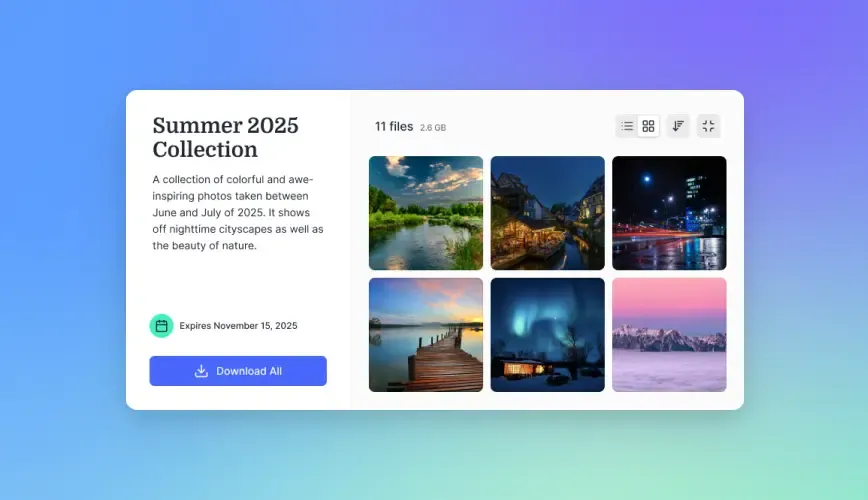
A Bynder alternative is a digital asset management or brand management platform that provides similar functionality to Bynder's asset storage, brand guidelines, and creative workflows. These alternatives range from full-featured enterprise DAM systems to simpler cloud storage platforms with collaboration features.
The right alternative depends on what you actually need. Many teams discover they're paying for enterprise DAM capabilities they never use. If your primary needs are storing brand assets, sharing files with clients, and collaborating on creative projects, you may not need traditional DAM at all.
Why Teams Look for Bynder Alternatives
Bynder targets large enterprises with dedicated brand management teams. For everyone else, there are three common friction points:
Price: Bynder's enterprise pricing typically starts at $30,000+ per year. For small and mid-sized teams, this is hard to justify when you only use a fraction of the features.
Complexity: DAM implementations average 3-6 months. You need to define metadata schemas, set up workflows, train users, and integrate with other tools. That's a significant commitment for teams that just want to share brand assets.
User adoption: 40% of DAM users cite complexity as their main pain point. If your team struggles to use the tool consistently, the ROI disappears regardless of features.
The best Bynder alternative isn't necessarily another DAM. It's whatever tool actually gets used by your team and solves your specific problems.
How to Choose a Bynder Alternative
Before comparing platforms, get clear on what you actually need:
Questions to Ask
- How many assets? Under 10,000 files? Most teams don't need enterprise DAM.
- Who needs access? Internal team only, or external clients and partners?
- What file types? Standard images and documents, or specialized formats like video, CAD, or RAW files?
- What workflows? Simple sharing, or approval chains and version control?
- What integrations? Does it need to connect to your existing design tools and CMS?
Red Flags in Bynder Alternative Reviews
- Articles that rank platforms by feature count rather than fit
- Alternatives that cost nearly as much as Bynder
- Any platform requiring consultants for implementation
- Recommendations that don't mention pricing
7 Best Bynder Alternatives Compared
| Platform | Best For | Starting Price | Setup Time |
|---|---|---|---|
| Fast.io | Teams needing simple brand asset sharing | Usage-based (~$60/mo for 25 users) | Same day |
| Canto | Mid-size teams wanting traditional DAM | $99/user/month | 2-4 weeks |
| Brandfolder | Marketing teams needing brand portals | Custom pricing | 4-8 weeks |
| Frontify | Brand guideline-focused teams | Custom pricing | 2-4 weeks |
| Air | Startups and small creative teams | Free tier available | Same day |
| Acquia DAM (Widen) | Enterprise needing PIM + DAM | Custom pricing | 2-6 months |
| MediaValet | Video-heavy enterprise workflows | Custom pricing | 2-4 months |
Fast.io
Fast.io isn't a traditional DAM, but it solves the actual problems most teams have: storing brand assets, sharing with clients, and collaborating on creative projects. The key difference is pricing. Where Bynder charges enterprise rates and traditional DAMs charge per seat, Fast.io uses usage-based pricing.
For a 25-person team with 5TB of storage, Fast.io costs around $60/month compared to $450/month for Dropbox or $30,000+/year for Bynder. You get unlimited workspaces, branded client portals, and HLS video streaming without per-seat costs eating into your budget.
Best for: Teams that need brand asset sharing and client collaboration without DAM complexity.
Canto
Canto is a mid-market DAM that's simpler than Bynder but still offers metadata management, smart albums, and approval workflows. It works well for teams that actually need DAM features but can't justify enterprise pricing.
Best for: Marketing teams with 10,000+ assets who need proper metadata organization.
Brandfolder
Brandfolder focuses on brand asset distribution. If your main use case is making approved logos, templates, and brand guidelines available to stakeholders, take a look.
Best for: Companies with strict brand governance needs and distributed teams.
Frontify
Frontify combines brand guidelines with asset management. It does a good job creating visual brand portals that explain how to use assets, not just store them.
Best for: Teams that need to document and enforce brand standards.
Air
Air is a lightweight option with a free tier that's actually useful. Creative teams will recognize the real-time collaboration features, which work like Figma's approach.
Best for: Small creative agencies and startups with limited budgets.
Acquia DAM (Widen)
Acquia DAM (formerly Widen) is a full enterprise DAM with product information management (PIM) capabilities. It's comparable to Bynder in scope but may work better for companies that also need to manage product data.
Best for: Large enterprises needing combined DAM and PIM.
MediaValet
MediaValet emphasizes video management and AI automation. If you work with large video libraries and need advanced transcoding and streaming, put it on your shortlist.
Best for: Media companies and video-heavy workflows.
Bynder vs. Simpler Alternatives: When DAM is Overkill
Traditional DAM systems solve a specific problem: managing thousands of assets with complex metadata, approval workflows, and integrations across enterprise systems. If that's your situation, you need DAM.
But many teams buy DAM for simpler needs:
- Storing brand assets in one place
- Sharing files with external clients
- Basic version control
- Giving stakeholders self-service access to approved assets
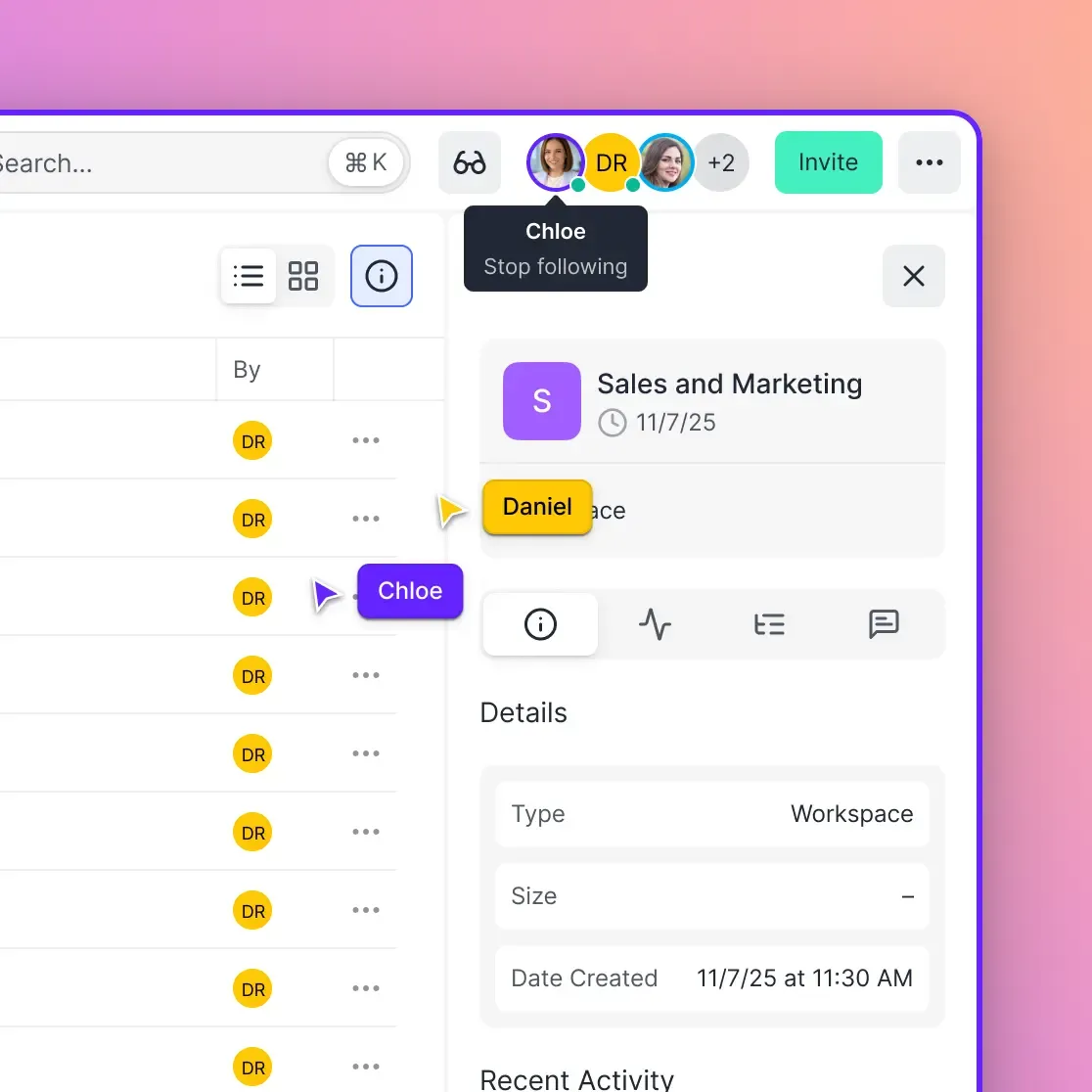
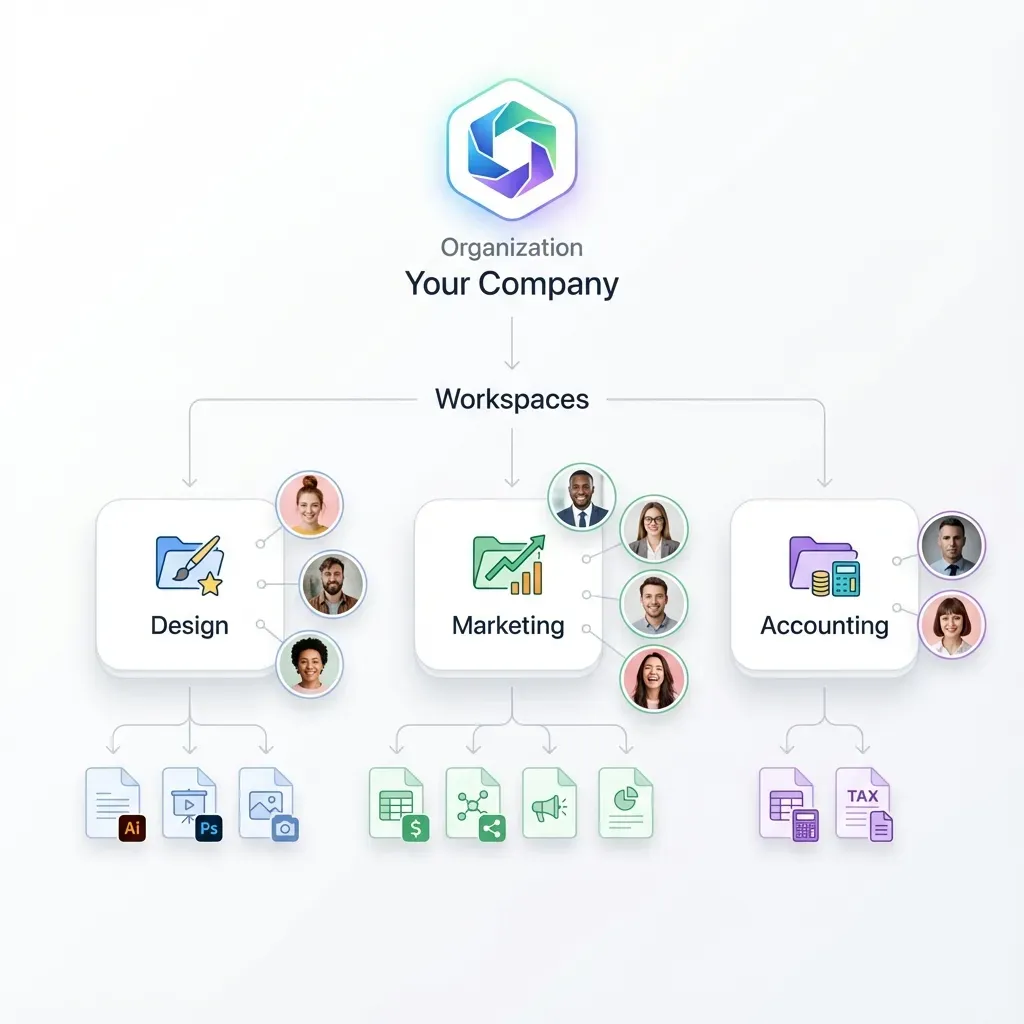
For these use cases, cloud platforms like Fast.io offer 80% of the functionality at 10% of the cost. You get unlimited workspaces for organizing assets by project or client, branded portals for external sharing, and real-time collaboration. What you don't get is enterprise metadata schemas and complex approval chains, but most teams never use those anyway.
The question isn't "which DAM?" It's "do I actually need DAM?"
Migration Considerations
If you're moving from Bynder (or considering it), plan for these challenges:
Asset Export
Bynder stores metadata alongside files. When you export, you'll get the raw files but may lose tags, categories, and custom metadata fields. Document your taxonomy before migrating.
User Training
Any new platform requires training, but simpler tools need less. Platforms like Fast.io are familiar to anyone who's used Dropbox or Google Drive. Enterprise DAM systems require dedicated training programs.
Integration Rewiring
If Bynder connects to your CMS, design tools, or marketing automation, you'll need to rebuild those connections. Check that your alternative supports the integrations you depend on.
Contract Timing
DAM contracts typically run annually with auto-renewal. Start evaluating alternatives 3-4 months before renewal to avoid getting locked into another year.
Making the Right Choice
The best Bynder alternative matches your actual workflow, not a feature checklist. Start with these steps:
Audit your current usage. Which Bynder features do you actually use weekly? Monthly? Never?
Calculate real costs. Include implementation, training, and the productivity lost to complexity.
Run a pilot. Most alternatives offer free trials. Test with real projects and real users.
Talk to similar teams. Find companies with comparable size and needs who've made the switch.
For many teams, the answer isn't a different enterprise DAM. It's a simpler tool that does what you actually need without the overhead you don't.
Frequently Asked Questions
What is similar to Bynder?
The closest traditional DAM alternatives to Bynder are Acquia DAM (Widen), Frontify, and Canto. For teams that don't need full DAM capabilities, cloud storage platforms like Fast.io, Air, and Brandfolder offer brand asset management with simpler setup and lower cost.
How much does Bynder cost?
Bynder doesn't publish pricing, but enterprise contracts typically start at $30,000+ per year. Pricing varies based on storage, users, and features. Many alternatives offer more transparent pricing, with mid-market options starting around $99/user/month and simpler platforms using usage-based pricing.
Is Bynder a DAM?
Yes, Bynder is a digital asset management (DAM) platform. It stores, organizes, and distributes digital assets like images, videos, and documents. Bynder also includes brand management features like brand guidelines and creative project workflows.
What is the difference between Bynder and Brandfolder?
Both are brand asset platforms, but they emphasize different capabilities. Bynder is a full DAM with broader enterprise features and integrations. Brandfolder focuses specifically on brand asset distribution and stakeholder portals. Bynder typically costs more and takes longer to implement.
Can I use cloud storage instead of DAM?
For many teams, yes. Cloud storage platforms now offer workspaces, collaboration, version control, and client sharing. You miss out on advanced metadata management and approval workflows, but if you're not using those features anyway, cloud storage works fine at a fraction of the cost.
Related Resources

Simplify your brand asset management
Fast.io gives your team unlimited workspaces, client portals, and collaboration tools without enterprise DAM complexity or per-seat pricing.