How to Choose Digital Asset Management Software for Your Team
Digital asset management (DAM) software centralizes storage, organization, and distribution of digital files like images, videos, and documents with metadata tagging and version control. This guide explains what DAM is, who actually needs it, and how to evaluate options without getting lost in feature comparisons.
What Is Digital Asset Management Software?
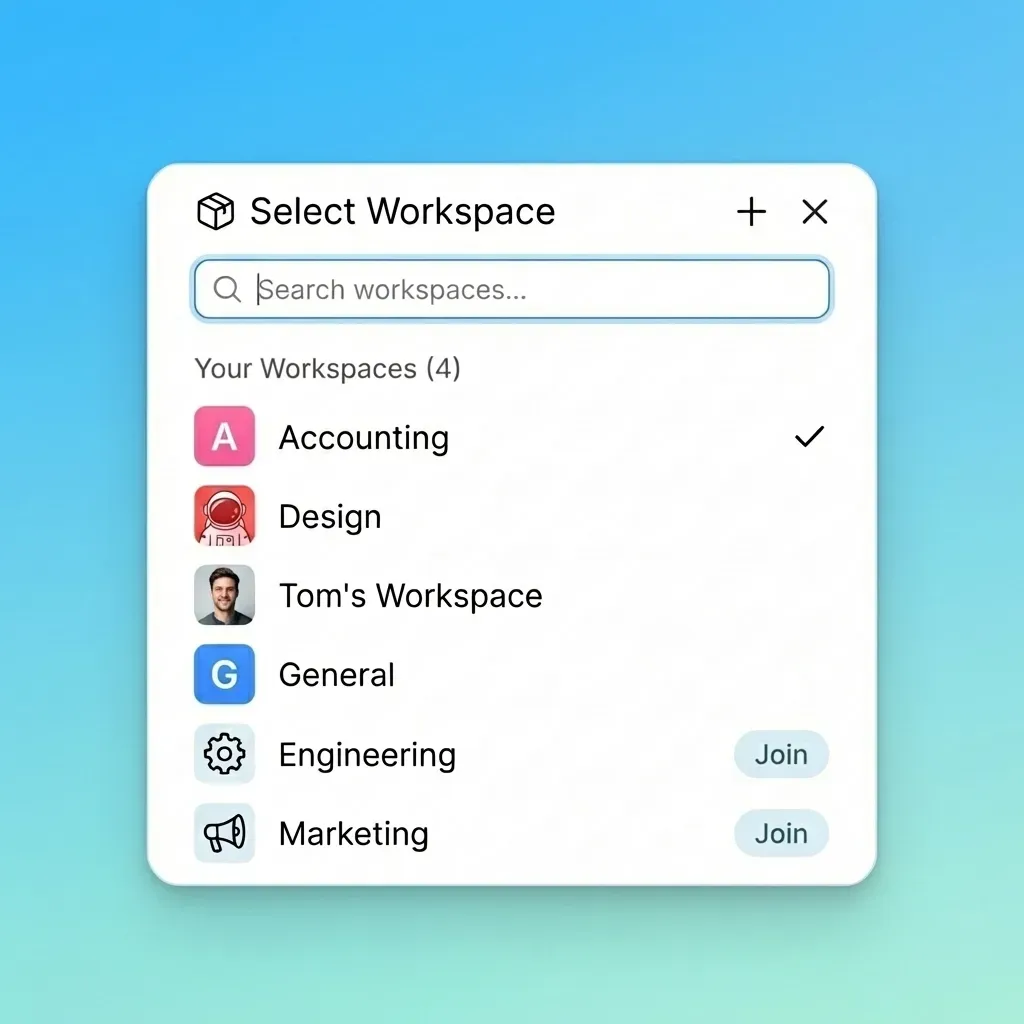
Digital asset management software is a centralized system for storing, organizing, searching, and distributing digital files. Unlike basic cloud storage that just holds files, DAM adds layers that turn files into findable, trackable assets: metadata tagging, version control, usage rights tracking, and distribution workflows.
The core difference between DAM and file storage: DAM treats files as business assets with value beyond the bits. A logo isn't just a PNG sitting in a folder. It's an asset with usage rights, approved versions, expiration dates, and a history of who used it where.
A practical definition: DAM software is the system of record for your organization's digital files. It answers three questions that basic storage can't:
- Where is the current, approved version of this asset?
- Who has the right to use it, and for what?
- How is it being used across the organization?
The DAM market has grown steadily as organizations realize that file chaos has real costs. Teams waste hours each week searching for assets. Content gets recreated because no one can find the existing version. Brand consistency suffers when teams use outdated logos or unapproved images.
DAM software solves these problems by making assets findable, trackable, and controllable at scale.
What Counts as a Digital Asset?
A digital asset is any digital file that has value to your organization. That's broad, but the definition matters because it determines what belongs in your DAM.
Common digital assets include:
- Brand assets: Logos, color palettes, brand guidelines, templates
- Marketing materials: Campaign images, social media graphics, advertisements
- Product images: Photography, renders, lifestyle shots
- Video content: Commercials, training videos, social clips, raw footage
- Documents: Presentations, PDFs, white papers, case studies
- Audio: Podcasts, music, sound effects, voiceovers
- Creative files: PSD, AI, INDD, Sketch, Figma exports
The key distinction is value and reuse. A one-off internal memo probably doesn't need DAM tracking. A logo that appears on every piece of collateral does.
Some organizations use DAM for everything. Others limit it to approved, final assets. The right scope depends on your workflow. If your team struggles to find final versions because they're mixed with drafts, a more inclusive approach helps. If storage costs matter, a curated library of finals makes sense.
DAM vs Cloud Storage: Why You Can't Just Use Google Drive
Teams often try to manage assets with Google Drive, Dropbox, or SharePoint. It works until it doesn't.
Where Basic Storage Falls Short
Search limitations: Cloud storage searches filenames. DAM searches metadata, tags, and increasingly, content itself. "Find me the outdoor lifestyle photo from the Q3 campaign" works in DAM. In Drive, you're scanning thumbnails hoping to recognize it.
No version control built for assets: Cloud storage tracks document versions. DAM tracks asset versions with context: who approved it, when it expires, which variants exist for different use cases.
Previews require downloads: Try opening a PSD in Google Drive. You'll download it first. DAM platforms render professional formats in the browser.
No rights management: Storage doesn't know if an image license expired. DAM can flag assets past their usage window.
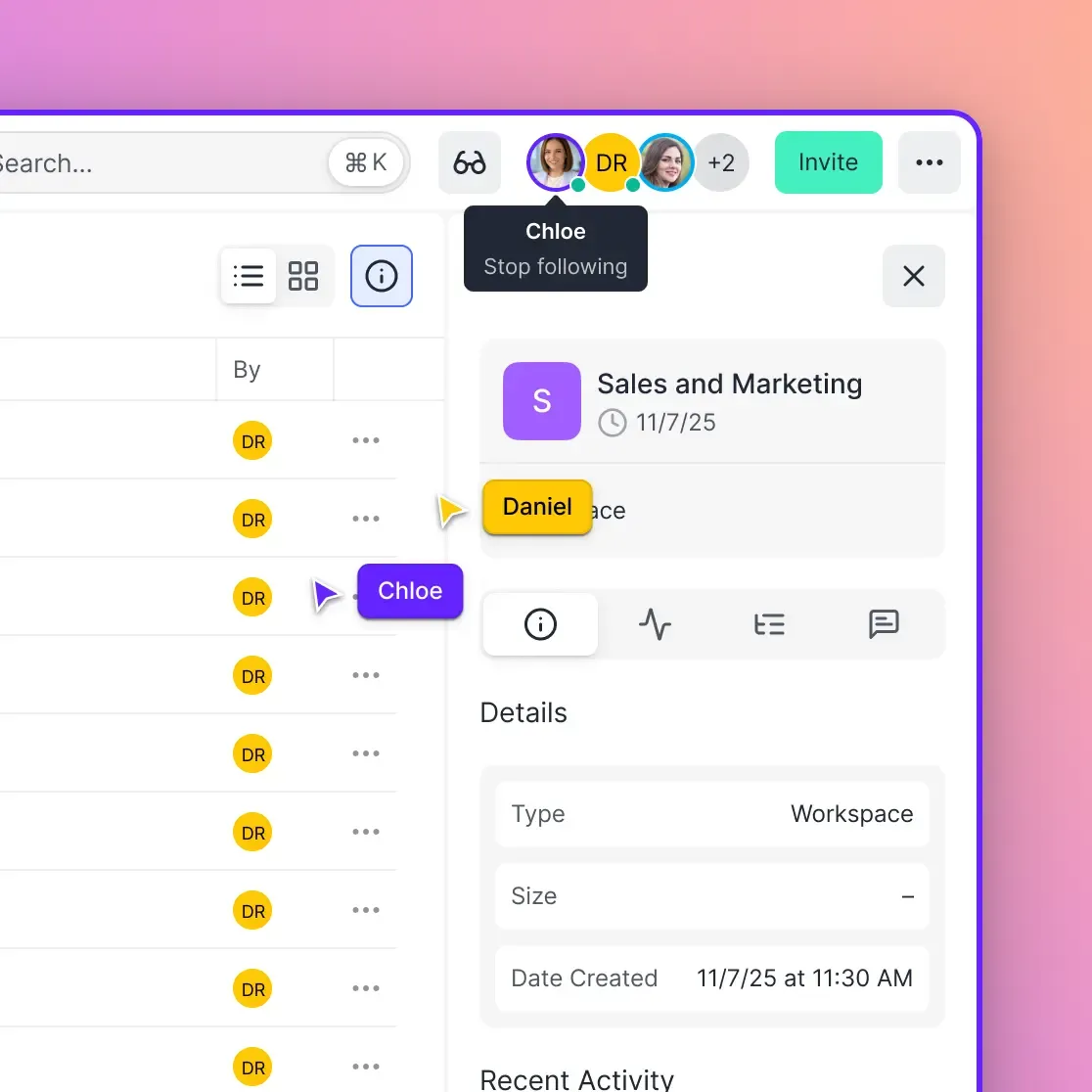
Ownership chaos: In cloud storage, files often belong to whoever uploaded them. When that person leaves, you're chasing access. DAM uses organization-owned files that persist regardless of employee turnover.
When Cloud Storage Actually Works
For small teams with fewer than 5,000 assets, familiar tools, and low collaboration needs, cloud storage works fine. The overhead of DAM isn't worth it until search becomes painful and brand consistency starts slipping.
Most organizations hit that wall around 10,000 assets or when they start sharing assets externally at scale.
Who Actually Needs DAM Software?
Not every organization needs dedicated DAM. Here's how to tell if you do.
Signs You've Outgrown Basic Storage
- Teams spend 30+ minutes per week searching for files
- "Final" versions exist in multiple places with inconsistent naming
- Brand assets get used without approval or past expiration
- External sharing requires manual steps that introduce errors
- Employees leave and take file access with them
- You've recreated assets because no one could find the original
Who Uses DAM Most
Marketing teams: Campaign assets, brand materials, social media content. Marketing manages the most externally-visible assets and cares most about consistency.
Creative agencies: Client assets, project files, deliverables. Agencies juggle multiple clients and need clear separation.
Video production: Raw footage, cuts, finals. Video asset management has specific requirements around streaming, transcoding, and frame-accurate review.
Product teams: Photography, renders, packaging designs. Product needs accurate, current images across sales materials and e-commerce.
Enterprises: Any organization with distributed teams creating or using branded content. The larger the organization, the harder consistency becomes without central control.
Who Can Skip DAM
Small teams under 10 people with simple needs and tight budgets can often manage with disciplined folder structures and naming conventions. The key word is disciplined. Without enforcement, even small teams drift into chaos.
Core Features Every DAM Should Have
Feature lists get overwhelming fast. Focus on these core capabilities first, then consider nice-to-haves.
Metadata and Tagging
The foundation of findability. Every asset needs structured data attached:
- Descriptive metadata: What's in the image? Who's in the video? What campaign is this for?
- Administrative metadata: Who created it? When? What's the usage license?
- Technical metadata: Resolution, file format, color space
Look for flexible tagging: controlled vocabularies you define, not just free-form tags that become inconsistent.
Search That Actually Works
Good search handles:
- Keywords and metadata matches
- Filters by date, file type, status, owner
- Visual similarity (find images that look like this one)
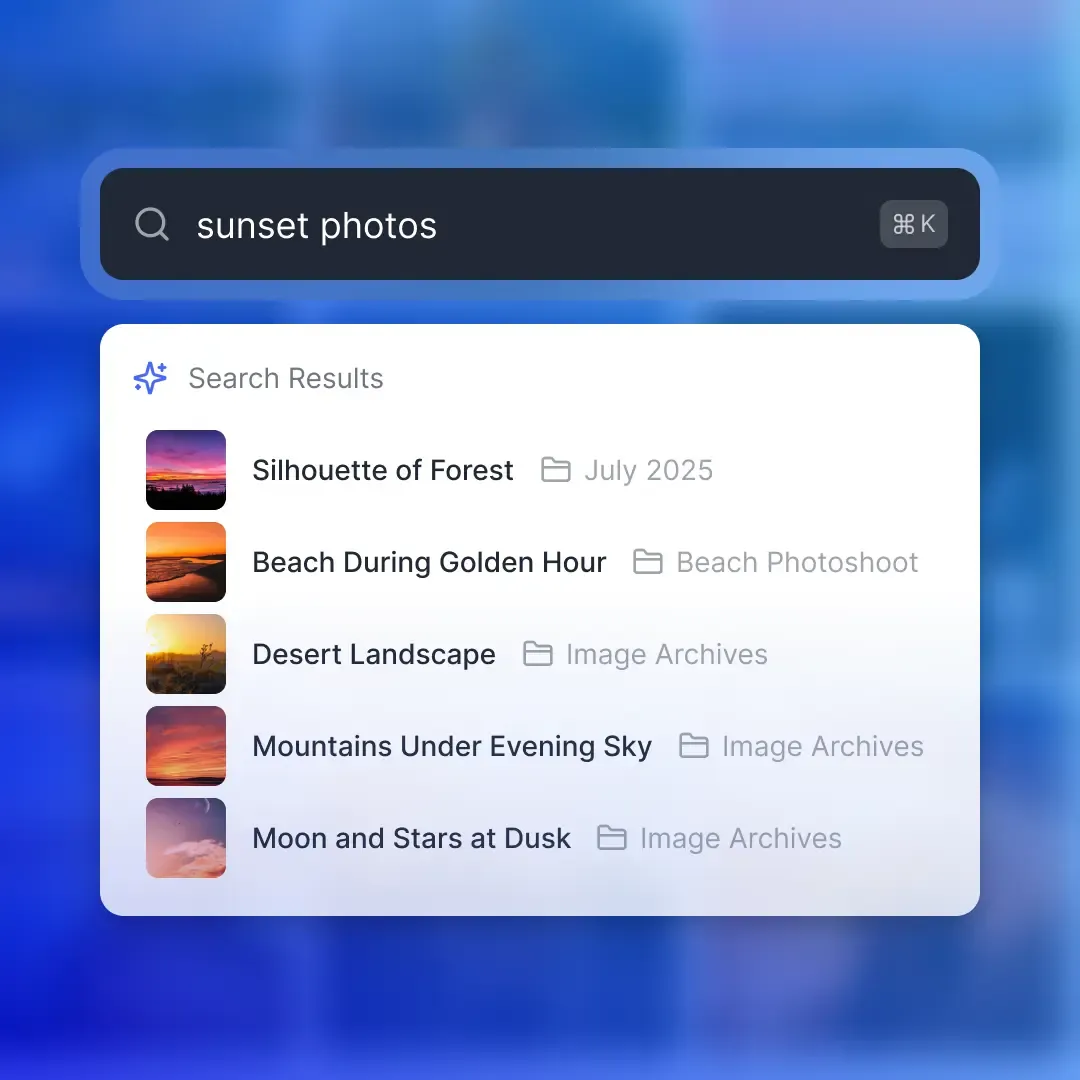
- Natural language queries like "red product shot on white background"
AI-powered search is now standard in serious DAM platforms. It auto-tags content and enables semantic search that understands what you mean, not just the keywords you typed.
Version Control
Track asset history without filename chaos. Good version control:
- Maintains history when files are replaced
- Shows who changed what and when
- Allows rollback to previous versions
- Keeps approved versions clearly marked
Access Control
Different people need different access. Look for:
- Role-based permissions (viewer, editor, admin)
- Workspace or folder-level controls
- External sharing with time limits and passwords
- Audit logs tracking who accessed what
Previews Without Downloads
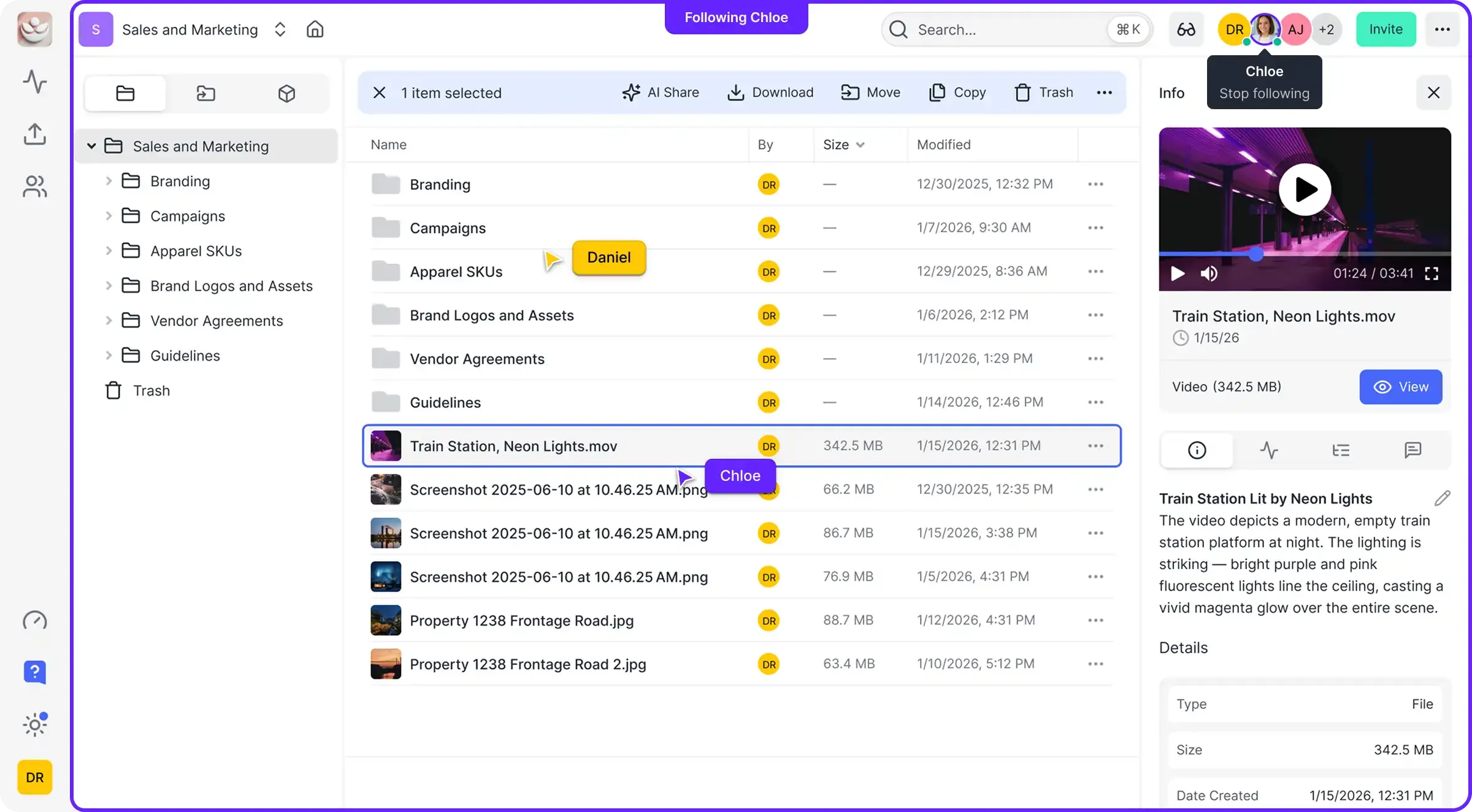
Stakeholders shouldn't need Photoshop to see a PSD. Browser-based previews for creative formats save time and remove friction from review workflows.
Integrations
DAM doesn't live in isolation. Check connections to:
- Creative tools (Adobe, Figma, Canva)
- Content management systems
- Project management platforms
- Marketing automation tools
Advanced Features Worth Considering
Beyond the basics, these features matter for specific use cases.
AI and Automation
Modern DAM uses AI for:
- Auto-tagging: Identify objects, people, scenes, text in images
- Transcription: Convert video and audio to searchable text
- Smart summaries: Generate descriptions from content
- Duplicate detection: Flag redundant uploads
Fast.io's semantic search understands natural language. Ask "show me the contract with Acme from Q3" and it finds matching files by understanding the request, not just keyword matching.
Brand Portals
Self-service access points where teams grab approved assets without bothering the creative team. Good portals include:
- Curated collections by use case
- Clear usage guidelines per asset
- Automatic format conversion (download the logo as PNG, SVG, or EPS)
- Request workflows for custom needs
Rights Management
Track usage rights at the asset level:
- License expiration dates with alerts
- Geographic or channel restrictions
- Model release tracking
- Cost center attribution
Essential for organizations using licensed stock or managing celebrity/model rights.
Analytics and Reporting
Understand how assets perform:
- Download and usage tracking
- Search analytics (what are people looking for?)
- Popular assets and underutilized content
- External sharing engagement
Data Rooms
Secure spaces for sensitive sharing. Useful for:
- M&A due diligence
- Client pitches with confidential materials
- Investment presentations
- Legal document exchange
Fast.io's data rooms add deal intelligence: see who viewed what, how long they spent, and which sections got attention.
How DAM Pricing Works
DAM pricing models vary widely. Understanding the structure helps you budget accurately.
Per-Seat Pricing
Most traditional DAM charges per user. Bynder, Canto, Brandfolder, and most enterprise platforms work this way. Costs range from $15-50 per user per month at the low end to custom quotes exceeding $500/user/month for enterprise features.
Per-seat pricing punishes collaboration. When the cost of adding a user matters, teams limit access. Stakeholders who occasionally need an asset get locked out. Freelancers and agency partners require expensive guest seats.
Storage-Based Pricing
Some platforms charge primarily by storage volume. This works better for organizations with many casual users but significant storage needs.
Usage-Based Pricing
Fast.io uses credits instead of per-seat fees. You pay for what you actually use, not for potential users. Pro plans include 25 seats, Business includes 100, and extra seats cost just $1/month.
This model works well for organizations with many stakeholders who need occasional access.
Enterprise Custom Pricing
Adobe Experience Manager, Aprimo, and other enterprise platforms quote per engagement. Expect $50,000-200,000 annually depending on users, storage, and features.
What to Watch For
- Seat minimums: Some platforms require 10+ seats minimum
- Storage overages: Penalties for exceeding allocated storage
- Feature tiers: Basic plans may lack essential capabilities
- Implementation fees: Enterprise platforms often charge for setup
- API access: Sometimes charged separately
Evaluating DAM for Your Team
Skip the 100-feature comparison spreadsheet. Answer these questions instead.
What's Your Asset Mix?
Image-heavy organizations need strong visual search and format support. Video-heavy teams need streaming, transcoding, and frame-accurate review. Document-focused workflows need PDF annotation and text search.
Fast.io handles all media types with a Universal Media Engine that previews professional formats in the browser: PSD, AI, INDD, RAW, ProRes, and more.
How Many People Need Access?
Count not just your core team but everyone who occasionally needs an asset. Include:
- Internal stakeholders who review or approve
- External agencies and freelancers
- Sales teams using assets in presentations
- Partners who need co-branded materials
If that number exceeds 50 people, per-seat pricing gets expensive fast.
What's Your Search Reality?
How do people currently find files? By filename? By asking someone? By digging through folders? The worse your current search, the more value DAM delivers.
How Do You Share Externally?
If external sharing is occasional and simple, basic link sharing works. If you're sending files to clients, agencies, or partners regularly, look for branded portals, access controls, and download tracking.
What's Your Technical Capacity?
Some platforms need dedicated administrators. Others require developer resources for integration. Cloud-native solutions like Fast.io run without infrastructure overhead.
What Does Success Look Like?
Define it before you start evaluating. Reduced search time? Fewer brand violations? Faster review cycles? Better external sharing analytics? Clear goals help you weigh tradeoffs.
Is Dropbox a DAM?
This question comes up constantly. The answer: Dropbox is cloud storage with some DAM-adjacent features, not a dedicated DAM.
What Dropbox Does Well
- File sync across devices
- Basic sharing and collaboration
- Familiar interface
- Integrations with common tools
Where Dropbox Falls Short for Asset Management
Metadata: Limited to filename and basic file properties. No custom fields, tags, or controlled vocabularies.
Search: Searches filenames and some document text. No visual search, no AI tagging, no semantic understanding.
Previews: Limited format support. Professional creative files require downloads.
Version control: Exists but isn't built for asset workflows. No approval states or variant tracking.
Video streaming: Progressive download only. Large videos require complete download before playback.
Rights management: None. No license tracking, expiration alerts, or usage restrictions.
Organization: User-owned files create ownership chaos. When employees leave, access becomes complicated.
The Gap
Dropbox works as file storage. It doesn't treat files as assets with business value. For teams that just need to share files, it's fine. For teams that need to find, manage, and distribute assets at scale, it's not enough.
Fast.io addresses these gaps with organization-owned files, HLS video streaming, semantic search, and usage-based pricing that doesn't charge per seat.
DAM Implementation: What to Expect
Buying DAM is step one. Making it work is the real challenge.
Migration Planning
Moving existing assets into a new DAM takes work. Plan for:
- Audit existing assets: What's worth migrating? What should be archived?
- Metadata mapping: What information exists? What needs to be added?
- Folder structure decisions: How will the new system organize content?
- Permission setup: Who gets access to what?
Don't migrate everything. Use the transition to clean house.
User Adoption
The best DAM fails if nobody uses it. Focus on:
- Training: Show users how it saves them time
- Quick wins: Solve their biggest pain point first
- Champions: Identify users who'll promote adoption
- Feedback loops: Listen and adjust based on actual usage
Governance
Without rules, DAM becomes another messy file dump. Establish:
- Upload standards: Required metadata, naming conventions, quality thresholds
- Approval workflows: Who reviews before assets go live?
- Archive policies: When do assets get retired?
- Access reviews: Regular audits of who has access to what
Timeline
Small team implementations can happen in days. Enterprise rollouts take months. Plan for:
- Proof of concept: 1-2 weeks
- Pilot with core team: 2-4 weeks
- Broader rollout: 4-12 weeks
- Full adoption: 3-6 months
Don't rush. Bad implementations create resistance that's hard to overcome.
DAM for Mid-Market Teams
Enterprise DAM platforms assume big budgets and dedicated admin teams. Small-team solutions often lack the features growing organizations need. Mid-market teams get squeezed.
The Mid-Market Gap
Organizations with 25-200 users face a challenge:
- Enterprise platforms (AEM, Aprimo) cost too much and require too much overhead
- Small-team tools (Canto, Air) lack advanced features or scale poorly
- Per-seat pricing punishes organizations that need broad access
What Mid-Market Teams Actually Need
- Professional features: Advanced search, format support, access controls
- Predictable pricing: Costs that don't explode as the team grows
- Minimal overhead: No dedicated admin required
- External sharing: Client and partner access without seat costs
Why Usage-Based Pricing Fits
Fast.io's model addresses the mid-market squeeze. Include 25-100 seats depending on plan, add more for $1/month each, pay for actual usage instead of potential users.
You get enterprise features without enterprise pricing: HLS streaming, semantic search, data rooms, and branded portals.
For a team of 50 people sharing 5TB of assets, Fast.io runs around $60/month. The same configuration on per-seat platforms costs $750-2,500/month.
Common DAM Mistakes to Avoid
Organizations make predictable errors when implementing DAM. Avoid these.
Overcomplicating Metadata
More fields isn't better. Create 5-10 required fields that actually get filled in, not 50 optional fields that stay empty. Add complexity later based on real needs.
Ignoring Governance
Without upload standards and naming conventions, DAM becomes another chaotic file dump. Document the rules. Enforce them. Review regularly.
Buying for Features, Not Problems
The platform with the longest feature list isn't automatically best. Identify your specific pain points, then find solutions that address them. Unused features are wasted budget.
Underestimating Migration
Moving existing assets takes more time than expected. Metadata needs cleaning. Duplicate files need deduplication. Permissions need mapping. Plan for it.
Limiting Access to Save Money
Per-seat pricing encourages restricting access. Restricted access encourages workarounds. Workarounds create the chaos DAM was supposed to fix. Consider usage-based pricing that doesn't penalize broad access.
Expecting Instant Adoption
People resist change. Plan for gradual adoption, training, and iteration. The first month won't be perfect.
Forgetting Mobile
Assets get used everywhere. If your DAM doesn't work on mobile, users will work around it.
Frequently Asked Questions
What is digital asset management software?
Digital asset management (DAM) software is a centralized system for storing, organizing, searching, and distributing digital files. Unlike basic cloud storage, DAM adds metadata tagging, version control, access permissions, and distribution workflows. It treats files as business assets with trackable history and usage rights.
What is an example of a digital asset?
Digital assets include any digital file with organizational value: logos, brand guidelines, marketing images, product photography, videos, presentations, PDFs, audio files, and creative source files (PSD, AI, INDD). The key characteristic is reuse value. A file that gets used once isn't an asset. A logo used across all materials is.
Is Dropbox a DAM?
Dropbox is cloud storage with some DAM-adjacent features, not a dedicated DAM. It lacks metadata tagging, visual search, professional format previews, rights management, and video streaming that true DAM provides. Dropbox works for file storage and sharing. It doesn't work for managing assets at scale.
How much does DAM software cost?
DAM pricing varies by model. Per-seat pricing ranges from $15-50/user/month for small teams to $500+/user/month for enterprise. Storage-based pricing depends on volume. Usage-based platforms like Fast.io charge for actual usage, typically saving 70% compared to per-seat alternatives. Enterprise platforms (AEM, Aprimo) cost $50,000-200,000 annually.
What's the difference between DAM and cloud storage?
Cloud storage (Google Drive, Dropbox) holds files. DAM manages assets. The difference: DAM adds metadata and tagging for findability, version control with approval workflows, access permissions at multiple levels, professional format previews, rights and license tracking, and analytics on asset usage. DAM treats files as business resources, not just data.
Who needs DAM software?
Organizations typically need DAM when they manage over 10,000 digital files, spend significant time searching for assets, share assets externally with clients or partners, need to control brand consistency across teams, or have employees leave and take file access with them. Marketing teams, creative agencies, and video production companies are common users.
What features should I look for in DAM?
Core features include metadata tagging and search, version control, access permissions, browser-based previews for creative formats, and external sharing controls. Advanced features include AI-powered search and tagging, brand portals, rights management, and analytics. Prioritize features that solve your specific pain points.

Ready to try DAM that doesn't charge per seat?
Fast.io offers enterprise DAM features with usage-based pricing. No per-seat fees, unlimited guest access, and streaming preview for all your media formats.