WeTransfer vs Dropbox: Which One Do You Actually Need?
WeTransfer and Dropbox both move files, but they solve different problems. WeTransfer sends files that expire in 7 days. Dropbox stores files permanently in the cloud. This guide breaks down when each makes sense, their real costs, and what to consider if you need both capabilities.

The Fundamental Difference
WeTransfer is a file transfer service. Dropbox is cloud storage. This distinction matters more than any feature comparison.
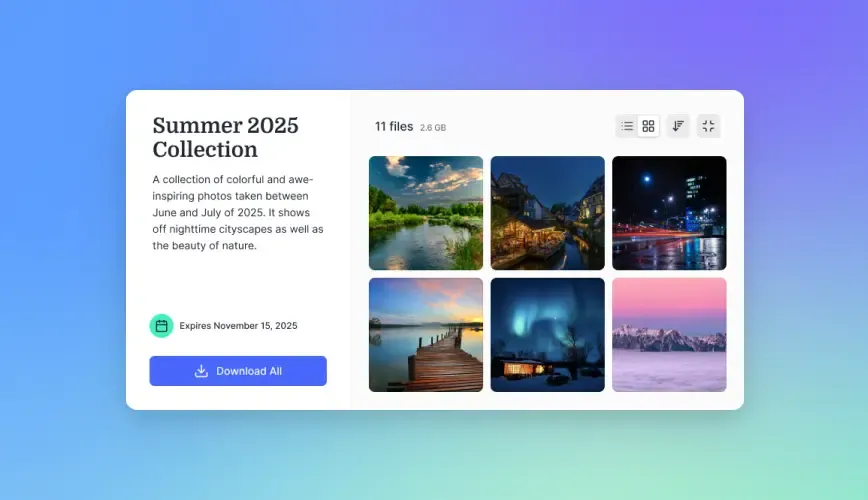
WeTransfer works like sending a package. You upload files, share a link, and recipients download within 7 days (free) or 30 days (paid). Then the files disappear. No account required for senders or recipients.
Dropbox works like renting a storage unit. Files live in the cloud indefinitely. You can organize them, share them repeatedly, and collaborate on documents. Everyone needs an account for full access.
Most "WeTransfer vs Dropbox" comparisons treat them as alternatives. They're not. Choosing between them depends entirely on whether you need to send files or store files.
Head-to-Head Comparison
WeTransfer vs Dropbox: Quick Facts
| Feature | WeTransfer | Dropbox |
|---|---|---|
| Primary purpose | One-time transfers | Cloud storage |
| Free tier | 2GB per transfer | 2GB total storage |
| File persistence | 7 days (free), 30 days (paid) | Permanent until deleted |
| Recipient account required | No | No (view only), Yes (edit) |
| Collaboration | None | Real-time editing, comments |
| Paid pricing | $13-23/month | $12-18/month |
| Max file size (free) | 2GB total | 2GB per file |
| Ads on free tier | Yes (prominent) | No |
This table captures the core tradeoffs. WeTransfer prioritizes simplicity for senders. Dropbox prioritizes ongoing access and collaboration.
When WeTransfer Makes Sense
WeTransfer fits specific scenarios well:
One-off deliveries to external contacts. You're sending a video file to a client who doesn't need ongoing access. Upload, share the link, done. No folders to organize, no permissions to manage.
Large files to non-technical recipients. Your aunt needs photos from the wedding. She doesn't have Dropbox, Google Drive, or any cloud storage account. WeTransfer's download page is simple enough that anyone can use it.
Quick transfers when you don't care about tracking. You just need to move files from A to B. You don't need to know if they were downloaded, when, or by whom.
WeTransfer's limitations become problems when:
- Files need to persist longer than 30 days
- You need to send updated versions to the same recipient
- Multiple people need access at different times
- You need audit trails or download confirmations
When Dropbox Makes Sense
Dropbox fits ongoing storage and collaboration needs:
Working with the same files repeatedly. Project assets, brand guidelines, reference documents. Anything you'll access more than once belongs in storage, not transfer.
Team collaboration on documents. Multiple people editing the same file, leaving comments, tracking versions. Dropbox integrates with Office 365 and Google Docs for real-time co-editing.
Backup and sync across devices. Your laptop, phone, and desktop all access the same files. Changes sync automatically.
Clients who need ongoing access. Share a folder with a client for the duration of a project. Add and remove files without sending new links each time.
Dropbox struggles when:
- You need to send files to people outside your organization who don't want accounts
- Per-user pricing becomes expensive with many collaborators
- Large media files need streaming, not just download
Pricing Reality Check
Both services advertise low starting prices. The real costs depend on how you use them.
WeTransfer Pricing
- Free: 2GB per transfer, files expire in 7 days, ads on download pages
- Pro ($13/month): 200GB transfers, 1TB storage, 30-day expiration, password protection
- Premium ($23/month): Unlimited transfers and storage
The free tier works for occasional personal use. Professionals typically need Pro to avoid embarrassing ads on client-facing download pages.
Dropbox Pricing
- Basic (free): 2GB total storage
- Plus ($11.99/month): 2TB storage, single user
- Essentials ($18/month): 3TB storage, advanced sharing
- Business ($18-24/user/month): Team features, admin controls
The 2GB free tier fills up fast. Any serious use requires a paid plan. For teams, the per-user pricing adds up. A 25-person team on Business Standard pays $450/month.
The Hidden Cost: Neither Solves Everything
Many teams end up paying for both. WeTransfer for external deliveries. Dropbox for internal storage. That's $25-40/month for capabilities that should live in one platform.
Security Comparison
Security matters more for some use cases than others. Here's what each platform actually offers.
WeTransfer Security
- TLS encryption for files in transit
- AES 256-bit encryption for files on their servers
- Two-factor authentication (registered accounts only)
- Password protection (Pro plan and above)
- No end-to-end encryption
- Third-party advertising on free tier (they track user behavior)
WeTransfer is secure enough for non-sensitive files. The advertising model on the free tier means your usage data gets shared with ad networks. For sensitive documents, the lack of detailed audit trails is a limitation.
Dropbox Security
- TLS encryption in transit
- AES 256-bit encryption for stored files
- Two-factor authentication
- Password-protected links
- Link expiration dates
- Download notifications
- No third-party advertising
Dropbox offers better security controls, especially for business plans with admin dashboards and audit logs. Neither platform has compliance certifications like SOC 2 or HIPAA, so highly regulated industries need specialized solutions.
What Actually Matters
For most use cases, both platforms provide adequate security. The bigger question is whether temporary links (WeTransfer) or persistent access (Dropbox) better fits your security model.
What If You Need Both Transfer and Storage?
This is where most comparisons fall short. They assume you need either WeTransfer or Dropbox. Many workflows need elements of both:
- Persistent storage so files don't expire
- Easy external sharing without requiring recipient accounts
- Collaboration features for team workflows
- Large file support without per-user pricing penalties
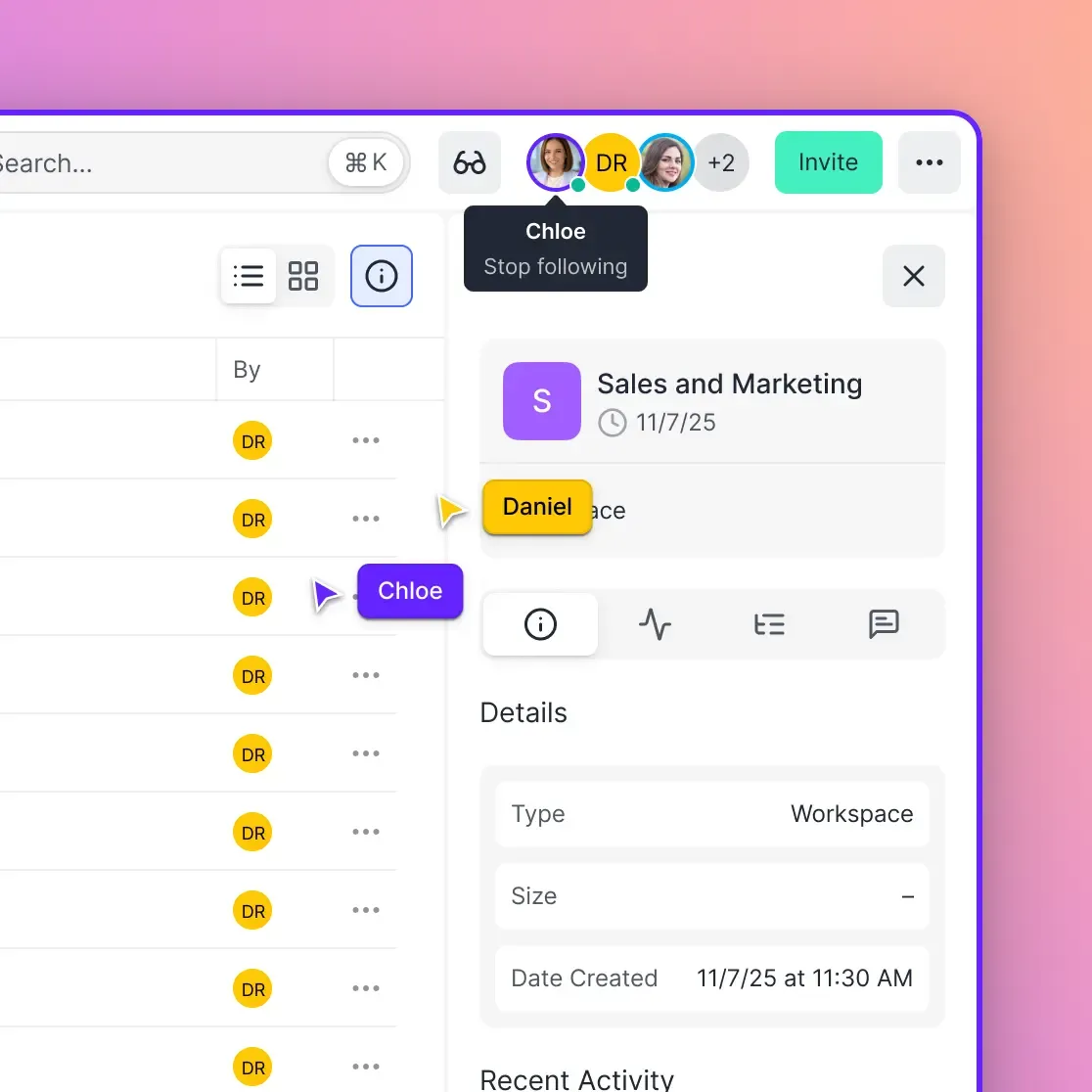
This is where cloud-native platforms like Fast.io fill the gap. Unlike sync-based storage (Dropbox) or temporary transfers (WeTransfer), Fast.io provides:
- Files that persist indefinitely in organized workspaces
- Share links with password protection and expiration when you want it
- No seat-based pricing. Invite unlimited external collaborators without per-user costs
- HLS streaming for video files instead of forcing downloads
- Organization-owned files that stay when employees leave
The pricing model matters here. A 25-person team pays roughly $60/month on Fast.io versus $450/month on Dropbox Business. External collaborators don't count against your seat limit.
For teams stuck paying for both WeTransfer and Dropbox, consolidating to a platform built for both internal collaboration and external delivery often makes more sense.
Making the Right Choice
Skip the feature-by-feature analysis. Answer these questions instead:
Do files need to exist longer than 30 days? Yes → You need storage (Dropbox or alternative), not transfer (WeTransfer)
Will multiple people work on the same files? Yes → You need collaboration features. WeTransfer doesn't have them.
Are you sending one-time deliveries to people outside your organization? Yes → WeTransfer's simplicity is an advantage. No accounts, no friction.
Is per-user pricing a problem for your team size? Yes → Look at usage-based alternatives. Dropbox's $18/user/month multiplies fast.
Do you need both internal storage AND external delivery? Yes → Consider platforms that handle both instead of paying for two services.
The "WeTransfer vs Dropbox" framing assumes one must replace the other. For many teams, the real answer is neither, or both, or something designed for how modern teams actually share files.
Frequently Asked Questions
Is WeTransfer or Dropbox better for large files?
WeTransfer handles large one-time transfers better. The free tier allows 2GB per transfer with no storage commitment. Dropbox's free tier is 2GB total storage, which fills up fast. For ongoing large file work, Dropbox's paid plans offer more capacity (2-3TB), but per-user pricing makes it expensive for teams. If you regularly work with large media files, consider platforms with streaming capabilities so recipients don't have to download entire files.
What is the difference between WeTransfer and Dropbox?
WeTransfer is a file transfer service where files expire after 7-30 days. You upload, share a link, recipients download, files disappear. Dropbox is cloud storage where files persist indefinitely. You can organize folders, collaborate on documents, and sync across devices. WeTransfer is simpler for one-off sends. Dropbox is better for ongoing access and teamwork.
Is WeTransfer safer than Dropbox?
Both use standard encryption (TLS for transfers, AES 256-bit for stored files). Dropbox offers more security controls: admin dashboards, detailed audit logs, and enterprise features. WeTransfer's free tier includes third-party advertising, meaning your usage data is shared with ad networks. For sensitive business files, Dropbox's paid plans provide better oversight. Neither has SOC 2 or HIPAA certification, so highly regulated industries need specialized solutions.
Can I use WeTransfer and Dropbox together?
Yes, many teams do. They use Dropbox for internal storage and collaboration, then WeTransfer for sending large files to external contacts who don't want Dropbox accounts. This works but means paying for two services. Cloud-native platforms like Fast.io combine persistent storage with easy external sharing, eliminating the need for both.
Why do WeTransfer files expire?
WeTransfer's business model is built around temporary transfers, not permanent storage. Expiring files (7 days free, 30 days paid) reduce their storage costs and keep the service simple. If you need files to persist, you need storage (Dropbox, Fast.io, Google Drive) rather than transfer (WeTransfer).
Related Resources

Need both transfer and storage?
Fast.io combines the simplicity of WeTransfer with the persistence of Dropbox. Share large files without expiration dates or per-user fees.