How to Build an AI Agent IoT Workspace
AI agent IoT workspaces provide persistent storage for device fleets and simulations. Agents manage sensor data, logs, and configurations in shared spaces with humans. Forecasts predict 75 billion IoT devices worldwide by 2025, so solid workspaces handle the data growth. This guide covers setup, tools, and Fastio features like MCP tools and built-in RAG.

What Is an AI Agent IoT Workspace?
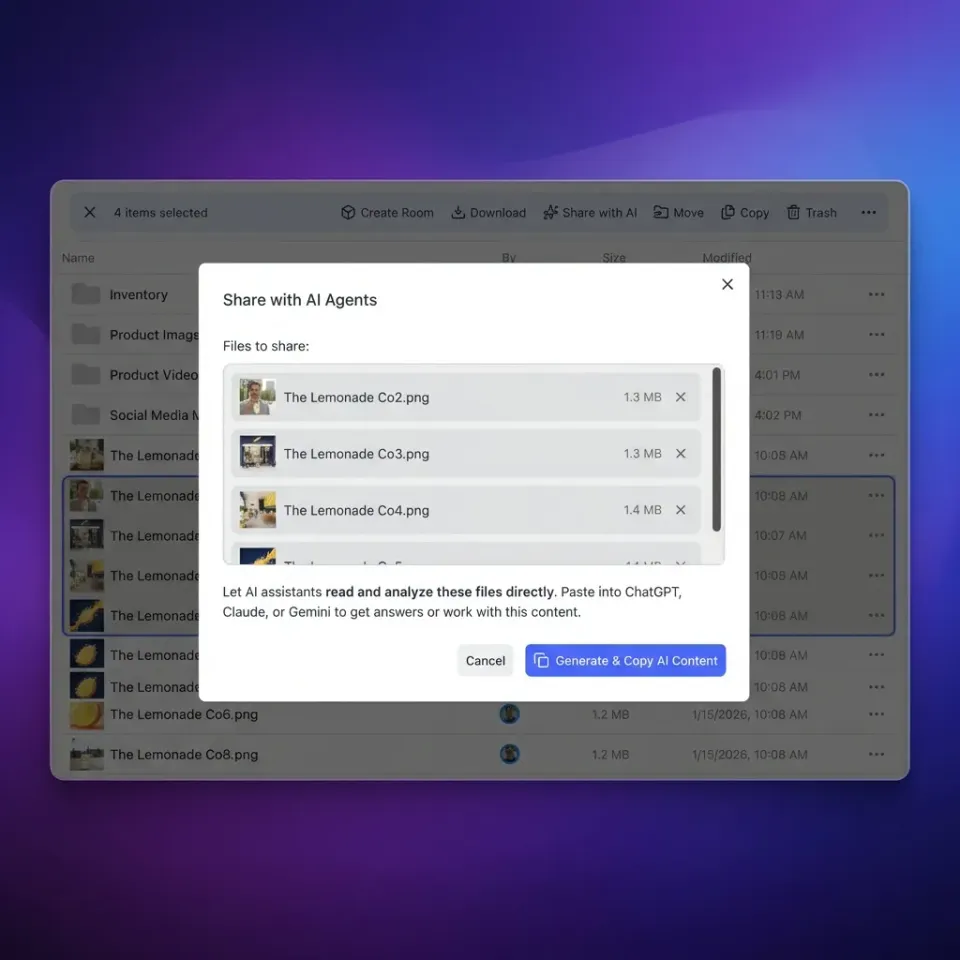
An AI agent IoT workspace is a shared environment where AI agents store and process data from IoT devices. Agents access device logs, sensor readings, and firmware updates through APIs or protocols like MCP. Unlike temporary storage, these workspaces keep data across sessions and support collaboration with human teams.
Fastio workspaces work well here. Agents use a consolidated MCP toolset to upload device telemetry, query indexed data, and manage files once Intelligence is enabled for the workspace. Intelligence auto-indexes files for semantic search, so an agent can find "temperature spikes from factory sensors last week" without exact filenames.
Workspaces handle fleet management tasks. Agents simulate device behavior using stored data or analyze historical trends. Humans review agent outputs in the same space.
Helpful references: Fastio Workspaces, Fastio Collaboration, and Fastio AI.
Related guides
- How to Build a Multi-Agent RAG System with Shared Workspace StorageMulti-agent architectures address the limitations of single-agent RAG systems by distributing tasks among specialized...
- How to Build an Agentic Workspace with the Fastio APIAn agentic workspace built with the Fastio API provides persistent memory, file sharing, and tools for autonomous...
- 8 Top AI Agent Workspace Platforms for 2026AI agent workspace platforms provide structured environments where autonomous agents can store files, execute code, and...
- How to Set Up an AI Agent Shared WorkspaceA shared workspace gives multiple AI agents a single place to read, write, and organize files without stepping on each...
- Dust AI Workspace: Features, Pricing, and AlternativesDust is an AI workspace that lets teams build custom assistants connected to company knowledge and tools. This guide...
- How to Set Up an Agentic Team WorkspaceAgentic team workspaces enable human-agent hybrid collaboration with shared intelligence and persistent storage. While...
More on this subject: Agent Memory and Storage (263 guides)
Why IoT Device Management Needs AI Agent Workspaces
IoT fleets generate massive data. According to Statista, connected IoT things worldwide are forecast to reach 75 billion by 2025.
Manual management fails at scale. Agents automate monitoring, anomaly detection, and updates. Workspaces provide persistence so agents resume interrupted tasks.
Collaboration matters. Agents build device configs; humans approve changes. Fastio supports ownership transfer: agents create workspaces, then hand off to teams while retaining admin access.
Data queries speed decisions. Built-in RAG lets agents ask "Which devices failed last month?" with citations from logs.
Key Challenges Without Workspaces
Ephemeral storage loses context between runs. Agents restart analysis each time.
Siloed data hinders multi-agent systems. One agent processes sensors; another handles alerts without shared state.
Humans rebuild agent work. No persistent shares mean manual re-uploads.
Top Tools for AI Agent IoT Workspaces
Several platforms support AI agent IoT management. Here's a comparison:
Fastio offers a remote MCP server at https://mcp.fast.io/mcp/tools to connect agent frameworks directly.


Start Your AI Agent IoT Workspace
Terabyte-scale workspace storage, a monthly credit allowance for AI work, and a consolidated MCP toolset. Start with a 14-day trial.
How to Build an AI Agent IoT Workspace
Follow these steps to set up.
Sign up for a Fastio account. Agents and developers can start with a 14-day Business Trial (credit card required).
Create workspace. Use the MCP tool or REST API to provision an isolated workspace. Enable Intelligence on the workspace for auto-indexing.
Import device data. Use URL import for cloud-stored logs or chunked uploads for large files.
Add agent collaborators. Grant scoped API keys with granular permissions at the workspace or folder level.
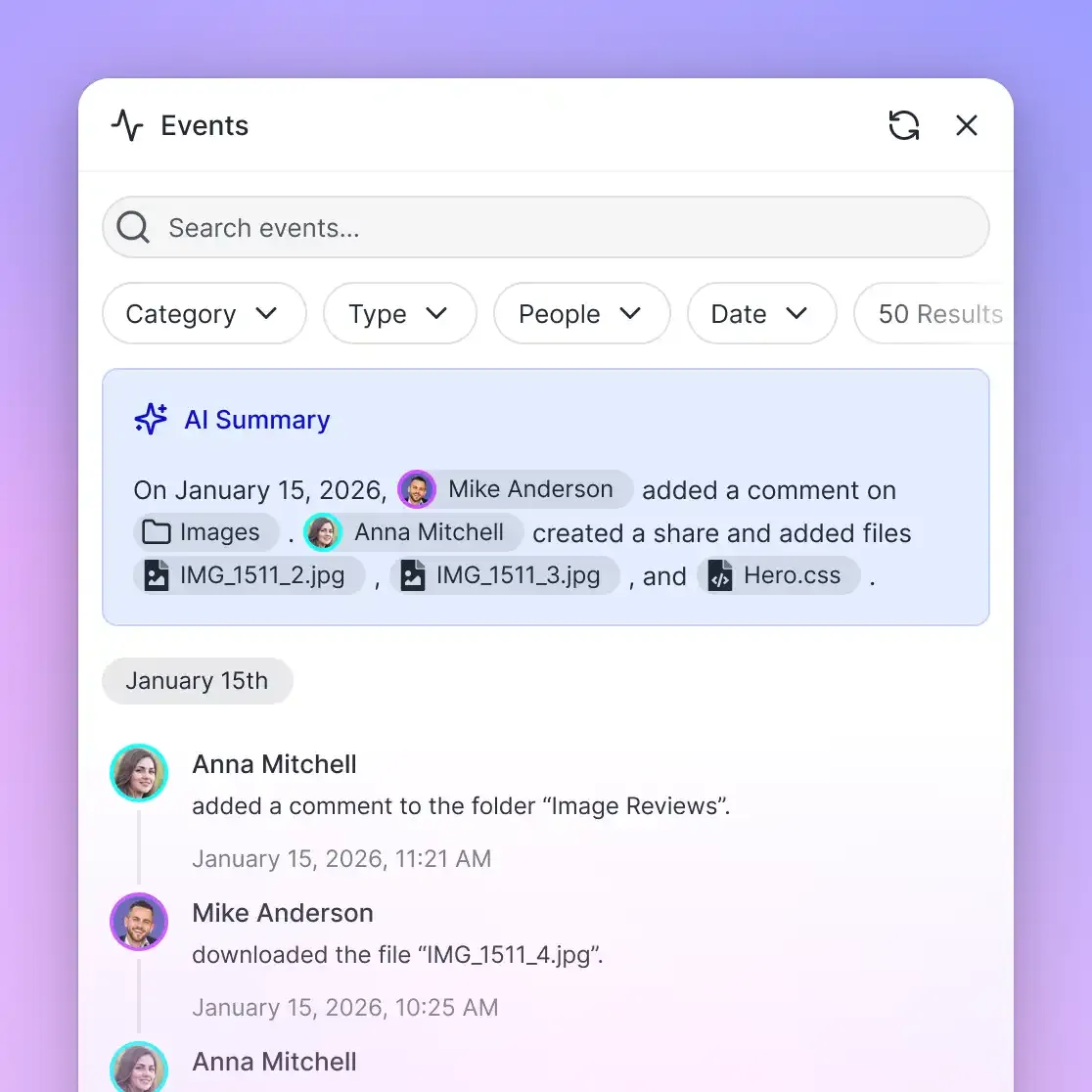
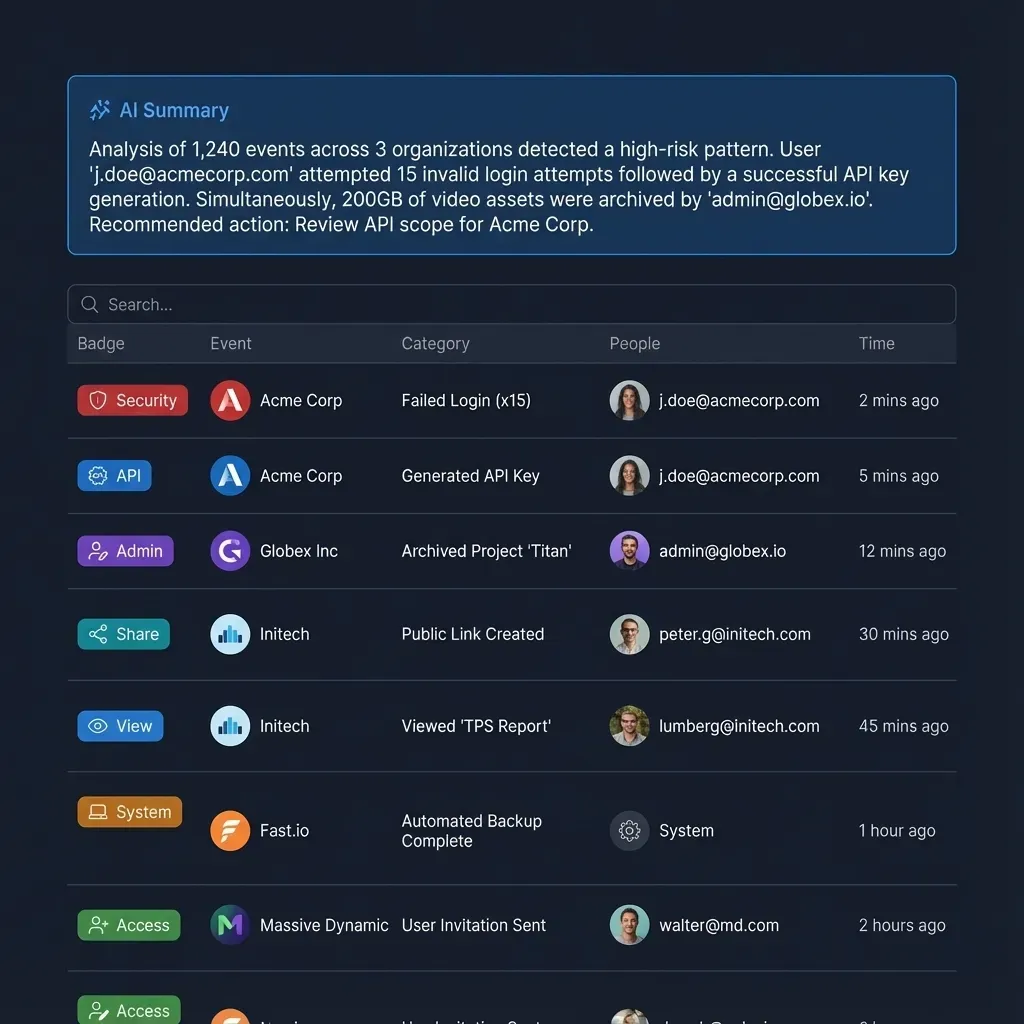
Stream events. Monitor uploads and modifications in real time via the WebSocket events feed or activity log polling.
Query data. Ask in chat or query the workspace to retrieve RAG responses with citations once Intelligence is enabled.
Coordinate multi-agent access. Use granular folder permissions and file version history to isolate agent writes and track all changes.
Code Example: Device Data Upload
Uploading telemetry data via the Fastio REST API:
import os
import requests

headers = {"Authorization": "Bearer YOUR_API_KEY"}
path = "sensor-log.json"
with open(path, "rb") as f:
    response = requests.post(
        "https://api.fast.io/current/upload/",
        headers=headers,
        data={
            "name": path,
            "size": os.path.getsize(path),
            "action": "create",
            "instance_id": "YOUR_WORKSPACE_ID",
            "folder_id": "root",
        },
        files={"chunk": f},
    )
IoT Agent Storage Best Practices
Store raw logs separately from processed insights. Use folders like /raw/telemetry, /analysis/reports.
Index selectively. Enable Intelligence on analysis folders where semantic search is needed.
Scope agents to specific folders. Granular permissions and file version history help avoid collisions in fleets.
Use ownership transfer for production. The agent prototypes the workspace and transfers ownership to the human operations team.
Monitor with audit logs. Track views and uploads for compliance.
Scale with event streams. Monitor the WebSocket events feed to trigger worker agents when new data arrives.
Define clear tool contracts and fallback behavior so agents fail safely when dependencies are unavailable. This improves reliability in production workflows.
Fastio Advantages for IoT Agents
Fastio provides agent-first features. The MCP tools match UI capabilities. Streamable HTTP keeps latency low.
Works with any LLM: Claude, GPT, Gemini. URL import pulls from Google Drive, Dropbox, OneDrive, Box, or public URLs without local storage.
A 14-day Business Trial covers prototyping a fleet before you commit to a plan.
Humans join smoothly. Real-time presence shows active agents and collaborators.
Define clear tool contracts and fallback behavior so agents fail safely when dependencies are unavailable. This improves reliability in production workflows.
Sources
References used to verify factual claims in this guide.
-
IoT connected things worldwide forecast to reach 75 billion by 2025
Frequently Asked Questions
How to build AI agent IoT workspace?
Sign up at Fastio for a 14-day Business Trial, create a workspace via MCP or API, enable Intelligence, import telemetry data, and invite agents with scoped keys.
What are IoT agent storage best practices?
Use persistent workspaces, advisory file locks, version history for concurrency, WebSocket events for updates, and RAG once Intelligence is enabled. Separate raw and processed data.
Can AI agents collaborate on IoT data?
Yes, via shared Fastio workspaces. Advisory file locks coordinate concurrent writes, version history preserves revisions, and ownership transfer hands off workspaces to humans.
Does Fastio support IoT simulations?
Agents store simulation data persistently, query it with RAG once Intelligence is enabled, and share outputs. Chunked uploads handle large log files and model artifacts.
How much does AI agent IoT storage cost?
Plans start at $9.99 per month for Starter (3 seats, 250 GB, 100,000 credits). Storage and seats come with the plan, and credits meter AI work such as ingestion, chat, and agent runs. Overage is $10 per 100,000 credits.
Related Resources

Start Your AI Agent IoT Workspace
Terabyte-scale workspace storage, a monthly credit allowance for AI work, and a consolidated MCP toolset. Start with a 14-day trial.