How to Use AI Agent Workspaces for Manufacturing Teams
AI agent manufacturing workspaces enable production agents and human engineers to access CAD files, logs, and supply chain documents in a shared, intelligent environment. Unlike traditional cloud storage, these workspaces support the specific needs of modern factories: version-tracked file access and granular permissions, automated RAG indexing for technical queries, and smooth handoffs between autonomous agents and human experts.

What Is an AI Agent Manufacturing Workspace?
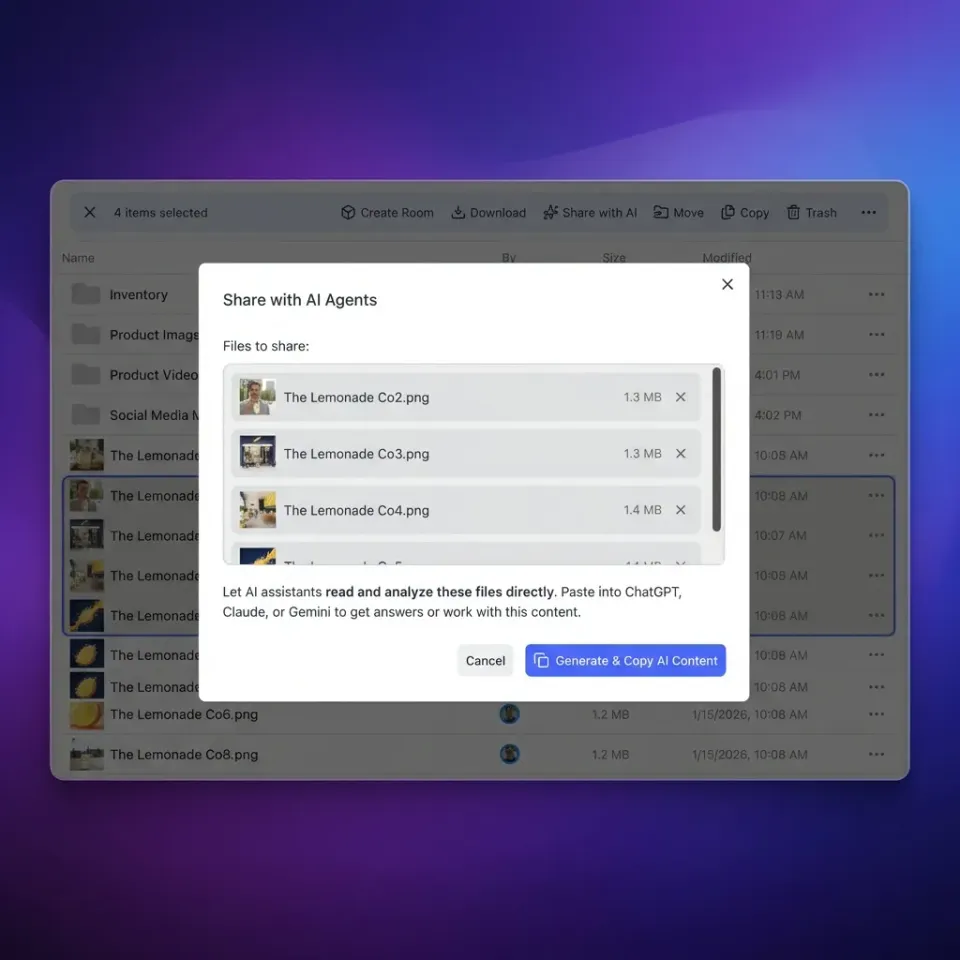
An AI agent manufacturing workspace is a specialized, shared digital environment where artificial intelligence agents and human engineering teams collaborate on the complex files and data streams that drive modern production. It serves as the central nervous system for "Agentic Manufacturing," a paradigm where autonomous software agents handle routine data processing, file transfers, and initial analysis, freeing human engineers to focus on strategic decision-making and complex problem-solving. In a typical factory setting, data is fragmented. CAD designs live in PLM systems, machine logs are trapped in local servers, and supply chain documents float around in email attachments. This fragmentation kills efficiency. When a quality issue arises, engineers waste hours gathering data from these disparate sources. An AI agent workspace unifies this. It provides a single, secure location where agents can programmatically read, write, and analyze files using the Model Context Protocol (MCP), while humans access the same files through a user-friendly web interface. Crucially, these workspaces are designed for the unique constraints of manufacturing. They handle proprietary file formats like STEP, IGES, and DWG. They support the massive scale of machine logs generated by IoT sensors. And they provide the strict concurrency controls needed when multiple agents, say, one for structural analysis and another for thermal simulation, need to work on the same assembly simultaneously.
The Evolution from Cloud Storage to Agent Workspaces
Traditional cloud storage was built for humans sharing PDFs and photos. It lacks the primitives needed for autonomous agents.
Helpful references: Fastio Workspaces, Fastio Collaboration, and Fastio AI.
Handling Specialized Manufacturing Data
Manufacturing isn't just about documents; it's about data density and format diversity. Agents in Fastio workspaces are equipped to handle the specific "nutrients" that factory systems need.
CAD and Engineering Files: Design files (STEP, IGES, SLDPRT) are the blueprints of manufacturing. They are often large and version-heavy. Fastio's chunked upload capabilities allow agents to reliably transfer these massive files, even over unstable factory network connections. Once uploaded, the universal media engine can render previews, allowing an agent to flag a specific file and a human to review the 3D wireframe in the browser without needing a $multiple CAD license.
Machine Logs and Telemetry: PLCs and SCADA systems generate endless streams of logs, often in CSV, JSON, or obscure binary formats. A single production line might generate gigabytes of log data daily. Agents can stream these logs directly into the workspace. With Intelligence Mode enabled, the workspace doesn't just store them; it indexes them. An agent can then query, "Show me all temperature spikes > multiple°C in the injection molding logs from Shift multiple," and get cited answers instantly.
Supply Chain Documentation: Bills of Materials (BOMs), invoices, and compliance certificates often arrive as messy Excel sheets or scanned PDFs. Agents use the workspace as a staging ground to normalize this data. They can ingest a vendor's PDF, extract the relevant data points, and save a clean JSON version for the ERP system to consume, all within the secure boundary of the workspace.


Start Your Agent Manufacturing Workspace
Get cloud workspaces and a consolidated MCP toolset to streamline production workflows. Secure, intelligent, and built for agent collaboration.
Related guides
- How to Set Up an AI Agent Shared WorkspaceA shared workspace gives multiple AI agents a single place to read, write, and organize files without stepping on each...
- Dust AI Workspace: Features, Pricing, and AlternativesDust is an AI workspace that lets teams build custom assistants connected to company knowledge and tools. This guide...
- How to Set Up an Agentic Team WorkspaceAgentic team workspaces enable human-agent hybrid collaboration with shared intelligence and persistent storage. While...
- How to Build Federated Workspaces for AI AgentsFederated AI agent workspaces enable distributed agents to collaborate without centralizing all data. Learn the...
- How to Automate Fastio Workspaces with PulumiAutomating Fastio workspaces with Pulumi lets you provision agentic storage using familiar programming languages. This...
- How to Automate Fastio Workspaces with TerraformTerraform can provision Fastio workspaces, permissions, and folder structures through the platform's REST API, bringing...
More on this subject: Agent Memory and Storage (263 guides)
What to check before scaling ai-agent-manufacturing-workspace
To support the rigorous demands of a 24/7 production environment, Fastio workspaces provide a suite of features that go beyond simple file hosting. These tools are the building blocks for reliable, autonomous factory operations.
1. Concurrency Control with File Locks
In a busy factory, multiple processes often target the same data. Imagine a "Design Agent" updating a CAD file while a "Simulation Agent" reads it for stress testing. Fastio provides advisory file locks via MCP tools (storage actions lock-acquire, lock-status, and lock-release) and the REST API. An agent acquires a lock before writing, heartbeats it while working, and releases it when done. If another agent attempts to acquire the lock, it receives an HTTP 409 and can wait. Because locks are advisory, version history retains every write so blueprint revisions are always preserved.
2. Built-in RAG and Intelligence Mode Turning on "Intelligence Mode" transforms a static folder into a dynamic knowledge base. The workspace automatically parses and indexes every file uploaded, whether it's a technical manual in PDF, a shift report in DOCX, or a machine log in text. Agents can then perform Retrieval-Augmented Generation (RAG) queries against this index. This eliminates the need for engineers to set up and manage separate vector databases (like Pinecone) or build complex ingestion pipelines. The intelligence is native to the storage.
3. Streamable MCP Interfaces Speed matters. Fastio's MCP server uses Streamable HTTP and Server-Sent Events (SSE) to maintain low-latency connections. This allows agents to maintain session state, which is crucial for complex, multi-step workflows like "Open file -> Read header -> Append data -> Close file." It ensures that agents can interact with the file system with the same responsiveness as a local drive, even from the cloud.
4. Activity Feeds and Event Streams
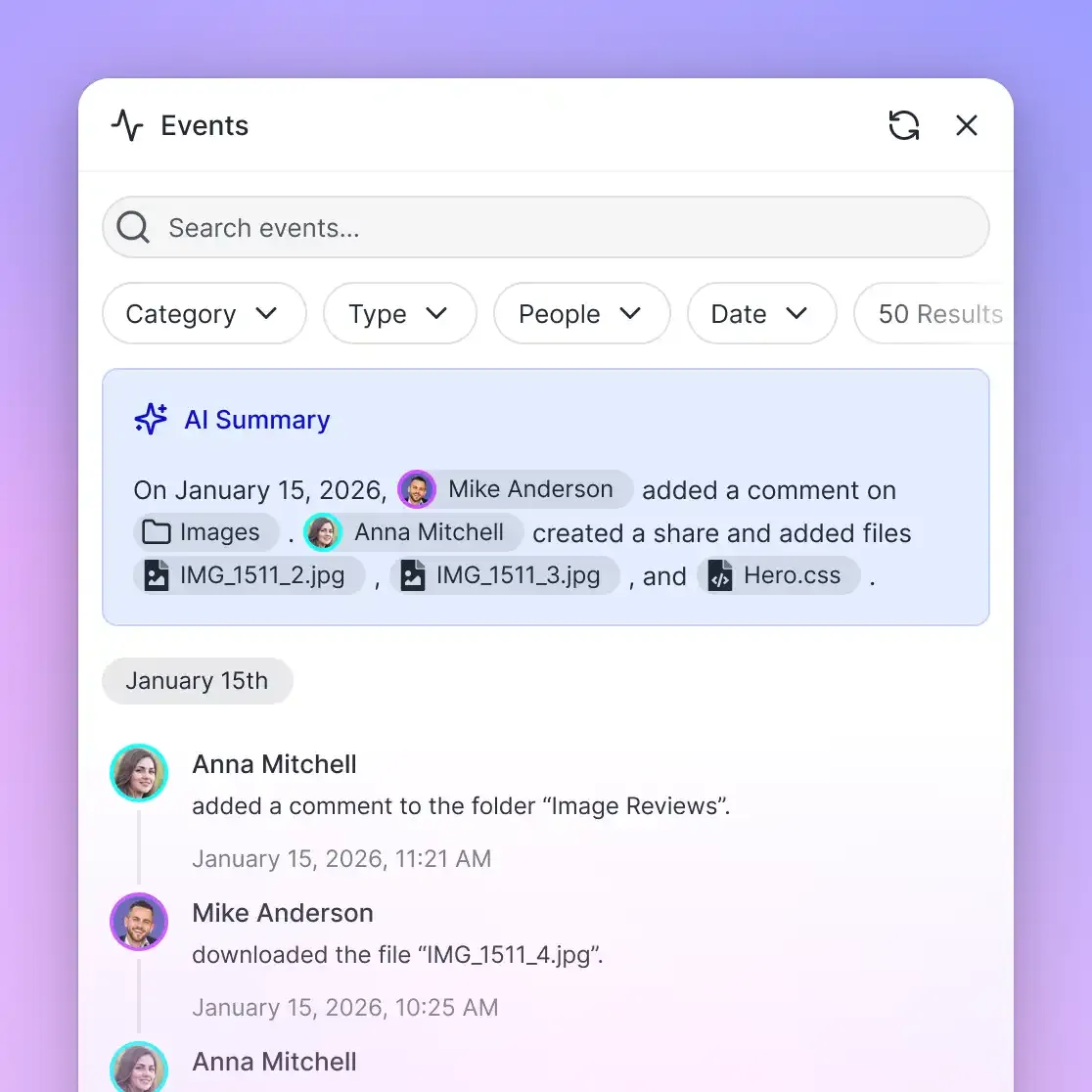
Polling for changes wastes compute resources and delays reaction times. Fastio workspaces provide an activity feed and a WebSocket events feed for file changes. A "Quality Control Agent" can listen on the events feed until a new inspection report hits the /qc-reports folder. The event wakes the agent, which then immediately validates the report and alerts the floor manager if defects exceed multiple%. This event-driven architecture is the standard for modern, efficient automation.
Security and Audit Trails
Manufacturing intellectual property (IP) is a prime target for theft. Security in an agent workspace is paramount.
Granular Permissions:
Not every agent needs access to everything. You can restrict a "Vendor Portal Agent" to only read/write in the /incoming-vendor-files folder, preventing it from ever seeing internal proprietary designs. Permissions can be set at the organization, workspace, folder, or file level.
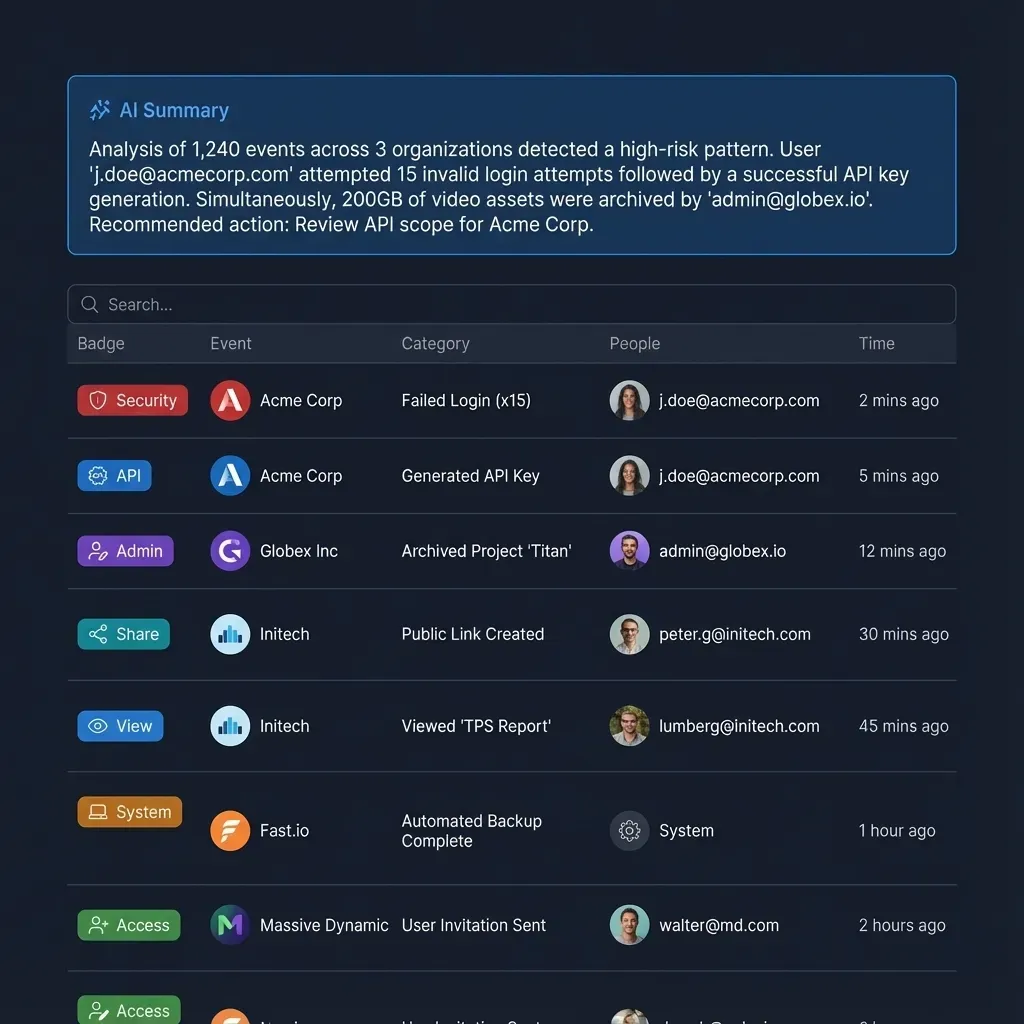
Comprehensive Audit Logs: Every action taken by an agent is logged with the same fidelity as human actions. The audit log records which agent accessed which file, what tool they used, and when. If a sensitive CAD file is downloaded, the log captures the event. This traceability is essential for post-incident forensics and maintaining trust in autonomous systems.
Ownership Transfer: Agents often do the heavy lifting of assembling data packages, like a "Final Deliverable" for a client. Once the package is ready, the agent shouldn't own it forever. Fastio's ownership transfer capability allows the agent to generate a secure claim token and pass full legal ownership of the files and workspace to a human stakeholder. The agent can remain as an admin to help, but the human is the owner.
Set Up Your Manufacturing Agent Workspace
Setting up a workspace for your manufacturing agents is a straightforward process that takes less than 10 minutes. Because agents are treated as first-class citizens, they sign up and manage their environment just like humans do.
Step 1: Agent Authentication and Organization
First, your agent needs an identity. It uses the auth tool to create an account. We recommend using a dedicated email address for the agent (e.g., agent-line1@yourfactory.com) to keep audit logs clear.
### Agent signs up
result = mcp.call("auth", {
    "action": "signup",
    "email": "agent-line1@yourfactory.com",
    "password": "secure-generated-password"
})
Once authenticated, the agent creates an organization. This is the container for all workspaces and ensures files are owned by the entity, not the individual agent.
### Create organization
org = mcp.call("org", {
    "action": "create",
    "name": "Acme-Manufacturing"
})
Step 2: Provisioning the Workspace
Now, the agent creates the specific workspace for the project or production line.
### Create a workspace for Assembly Line A
ws = mcp.call("org", {
    "action": "create-workspace",
    "name": "Assembly-Line-A-Prod",
    "organization_id": org.id
})
Step 3: Enabling Intelligence
This is the critical step that differentiates a "dumb" drive from a smart workspace. Enabling Intelligence Mode activates the indexing pipeline.
### Enable RAG and semantic search
mcp.call("workspace", {
    "action": "update",
    "workspace_id": ws.id,
    "intelligence": true
})
Step 4: Folder Structure and Access
Agents should organize data logically to help both humans and other agents find what they need.
### Create standard directories
mcp.call("resources", {"action": "create_folder", "path": "/cad-designs"})
mcp.call("resources", {"action": "create_folder", "path": "/machine-logs"})
mcp.call("resources", {"action": "create_folder", "path": "/quality-reports"})
Step 5: Connecting Agents via the Remote MCP Server
Connect your agent frameworks by pointing them directly to Fastio's remote MCP server.
Configure your MCP client with the remote endpoint https://mcp.fast.io/mcp/tools over Streamable HTTP and authenticate by sending an Authorization: Bearer <api key> header on the connection, following the setup steps. This gives your agents immediate access to a consolidated MCP toolset for file and workspace management without deploying local services.
Human-in-the-Loop Configuration
Agents shouldn't work in a vacuum. The final setup step is inviting human supervisors.
# Invite the Lead Engineer as an Admin
mcp.call("member", {
    "action": "add",
    "workspace_id": ws.id,
    "email": "lead.engineer@yourfactory.com",
    "role": "admin"
})
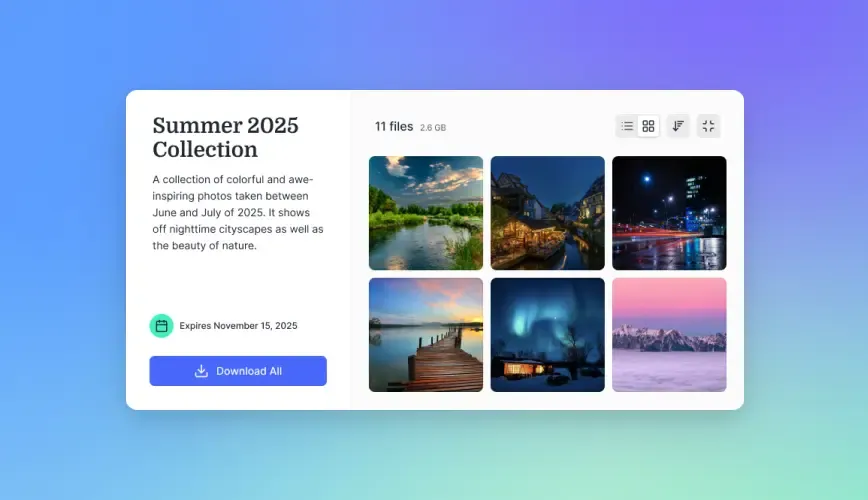
This allows the engineer to log in via the Fastio web UI to inspect files, view 3D previews, and read the agent's output. It establishes the "shared reality" where agents do the work and humans provide the oversight.
Manufacturing Use Cases with Agent Workspaces
The true power of an agent workspace is revealed in how it simplifies specific manufacturing workflows. Here are three high-impact use cases implemented by forward-thinking factories.
1. Automated Supply Chain Reconciliation
The Problem: Suppliers send updated BOMs and shipping manifests via email attachments. Procurement teams manually check these against inventory levels in the ERP, a slow and error-prone process that leads to stockouts.
The Agent Solution:
A "Supply Chain Agent" monitors a specific /incoming-vendor folder. When a vendor uploads a new BOM (Excel or PDF):
- Trigger: The workspace activity feed reports the new upload.
- Process: The agent reads the file using
resources.read(or uses built-in preview parsing). - Analyze: It cross-references the BOM items against the current inventory snapshot stored in
/system/inventory.csv. - Act: The agent generates a "Shortage Report" PDF listing missing items and uploads it to
/procurement/alerts. - Notify: It sends a link to the report to the procurement manager via chat or email.
Result: Reconciliation happens in seconds, not hours. Supply gaps are identified immediately.
2. Predictive Maintenance Logs
The Problem: Machines generate terabytes of logs. Engineers only look at them after a failure occurs. Predictive maintenance signals are buried in the noise.
The Agent Solution:
IoT gateways stream log files directly into the workspace's /logs folder every hour.
- Index: Intelligence Mode automatically indexes the text logs.
- Query: A "Maintenance Agent" runs a scheduled RAG query: "Identify any vibration sensor readings on the line that exceeded the safety threshold in the last batch."
- Report: If the query returns hits, the agent compiles the specific log snippets and timestamps into a "Preventative Maintenance Request."
- Schedule: It appends the request to the maintenance schedule file, creating an auditable version entry.
Result: Maintenance becomes proactive. Machines are serviced during planned downtime based on data, preventing costly unplanned outages.
3. Multi-Agent Design Validation
The Problem: Design changes need approval from multiple departments (Structural, Thermal, Manufacturing). Sequential email approvals take weeks.
The Agent Solution:
A "Design Coordinator Agent" manages the lifecycle of a CAD file in /designs/pending.
- Distribution: The agent shares the file with the specialized "Thermal Agent" and "Structural Agent."
- Concurrent Analysis:
- The Thermal Agent reads the geometry, runs a thermal sim, and saves a report to
/reports/thermal. - The Structural Agent reads the geometry for stress testing, saving its report to
/reports/structural.
- The Thermal Agent reads the geometry, runs a thermal sim, and saves a report to
- Synthesis: The Coordinator Agent reviews both reports. If both pass, it moves the CAD file to
/designs/approved.
Result: Validation runs in parallel, drastically reducing time-to-production.
Integrating with Factory Systems (MES/ERP)
Your agent workspace acts as the bridge between modern AI and legacy factory systems. While direct integration with old ERPs can be painful, file-based integration is universal.
Most MES (Manufacturing Execution Systems) can export reports to folders and ingest CSVs. By mounting the agent workspace as a network drive (or using the API to sync), the workspace becomes the "dropbox" for the factory floor. The agent picks up the exported CSV from the MES, cleans it, enriches it with external market data, and places a processed JSON file in a folder the ERP watches. This "loose coupling" allows you to add modern AI intelligence to multiple-year-old machinery without risky direct software integration.
Troubleshooting Common Issues
Even in automated systems, friction occurs. Here is how to diagnose and resolve common issues in manufacturing agent workspaces.
Scenario 1: Agent Can't Edit a File (Permission Issue)
- Symptom: Agent receives an unauthorized or access denied error.
- Cause: The agent API key lacks write permissions for the target folder.
- Fix: Check the workspace settings and audit log to verify agent permissions. Ensure the agent has Editor rights on the specific folder, or update the scoped API key.
Scenario 2: RAG Returns Outdated Info
- Symptom: The agent answers a query using old log data.
- Cause: High-velocity log uploads might be queuing faster than the indexer can process (though Fastio is near real-time).
- Fix: For critical real-time decisions, have the agent read the raw file directly (
resources.read) rather than relying solely on the semantic index. Use RAG for trend analysis and historical queries.
Scenario 3: "Rate Limit Exceeded" on Uploads
- Symptom: Uploads of massive CAD files fail.
- Cause: Trying to upload a large file in a single HTTP request.
- Fix: Ensure your agent uses the
storage.upload_chunktool. This breaks the file into manageable pieces, which is essential for reliability over factory Wi-Fi.
Scenario 4: Event Stream Disconnection
- Symptom: Agent doesn't wake up when a file arrives.
- Cause: The factory network dropped the persistent connection to the WebSocket events feed.
- Fix: Implement automatic reconnection logic in your agent event listener, with a periodic polling fallback against the Fastio activity feed to ensure no files are missed during network interruptions.
Best Practices for Factory Agent Collaboration
To build a resilient and scalable agent workforce, follow these field-tested best practices.
1. Structure for Scale
Don't dump everything in root. Adopt a strict hierarchy:
/Project-ID/Context/Type/Date
Example: /Model-X/Chassis/Logs/2026-02-19/
This helps RAG queries be more precise ("Search only in Chassis logs") and makes permissions easier to manage.
2. The "Read-Only" Principle for Vendors
Never give write access to your root directory. Create specific "Drop Zones" for vendors (e.g., /incoming/vendor-A). Configure the agent to move valid files out of the drop zone into the secure internal area immediately after validation. This creates an air gap between external inputs and internal production data.
3. Use Metadata for State
Files have metadata. Use it. When an agent processes a file, have it tag the file with status: processed or checked_by: agent-multiple. This allows other agents to filter files without reading their contents, saving bandwidth and credits.
4. Human Oversight Dashboard
Create a "Summary" folder. Have your agents periodically write a simple Markdown file (daily-summary.md) summarizing their actions, errors, and decisions. Engineers can scan this file in the morning to trust that the system is healthy.
5. Rotate Access Tokens
Security best practice: Have agents rotate their session tokens periodically. If an agent script is compromised, the damage is limited. Use the ownership transfer feature to offload critical data to human-owned accounts regularly, minimizing the blast radius of any single agent account.
By adhering to these standards, you create a manufacturing environment that is strong, secure, and ready for the future of autonomous production.
Sources
References used to verify factual claims in this guide.
-
Fastio Business Trial offers generous storage
-
included credits for agents
Frequently Asked Questions
What makes an AI agent manufacturing workspace different from Dropbox?
Unlike Dropbox, an AI agent workspace is built for autonomous interaction. It offers an MCP server with a consolidated toolset for agents to programmatically control files, granular permissions, file version history, and built-in RAG intelligence that indexes technical manufacturing data for semantic search.
Can agents handle proprietary CAD file formats?
Yes. Agents can upload and manage any file format, including STEP, IGES, and SolidWorks files. Fastio's universal media engine also renders browser-based previews for many of these formats, allowing humans to review designs without specialized software.
How secure are these workspaces for IP protection?
Security is enterprise-grade. Features include granular permissions (down to the file level), comprehensive audit logs of every agent action, encryption at rest and in transit, and the ability to keep files organization-owned rather than user-owned.
What is the cost for a manufacturing agent team?
Organizations run on a paid subscription or a 14-day Business Trial that requires a credit card. Starter is $9.99 per month with 3 seats, 250 GB of storage, and 100,000 credits. Business is $49.99 with 10 seats and 5 TB, Enterprise is $199.99 with 30 seats and 25 TB. Storage and seats come with the plan while credits meter AI work, and overage runs $10 per 100,000 credits.
How do I integrate this with my existing MES or ERP?
Integration is typically file-based. Your MES exports data (CSVs/logs) to a local folder mounted to the workspace, or uploads via API. Agents then pick up, process, and normalize this data into JSON or XML formats that your ERP can ingest.
Do I need to know how to code to use this?
Not necessarily. While developers connect custom agents using the remote MCP server URL at `https://mcp.fast.io/mcp/tools`, non-technical users can interact directly through Fastio's browser dashboard, chat interface, and branded portals.
What happens if two agents try to edit a file at once?
Fastio coordinates edits through advisory file locks. An agent acquires a lock before writing, and another agent attempting to lock receives an HTTP 409. If simultaneous writes occur without a lock, Fastio preserves both versions in automatic file history.
How does the ownership transfer feature work?
When an agent completes a project (like compiling a final data package), it generates a transfer token and shares a claim URL with a human. The human clicks the link to become the legal owner of the workspace and files, while the agent can remain as an admin.
Related Resources

Start Your Agent Manufacturing Workspace
Get cloud workspaces and a consolidated MCP toolset to streamline production workflows. Secure, intelligent, and built for agent collaboration.