5 Best Semantic Search Tools for AI Agents
Semantic search helps agents retrieve information based on meaning, not just keywords. It uses vector embeddings to find relevant data and boost performance. This guide reviews the top 5 tools for agent workflows, including Fastio's built-in option.

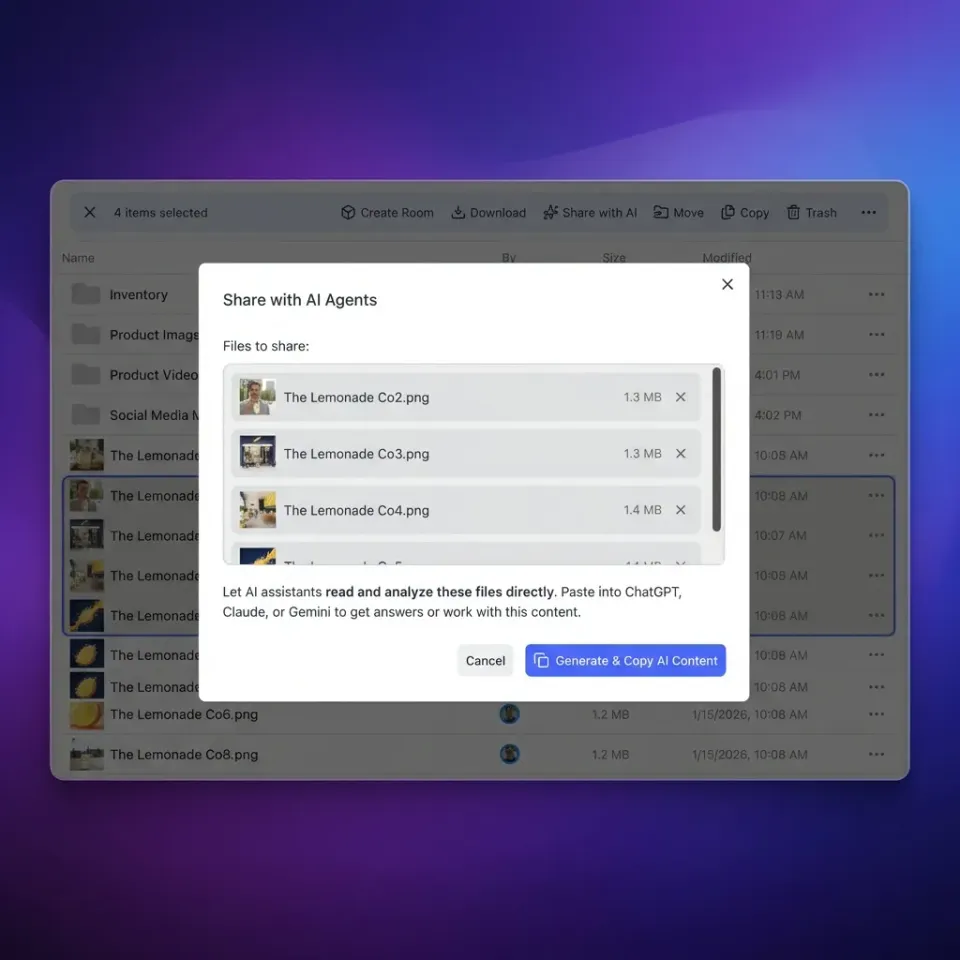
What Is Semantic Search for Agents?
Semantic search finds information by meaning and context, not exact keywords. For AI agents, it's key to Retrieval-Augmented Generation (RAG). Agents fetch relevant data from large document collections before responding.
First, convert text to vector embeddings with models like OpenAI's text-embedding-3-large or sentence-transformers. Queries and documents become points in high-dimensional vector space. Cosine similarity or approximate nearest neighbors (ANN) find the closest matches.
Keyword search misses synonyms ("car" vs "automobile") or implied meanings. Semantic search grasps intent. Agents handle natural queries like "find high-value budget reports last quarter."
Popular indexes include HNSW for speed and accuracy balance, IVF for large scale.
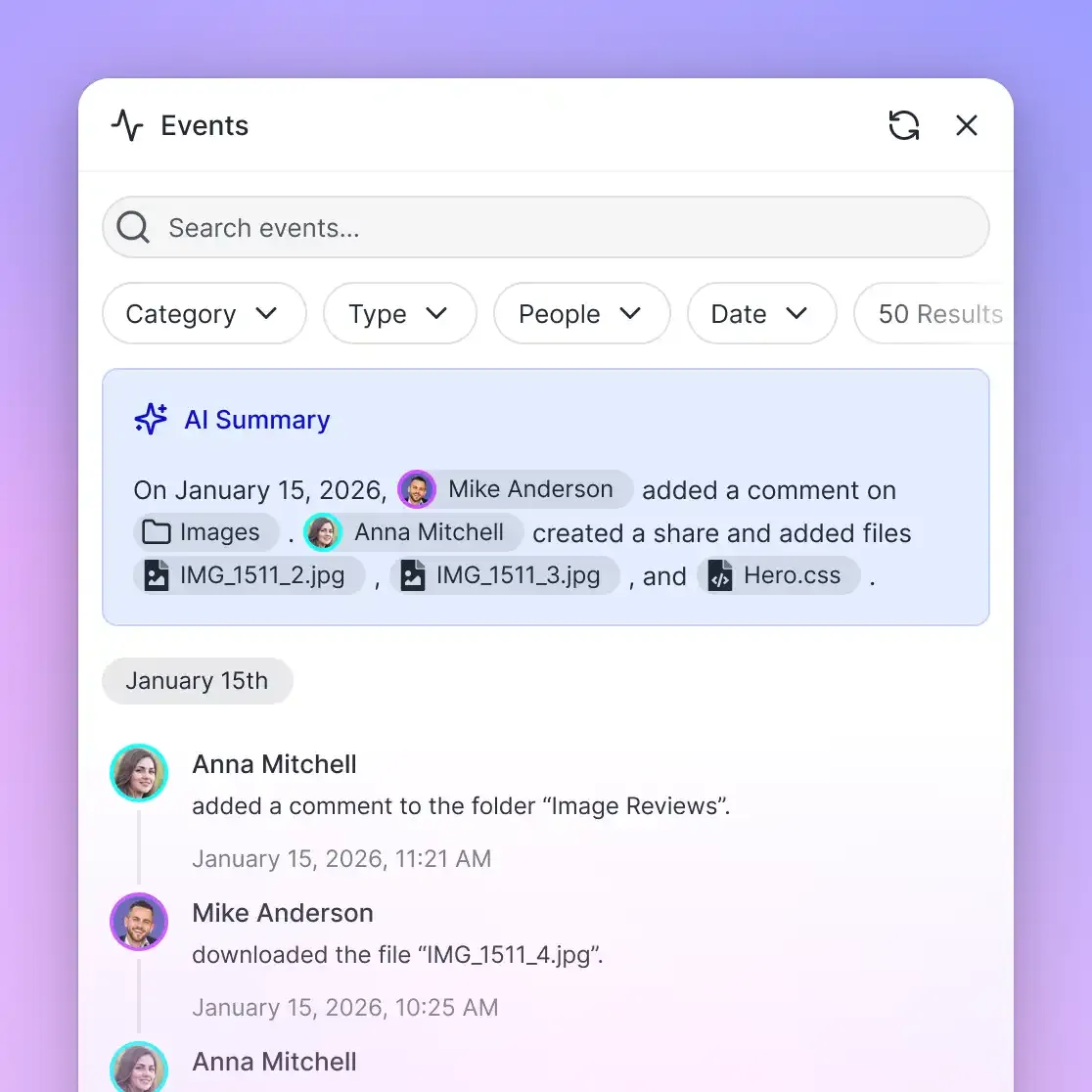
Related guides
- Best ETL Tools for AI Agents: Parsing Unstructured DataExtracting clean data from unstructured files is the biggest bottleneck in building effective RAG pipelines. We...
- Best Tools for Multi-Modal AI Agents in 2026Multi-modal AI agents need more than a capable model. They need infrastructure to store, index, retrieve, and deliver...
- Best Tools for Building LlamaIndex AgentsBuilding production LlamaIndex agents requires more than just the core framework.
- Top Tools and Plugins for Semantic KernelMicrosoft Semantic Kernel's plugin ecosystem lets developers connect AI services to existing codebases without...
- Best Headless Browsers for AI Agents: Top Tools (2026)Finding the best headless browsers for AI agents matters for reliable automation. Old scrapers break on dynamic sites....
- Best Web Browsing Tools for AI Agents (2026)Web browsing tools let AI agents navigate the live web, fill forms, and extract real-time data. Traditional scrapers...
More on this subject: AI Tool Directories and Comparisons (231 guides)
Why Semantic Search Matters for Agents
Agents rely on external data to stay accurate and up-to-date. Poor retrieval leads to hallucinations, outdated info, and off-topic answers. That erodes trust.
Semantic search provides relevant, context-filled results. Benchmarks show 40% better recall than keywords. It handles queries like "Q3 Acme contract risks" across mixed docs.
See Pinecone RAG series. Stacks combining search, storage, and tools reduce latency and errors.
Fastio MCP (consolidated toolset) integrates retrieval into file workflows once Intelligence Mode is enabled.
Define clear tool contracts and fallback behavior so agents fail safely when dependencies are unavailable. This improves reliability in production workflows.
RAG Workflow
- Embed user query.
- Retrieve top-k chunks via ANN search.
- Rerank if needed (cross-encoder).
- Prompt LLM with context + query. Semantic search ensures step 2 yields relevant input, minimizing token waste and errors.
Top Semantic Search Tools Comparison
Benchmarks and Performance
Tests show semantic search improves recall by 40% over keyword matching in RAG pipelines for agent apps.
On diverse datasets, it cut hallucinations by supplying better context. Precision improves because embeddings capture specific meanings.
Fastio Intelligence Mode handles indexing, query embedding, and retrieval. Ideal for agent workflows. No separate vector DB or pipeline code needed.
Other tools need embedding models, indexing pipelines, and storage management.
End-to-end integration matters for agents. Fastio combines semantic search with a consolidated MCP toolset for workflows like upload, retrieve, generate, and share once Intelligence Mode is enabled.

1. Fastio Intelligence Mode
Fastio provides semantic search natively in intelligent workspaces. Toggle Intelligence Mode on a workspace to auto-index all files for semantic retrieval and RAG. No separate vector database, embedding pipeline, or indexing code required.
Agents access search via a consolidated MCP toolset (streamable HTTP) or full REST API. Supports any LLM: Claude, GPT, Gemini, Llama.
Connect to the remote MCP server:
https://mcp.fast.io/mcp/tools
On the named tool set at that address, an agent searches by calling the storage tool with action search, a workspace_id and a query. Semantic hits usually carry a content_snippet with the matching passage, which the agent can pass to its LLM as context.
Pros:
- Native RAG with citations, summaries, metadata extraction
- Business Trial: 14 days (credit card required)
- Human-agent collaboration in shared workspaces
- Ownership transfer: agents build, humans own
- URL import (Drive, Box, Dropbox OAuth, no local download)
- Advisory file locks to coordinate concurrent multi-agent writes, backed by version history
- WebSocket events feed and activity polling for reactive workflows
- Chunked uploads (25 to 100 GB maximum by plan), HLS streaming previews
Cons:
- Workspace-scoped (use multiple for isolation)
- Credit-based for heavy AI usage (generous limits)
Best for agentic teams where search works alongside full file workflows: storage, sharing, collaboration.
Pricing: Starter from $9.99/mo (250 GB), Business ($49.99/mo, 5 TB), Enterprise ($199.99/mo, 25 TB); 14-day Business Trial at pricing.


Give Your AI Agents Persistent Storage
Fastio Intelligence Mode offers built-in RAG with generous storage. Works with any LLM via MCP.
2. Pinecone
Pinecone offers a fully managed vector database optimized for high-scale semantic search.
Serverless indexes automatically scale queries and storage. Supports hybrid keyword + vector search and built-in reranking.
Agent integration via Python, JS clients. Upsert embeddings, query top-k matches.
Example:
import pinecone
pc = pinecone.Pinecone(api_key="key")
index = pc.Index("agents")
index.upsert(vectors=[{"id": "doc1", "values": emb}])
matches = index.query(vector=query_emb, top_k=10, include_metadata=True)
Pros:
- Scales to billions of vectors with low latency
- Serverless, pay-per-use after $50/mo min
- Hybrid search and reranking built-in
- works alongside embedding services
Cons:
- Minimum $50/mo for Standard plan
- Requires separate file storage and embedding pipeline
- No native file ops or collaboration
Best for high-scale, dedicated vector search in agent RAG pipelines.
Pricing: Starter free (limited), Standard $50/mo minimum.
3. Weaviate
Weaviate is an open-source vector database with LLM modules for agentic workflows.
Supports hybrid search, graph RAG, and auto-embedding. Cloud or self-hosted.
Agent example using GraphQL API:
query = """
{
  Get { Article(nearVector: {vector: $vec, certainty: 0.8}) {
    content title _additional { distance }
  }}
}
"""
Pros:
- Hybrid BM25 + vector search
- Modular architecture for custom pipelines
- Knowledge graph features
- Free embeddings service
Cons:
- Flex plan $45/mo entry
- Steeper learning curve for advanced modules
- Separate storage for raw files
Best for semantic search with structured data and graphs.
Pricing: Free trial, Flex starts $45/mo.
4. Qdrant
Qdrant is a high-performance vector database, open source with cloud hosting.
Excels in fast similarity search with payload filtering and quantization.
Rust-based for speed. Agents use REST/gRPC APIs.
Example filter query:
{
  "must": [{ "key": "category", "match": { "value": "docs" } }],
  "should": [{ "vector": { "query": emb, "limit": 10 } }]
}
Pros:
- Top benchmarks for QPS/latency
- 1GB free cloud cluster
- Advanced filtering on metadata
- Self-host or managed
Cons:
- Cloud scaling custom pricing
- Less LLM modules than Weaviate
- Separate file handling
Best for performance-critical agent retrieval.
Pricing: Free 1GB cloud, pay for more.
5. Chroma
Chroma is an open-source embedding database for local and cloud use.
Simple Python API for prototyping agent RAG. Supports persistence, metadata.
Quick start:
import chromadb
client = chromadb.Client()
collection = client.create_collection("agents")
collection.add(documents=["text"], embeddings=embs)
results = collection.query(query_embeddings=query_emb, n_results=5)
Pros:
- Zero-config local development
- Native Python integration
- Free self-hosting
- Easy prototyping
Cons:
- Cloud beta, usage-based costs
- Scaling requires Kubernetes
- Limited enterprise features
Best for agent prototypes and small-scale apps.
Pricing: Open source free, cloud $0 + usage ($0.33/GB storage, etc.).
How We Evaluated
We evaluated based on:
- Agent workflow integration (MCP/API ease)
- Pricing and free tiers
- RAG readiness (built-in or easy setup)
- Scalability (vectors handled, QPS)
- Ease of use for developers
- Documentation and community support.
Sources: official docs, benchmarks, agent use cases.
Which Tool to Choose?
Pick based on your needs:
- Full agent workflows + storage: Fastio (integrated MCP, RAG, workspaces).
- Pure scale vector DB: Pinecone (billions vectors, serverless).
- Knowledge graphs + hybrid search: Weaviate (rich modules).
- High perf open source: Qdrant (fast filtering).
- Local prototypes: Chroma (lightweight).
Most agents need storage too, so Fastio covers retrieval, files, sharing. Test the Business Trial (try Business Trial).
Sources
References used to verify factual claims in this guide.
-
Fastio offers agent workspaces with built-in RAG and MCP integration Fastio MCP provides a consolidated toolset that integrates retrieval into file workflows Fastio Intelligence Mode provides built-in search and document chat once enabled Fastio Intelligence Mode combines semantic search with a consolidated MCP toolset for file workflows Agents access search via a consolidated MCP toolset using Streamable HTTP or REST API
-
Pinecone Pricing: Starter free (limited), Standard $50/mo minimum
-
Weaviate Pricing: Free trial, Flex starts $45/mo
-
Qdrant Pricing: Free 1GB cloud, pay for more
-
Chroma Pricing: Open source free, cloud $0 + usage
-
Benchmarks show semantic search improves recall by 40% over keywords in RAG pipelines Semantic search boosts recall by 40%, manages complex queries, and supplies precise context
-
Semantic search ensures relevant input retrieval, minimizing token waste and errors in RAG step 2 This guide reviews the top 5 tools for agent workflows including Fastio
-
OpenAI text-embedding-3-large and sentence-transformers create vector embeddings for semantic search
-
Weaviate GraphQL Get Article nearVector certainty 0.8
Frequently Asked Questions
What are the best agent search tools?
Fastio Intelligence Mode, Pinecone, Weaviate, Qdrant, Chroma top the list for agent semantic retrieval.
What is semantic search RAG?
RAG uses semantic vector search to grab relevant context before LLM generation. It reduces hallucinations.
Does Fastio support semantic search for agents?
Yes. Intelligence Mode offers built-in semantic search and RAG with citations across workspace files.
Is there free semantic search for agents?
Qdrant offers a 1GB free cloud tier, Chroma is free to self-host, and Pinecone provides a starter tier. Fastio offers built-in semantic search on paid plans starting at $9.99/mo with a 14-day Business Trial.
How does semantic search improve agent performance?
It boosts recall by 40%, manages complex queries, supplies precise context to cut errors.
How to integrate semantic search in an agent workflow?
Embed the query, get top-k matches, add to LLM prompt. LangChain or LlamaIndex make it easy.
What are common pitfalls in agent retrieval?
Chunking too large or small, skipping metadata filters, no reranking. Test on your data.
Can agents use hybrid search?
Yes. Pinecone, Weaviate, Qdrant support keyword plus vector for higher precision.
Related Resources

Give Your AI Agents Persistent Storage
Fastio Intelligence Mode offers built-in RAG with generous storage. Works with any LLM via MCP.