How to Build a Document Processing Pipeline with Fastio API
A document processing pipeline built on the Fastio API listens for new file uploads, automatically routes them for AI extraction, and stores structured metadata back in the workspace. This guide walks through each stage, from workspace setup and event listening to LLM-powered extraction and metadata tagging, with practical code examples you can adapt for invoices, contracts, and forms.


What a Document Processing Pipeline Does
A document processing pipeline is an automated system that ingests files, extracts structured data from them, and routes that data to downstream applications. Instead of a person opening a PDF, reading the contents, and manually typing values into a spreadsheet, the pipeline handles every step programmatically.
The typical pipeline follows four stages: upload, trigger, process, and store. A file enters the system through an upload or email attachment. An event fires to notify the processing layer. An AI model or OCR engine reads the document and pulls out specific fields. The structured output gets saved as metadata, pushed to a database, or forwarded to another service.
According to Parseur's 2026 automation guide, organizations that automate document workflows cut manual data entry by 80% or more. The savings compound quickly. DocuExprt estimates that manual document processing costs between $5 and $25 per document when you factor in labor, error correction, and delays. For a team handling hundreds of documents per week, that adds up to thousands of dollars in avoidable overhead.
The challenge for developers is stitching together the infrastructure. A traditional pipeline requires separate services for storage (S3 or Google Cloud Storage), event delivery (Amazon EventBridge or a custom webhook layer), OCR (Tesseract, Google Document AI, or ABBYY), and metadata storage (a relational database or search index). Each integration point is a potential failure, and the whole system needs monitoring.
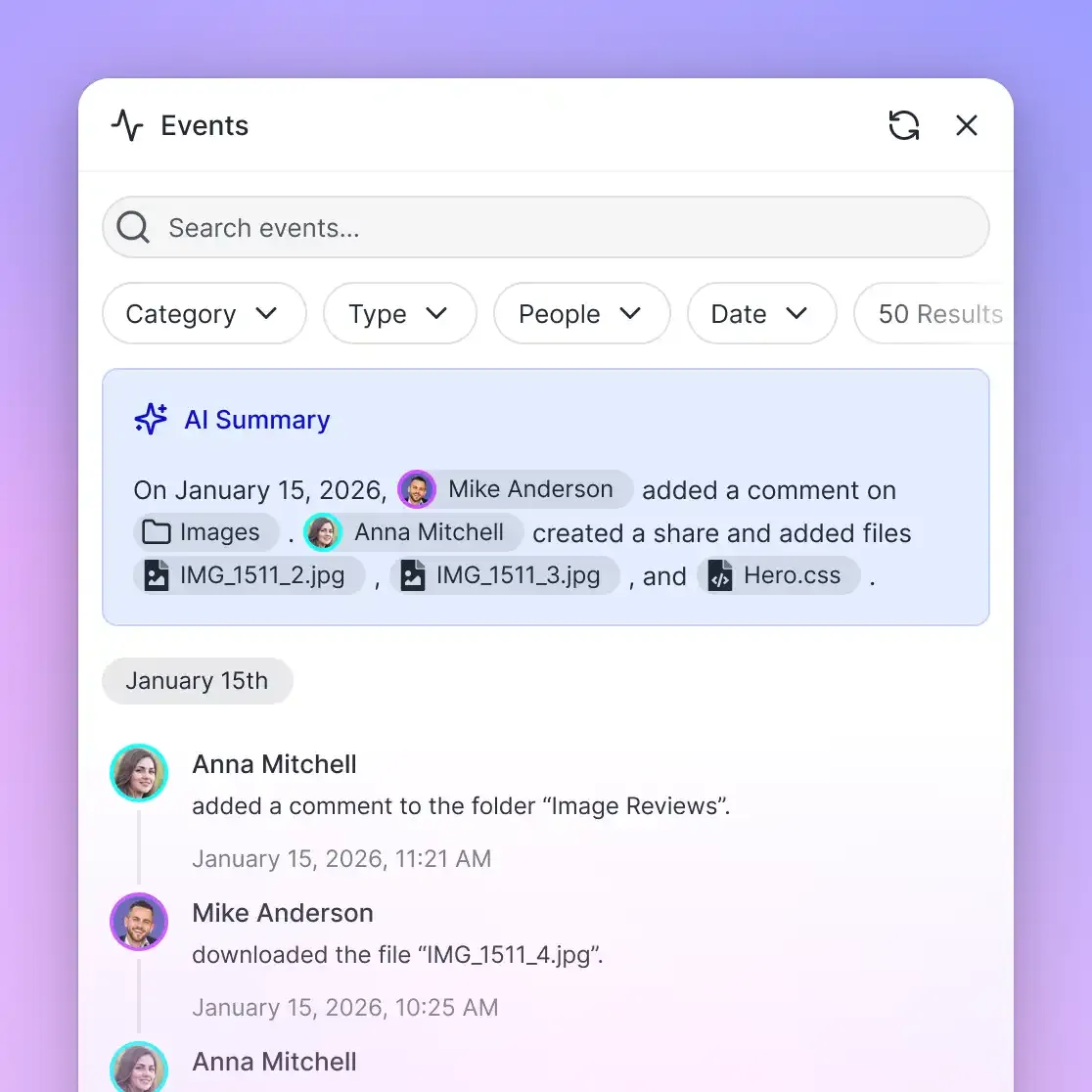
Fastio collapses several of these layers into one platform. A workspace provides persistent storage. Event feeds deliver file updates in real time. Intelligence Mode auto-indexes documents once enabled for the workspace. And the MCP server gives AI agents direct access to files without downloading them. The result is fewer moving parts and a shorter path from "file uploaded" to "data extracted."
Helpful references: Fastio Workspaces, Fastio AI.
Related guides
- How to Build an AI Agent Document Redaction PipelineAI agent document redaction automation uses an autonomous agent to detect and remove sensitive information like names,...
- Best Document Processing Tools for AI AgentsDocument processing tools for AI agents automate the extraction, parsing, and transformation of unstructured documents...
- How to Automate Document Processing with AI AgentsAI agent document processing uses autonomous agents to extract, analyze, and transform information from documents...
- ChatGPT PDF Limit: File Size, Page Count, and Large Document WorkaroundsThe ChatGPT PDF limit enforces a 512MB file size ceiling, a 2 million token extraction threshold, and a restriction of...
- How to Automate Spreadsheets with AI AgentsManual data entry takes up nearly 30% of the work week. AI agents take over these repetitive tasks by reading,...
- 8 Best AI Spreadsheet Automation Tools for Agents in 2026AI spreadsheet automation tools let agents programmatically read, transform, and generate spreadsheet data using...
More on this subject: Agent File and Document Workflows (325 guides)
Pipeline Architecture Overview
Before writing code, it helps to map out the components and data flow. Here is the architecture for a document processing pipeline built on the Fastio API:
Upload layer. Documents arrive in a Fastio workspace through the web UI, API upload, MCP tools, or a Receive share (a branded upload portal for external users). Files land in an
inboundfolder.Event layer. The realtime activity feed or WebSocket events feed fires when a file is created in the
inboundfolder, delivering the file ID, name, size, MIME type, and workspace context.Routing layer. Your application checks the event payload, validates the file type, and pushes a processing job onto an async queue (Redis, Celery, BullMQ, or a cloud equivalent). Simple text files get lightweight extraction. PDFs and images get routed to AI extraction.
Extraction layer. A worker pulls the job, connects an LLM to the Fastio MCP server, and instructs the model to read the document and return structured data. The MCP server handles file access, so the raw document never leaves the Fastio environment.
Storage layer. The worker writes the extracted key-value pairs back to the file's custom metadata in Fastio. It moves the file from
inboundtoprocessedand updates a status tag. Human reviewers see the results instantly in the same workspace.
This event-driven design decouples ingestion from processing. Your event listener stays fast because it only enqueues a job. The actual extraction happens asynchronously, which means a sudden batch of 200 uploads does not overwhelm your server.
For teams already using Fastio for collaboration, the pipeline runs inside the same workspace where humans review and approve documents. There is no separate "processing bucket" that agents use in isolation. Agents and humans share one environment, which simplifies permissions and audit trails.

Step 1: Configure the Workspace and API Credentials
Start by creating a dedicated workspace for your pipeline. You can do this through the Fastio dashboard or programmatically via the API.
Create three folders inside the workspace: inbound, processing, and processed. This folder structure gives you a visual state machine. Files move left to right as the pipeline handles them, and anyone with workspace access can see where a document stands at a glance.
Next, generate an API key. Navigate to your organization settings and create a key scoped to the ingestion workspace. Restrict permissions to file read, file write, and metadata operations. Avoid granting full admin scope to a processing service.
import httpx

FASTIO_API_KEY = "your-api-key"
BASE_URL = "https://api.fast.io/current"

headers = {
    "Authorization": f"Bearer {FASTIO_API_KEY}",
}

# Create the inbound folder at the workspace root
response = httpx.post(
    f"{BASE_URL}/workspace/1234567890123456789/storage/root/createfolder/",
    headers=headers,
    data={"name": "inbound"},
)
inbound_folder_id = response.json()["node"]["id"]
Enable Intelligence Mode on the workspace. This tells Fastio to automatically index every uploaded file for semantic search and RAG. With Intelligence Mode active, documents become queryable the moment they finish uploading. You can verify the indexing status by checking the ai_state field on any file: it progresses from pending to in_progress to ready, and then to indexed once its contents are searchable.
Intelligence Mode consumes credits for every document page it ingests. Plans come with a monthly credit allowance (100,000 on Starter, 600,000 on Business, 3 million on Enterprise), and storage and seats come with the plan rather than the meter. Watch the allowance if you are indexing at volume.


Automate Your Document Workflows
Start building document processing pipelines on Fastio with plan-included storage, monthly credits, and full MCP server access. Begin with a 14-day trial.
Step 2: Listen for Real-Time File Events
To react promptly when documents arrive, listen to Fastio's realtime activity feed or connect to the WebSocket events feed. This eliminates latency while avoiding blind delays.
Your application long-polls the workspace activity feed (GET /current/activity/poll/{workspace_id}/), which returns the names of the activity fields that changed, such as storage, with timestamps. When storage changes, the worker lists the inbound folder to find the new files.
Here is an asynchronous Python worker that polls the activity feed and enqueues new files for processing:
import httpx
import os
import asyncio

BASE_URL = "https://api.fast.io/current"
FASTIO_API_KEY = os.environ.get("FASTIO_API_KEY", "your-api-key")

async def poll_activity_feed(workspace_id: str, lastactivity: str) -> str:
    headers = {"Authorization": f"Bearer {FASTIO_API_KEY}"}
    async with httpx.AsyncClient(timeout=100) as client:
        response = await client.get(
            f"{BASE_URL}/activity/poll/{workspace_id}/",
            headers=headers,
            params={"wait": 95, "fields": "storage", "updated": 1, "lastactivity": lastactivity},
        )
        data = response.json()
        if data.get("results"):
            # Storage changed: list the inbound folder and enqueue files not seen yet
            enqueue_new_files(workspace_id)
        return data.get("lastactivity", lastactivity)
Make enqueue_new_files idempotent by keying each job on the file's node ID. This prevents duplicate extraction runs when the same file shows up in more than one poll.
Process events quickly by pushing tasks onto a background queue. To avoid bottlenecks, handle the extraction asynchronously in dedicated workers.
Step 3: Extract Data with AI via the MCP Server
The extraction stage is where the pipeline generates value. Your async worker picks up a job from the queue, connects an LLM to the Fastio MCP server, and instructs it to read the document and return structured fields.
Fastio exposes its MCP server via Streamable HTTP at /mcp and legacy SSE at /sse. The server provides a consolidated MCP toolset that let an LLM interact with workspaces, files, metadata, and AI features without your application downloading the raw document. For full tool documentation, see mcp.fast.io/skill.md.
Here is how the extraction flow works in practice. Say your pipeline processes vendor invoices. The worker receives a file ID from the queue and sends a prompt to Claude, GPT-4, or Gemini with access to the Fastio MCP server:
System prompt:
You have access to the Fastio MCP server. Use the AI chat tool
to read the document and extract structured data.

User prompt:
Analyze the file with ID "file_xyz789" in workspace "ws_abc123".
Extract: vendor_name, invoice_number, invoice_date, line_items,
subtotal, tax, and total_due. Return strict JSON.
The LLM calls the Fastio MCP tools to access the file contents. Because Intelligence Mode has already indexed the document, the model can run semantic queries against specific sections rather than loading the entire file into its context window. This matters for long documents. A 40-page contract does not need to fit entirely in the prompt; the agent can search for "payment terms" or "governing law" and read only the relevant passages.
The LLM returns a JSON object with the extracted fields:
{
  "vendor_name": "Acme Supplies Co.",
  "invoice_number": "INV-2026-0847",
  "invoice_date": "2026-03-14",
  "line_items": [
    {"description": "Widget A", "qty": 100, "unit_price": 12.50},
    {"description": "Widget B", "qty": 50, "unit_price": 8.75}
  ],
  "subtotal": 1687.50,
  "tax": 135.00,
  "total_due": 1822.50
}
This approach keeps the raw PDF inside the secure Fastio environment. Your application server only handles the structured output, which reduces bandwidth, simplifies security, and avoids managing temporary file storage on your processing nodes.
For documents that need traditional OCR (scanned images with no selectable text), you can route them to a dedicated OCR service like Google Document AI or Tesseract before sending the extracted text to the LLM for field parsing. The hybrid OCR-plus-LLM pattern catches formatting that pure OCR misses while keeping accuracy high.
Step 4: Write Metadata Back and Complete the Workflow
Once the LLM returns structured data, your worker writes it back to Fastio as custom metadata on the file. This makes every extracted field searchable and filterable inside the workspace.
Fastio stores extracted fields as metadata on each file, and the field names form a workspace-wide vocabulary. Set values on individual files:
# Set extracted metadata on the processed file
metadata_payload = {
    "vendor_name": extracted["vendor_name"],
    "invoice_number": extracted["invoice_number"],
    "invoice_date": extracted["invoice_date"],
    "total_due": extracted["total_due"],
    "status": "extracted",
}

httpx.post(
    f"{BASE_URL}/workspace/{workspace_id}/storage/{file_id}/metadata/facts/",
    headers=headers,
    json={"facts": metadata_payload},
)

# Move file from inbound to processed
httpx.post(
    f"{BASE_URL}/workspace/{workspace_id}/storage/{file_id}/move/",
    headers=headers,
    data={"parent": processed_folder_id},
)
After updating metadata and moving the file, the pipeline is complete for that document. A human team member opening the workspace sees the file in the processed folder with all extracted fields visible in the sidebar. They can search for "invoices from Acme Supplies over $1,000" and get instant results because the metadata is indexed.
If the extraction flagged anomalies, like a missing signature field on a contract or a suspiciously high invoice total, your worker can tag the file as needs_review and post a comment mentioning a specific reviewer. Fastio's comment system supports mentions, so the reviewer gets notified without leaving the workspace.
This handoff between agent and human is where Fastio's shared workspace model pays off. The agent does the heavy lifting of reading and tagging. The human reviews, approves, or corrects. Both work in the same environment, on the same files, with a full audit trail of who did what.
For pipelines that need human verification, workers can leave anchored comments on document pages or write extraction summaries to collaborative notes in the workspace. Team members can review the extracted values directly alongside the file and leave feedback before downstream systems ingest the structured data.
Error Handling and Production Hardening
A pipeline that works on 10 test documents needs additional safeguards before it handles thousands in production.
Retry with backoff. Wrap all Fastio API calls in exponential backoff. Transient network errors and rate limits are normal at scale. If an extraction fails because the LLM returned malformed JSON, retry once with a stricter prompt. If it fails again, move the file to an errors folder and tag it with status: failed so a human can investigate.
Idempotency. Activity events can be received more than once during reconnects. Store each event identifier in a set (Redis or a database column with a unique constraint) and skip duplicates. Without this, a network hiccup could cause the same document to be processed and tagged twice.
File locks for concurrency. If multiple workers process related files simultaneously, use Fastio's advisory file locks. Acquire a lock before modifying a file or writing metadata, heartbeat it while working, and release it when done. If another agent tries to lock the same file, it receives an HTTP 409 and can wait. Even if writes occur without locking, Fastio's version history preserves every revision.
# Update metadata with bearer authentication
response = httpx.post(
    f"{BASE_URL}/workspace/{workspace_id}/storage/{file_id}/metadata/facts/",
    headers=headers,
    json={"facts": extracted_data},
)
response.raise_for_status()
Scheduled audits. Run a scheduled job (every 15 minutes is usually enough) that verifies files in inbound against your processed database records and enqueues any pending items. This catches anything missed during worker redeployments.
Monitor credit usage. Intelligence Mode indexing consumes credits per page, so a batch of long PDFs can draw down a large slice of the monthly allowance in one run. Track your credit usage through the Fastio dashboard and set alerts before you hit the plan limit, since overage bills at $10 per 100,000 credits.
Handle corrupt files gracefully. Password-protected PDFs, zero-byte uploads, and unsupported formats will appear in any real pipeline. Check file size and MIME type before sending to extraction. If a file is unreadable, skip it, tag it with the error reason, and move on.
Sources
References used to verify factual claims in this guide.
-
Organizations that automate document workflows cut manual data entry by 80% or more
-
Manual document processing costs between $5 and $25 per document
Frequently Asked Questions
How do I automate document processing with APIs?
Poll the activity feed or listen to the WebSocket events feed for file upload events, then pass the file reference to an AI agent or OCR service via API. The agent extracts structured data and writes it back as metadata. Fastio's event feed and MCP server handle event delivery and file access layers, so you focus on extraction logic.
Can Fastio trigger OCR workflows?
Yes. When a file is uploaded to a workspace with Intelligence Mode enabled, Fastio automatically indexes the document text once Intelligence is enabled for the workspace. You can also use event triggers to invoke external OCR services like Google Document AI or Tesseract for scanned images that need dedicated OCR before AI extraction.
Do I need to download files to extract data from them?
No. The Fastio MCP server lets AI agents read, search, and query documents directly in the cloud. Your application sends prompts to the LLM, and the LLM uses MCP tools to access the file contents. The raw document stays in the Fastio workspace.
What does the Fastio trial include?
The 14-day trial gives you a full plan, and it requires a credit card. Starter is $9.99 per month ($99 per year) with 3 seats, 250 GB of storage, and 100,000 monthly credits. Credits meter AI work such as ingestion and chat, while storage and seats come with the plan.
What happens if a document upload fails or the file is corrupted?
Your pipeline should check file size and MIME type before attempting extraction. If a file is unreadable (password-protected, zero bytes, or unsupported format), tag it with the error reason, move it to an errors folder, and skip it. Retrying a corrupt file wastes credits without producing results.
Can multiple agents process documents concurrently?
Yes. Multiple agents can access the same workspace. Use Fastio's advisory file locks to coordinate work when agents update the same files. Acquire a lock before writing, renew it with heartbeats, and release it when finished; version history preserves every update regardless.
Which LLMs work with the Fastio MCP server?
The MCP server is LLM-agnostic. It works with Claude, GPT-4, Gemini, LLaMA, and local models. Any LLM that supports the Model Context Protocol can connect via Streamable HTTP at /mcp or legacy SSE at /sse.
How do I handle large documents that exceed the LLM context window?
Use Intelligence Mode's semantic search to query specific sections of the document rather than loading the entire file into the prompt. The LLM can search for "payment terms" or "total amount" and read only the relevant passages, keeping token usage low even for long documents.
Related Resources

Automate Your Document Workflows
Start building document processing pipelines on Fastio with plan-included storage, monthly credits, and full MCP server access. Begin with a 14-day trial.