How to Build Custom Tools for Smolagents
Custom tools in Smolagents define functions your agents call to interact with the world. The framework includes basics like web search, but custom tools let agents use your specific APIs, databases, and file systems. This guide covers two ways to make them: the simple decorator approach and the class-based method.


Why You Need Custom Tools
Smolagents is popular with Python developers for its lightweight approach to building AI agents. It has less overhead than heavier frameworks. But an agent's real value comes from doing things, not just writing text.
According to Gartner, inquiries about multi-agent systems jumped 1,445% between early 2024 and mid-2025. This shift moves us from passive chatbots to active agents that run workflows. For an agent to work in an enterprise, it needs custom tools to connect its logic to your data.
If you need an agent to query a SQL database, resize an image, or fetch stock data, build a custom tool.

Related guides
- 8 Best AI Agent Frameworks for Python in 2026Python dominates the AI agent ecosystem, but picking the right framework matters more than picking the popular one....
- How to Build an AI Agent in PythonAn AI agent is software that perceives its environment, makes decisions, and takes actions to achieve specific goals....
- Best AI Agent Frameworks for Java in 2026Java developers building AI agents no longer need to switch to Python. Eight production-viable frameworks now offer...
- 7 AI Agent Templates That Actually Save You Time in 2026AI agent templates give you a working foundation instead of an empty file. This guide covers seven proven starter kits...
- Best AI Agent Frameworks for Golang in 2026Go developers building AI agents have real options now. Seven frameworks offer tool calling, multi-agent orchestration,...
- How to Implement the ReAct Pattern for Reliable AI AgentsThe ReAct pattern combines reasoning with action, letting agents solve problems by thinking before they act. This guide...
More on this subject: Agent Frameworks and Patterns (52 guides)
Method 1: The @tool Decorator (The Simple Way)
For stateless functions that take simple inputs and return text or numbers, the @tool decorator is the simplest method. It parses your Python function's signature and docstring to create the tool definition that the Language Model (LLM) sees.
How to implement it:
- Import the
tooldecorator fromsmolagents. - Write a standard Python function with strict type hints.
- Add a clear docstring that describes what the function does and explains each argument.
- Decorate the function with
@tool.
Example Code:
from smolagents import tool

@tool
def fetch_customer_status(customer_id: str) -> str:
    """
    Retrieves the current subscription status of a customer.

Args:
        customer_id: The unique ID string of the customer (e.g., 'CUST-123').

Returns:
        A string indicating status: 'active', 'churned', or 'pending'.
    """
    # Logic to query your database would go here
    return "active"  # Placeholder
The agent reads the docstring to know when to call this tool and uses the type hints to know how to format the arguments. If you skip the type hints or docstring, the agent will likely fail to use the tool correctly.
Method 2: Subclassing Tool (The Advanced Way)
When you need more control, such as maintaining state between calls, handling complex initialization, or defining metadata explicitly, subclassing the Tool class is the better approach. This method handles state and metadata better, making it good for large projects.
Key components of a Tool subclass:
name: The unique identifier the model uses to call the tool.description: A clear explanation of the tool's purpose.inputs: A dictionary defining the schema for arguments.output_type: The expected return type.forward: The method containing the actual execution logic.
Example Code:
from smolagents import Tool

class ImageResizerTool(Tool):
    name = "image_resizer"
    description = "Resizes an image to specific dimensions."
    inputs = {
        "image_path": {"type": "string", "description": "Local path to the image file."},
        "width": {"type": "integer", "description": "Target width in pixels."}
    }
    output_type = "string"

def forward(self, image_path: str, width: int) -> str:
        # Complex logic to process image
        return f"Image at {image_path} resized to width {width}"
Integrating Tools with Your Agent
Once your tools are defined, you must register them with your agent. Whether you are using CodeAgent (which writes Python code to call tools) or ToolCallingAgent (which uses JSON-like structures), the process is similar.
Pass your tools as a list to the tools parameter during initialization. You can mix and match decorator-based tools and class-based tools in the same agent.
Integration Example:
from smolagents import CodeAgent, HfApiModel

# Initialize the agent with your custom tools
agent = CodeAgent(
    tools=[fetch_customer_status, ImageResizerTool()],
    model=HfApiModel()
)

# Run the agent
agent.run("Check the status of customer CUST-999 and resize their profile photo to 400px.")
The agent decides which tool to call based on the user's prompt and the tool descriptions you provided.
Giving Your Agents Long-Term Memory
One common challenge when building custom tools is managing state and file persistence. If your agent generates a report or processes a file, where does that data go? Local storage is ephemeral in many containerized environments.
Fastio provides the persistent storage layer for your agentic workflows. By integrating Fastio as a storage tool, your agents can read and write files to a secure cloud workspace that you can also access via a web UI.
Why Fastio for Agents?
- Persistent Storage: Files are safe, even if the agent crashes or the container restarts.
- Zero-Config: Connect via the remote MCP server or simple API calls.
- Concurrency: Fastio supports advisory file locks and automatic version history, allowing multiple agents to coordinate writes safely.
- Storage: Generous cloud storage for agent accounts, perfect for logging and data outputs.
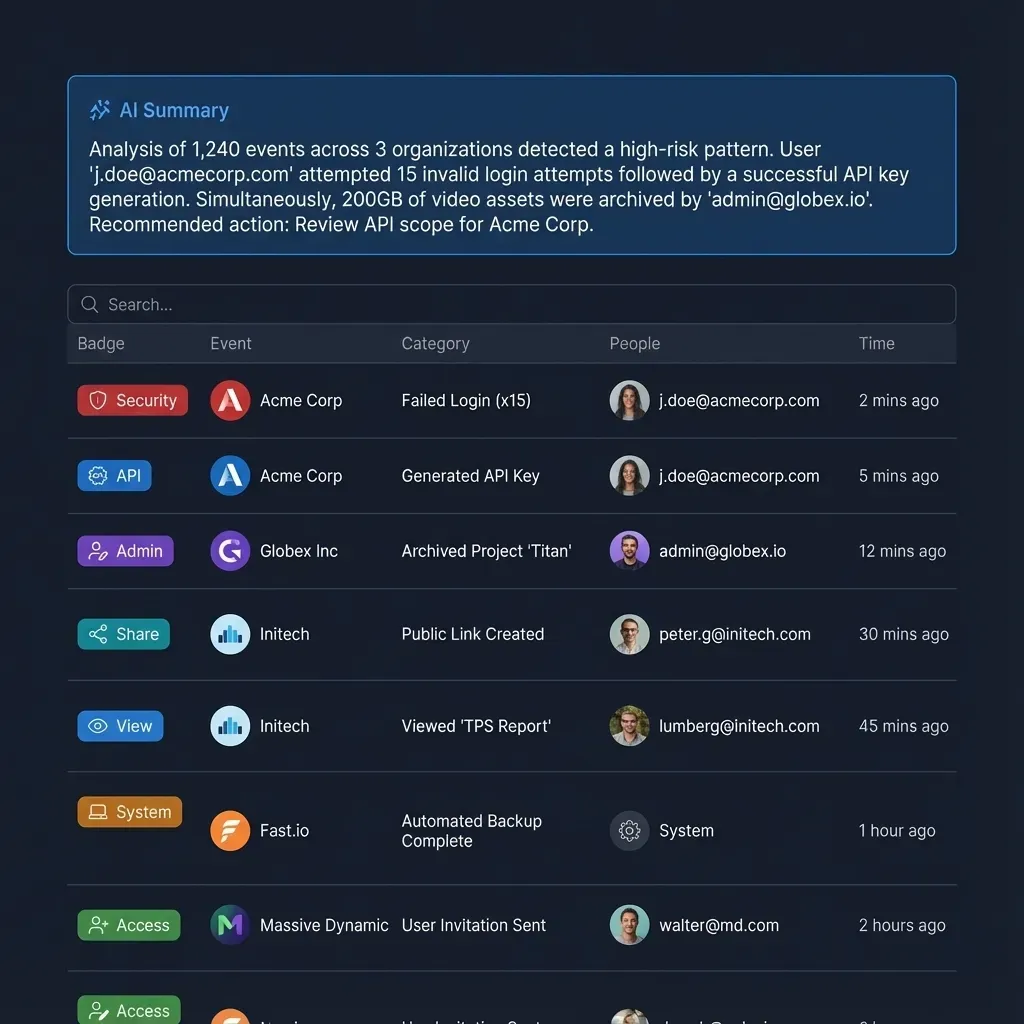


Give Your Agents a Home Base
Don't let your agent's hard work disappear. Use Fastio to store, organize, and share the files your custom tools create.
Best Practices for Tool Development
To ensure your custom tools work reliably with Smolagents, follow these optimization tips:
1. Explicit is Better Than Implicit LLMs struggle with ambiguity. If an argument is optional, state it clearly in the docstring. If a specific format is required (like "YYYY-MM-DD"), include that example in the description.
2. Handle Errors Gracefully Your tool should return informative error messages rather than crashing. If an API call fails, return a string like "Error: API timeout. Please try again," so the agent can attempt a retry or inform the user.
3. Keep Tools Atomic Avoid building "Swiss Army Knife" tools that do ten different things. Break them down into smaller, single-purpose tools. This makes it easier for the agent to reason about which tool to use for a specific step in the plan.
Sources
References used to verify factual claims in this guide.
-
Inquiries about multi-agent systems jumped 1,445% between early 2024 and mid-2025.
Frequently Asked Questions
What are smolagents?
Smolagents is a lightweight library from Hugging Face designed for building AI agents that write and execute Python code. It focuses on simplicity and minimal abstraction, making it easier for developers to create custom agentic workflows compared to heavier frameworks.
Can I use async functions with smolagents?
Currently, smolagents primarily supports synchronous execution for simplicity. If you have async code, you typically need to wrap it in a synchronous runner or use a bridge function to ensure the agent can execute it within its standard loop.
How do I debug a custom tool?
The best way to debug is to test the tool function independently before passing it to the agent. Since tools are just Python functions or classes, you can write standard unit tests for them. Additionally, you can enable verbose logging in your agent configuration to see exactly how the model is interpreting the tool's inputs.
Does Fastio offer a trial for agent storage?
Fastio offers a 14-day Business Trial that provides full access to intelligent workspaces, storage, and monthly credits. A credit card is required to sign up.
Related Resources

Give Your Agents a Home Base
Don't let your agent's hard work disappear. Use Fastio to store, organize, and share the files your custom tools create.