How to Connect Cursor to Dropbox Storage via MCP: Integration Guide
Connecting Cursor to Dropbox allows AI coding agents to search and reference project documentation, specs, and design assets directly from the editor. While local folder syncing clutters developer disks and direct API connectors flood prompt context with raw files, connecting through an intelligent Fast.io workspace pre-indexes Dropbox documents for hybrid search. Developers query technical requirements inside Cursor without context window exhaustion.


The Context Bottleneck: Grounding Cursor in Enterprise Dropbox Storage
In a benchmark published on 9 September 2026 ("Multi-document audit, single run per provider, 9 September 2026"), an agent running claude-opus-5 in Claude Desktop with Cowork completed a 211-file audit through Fastio in 2 minutes and 50 seconds across 29 connector calls, compared to 4 minutes and 24 seconds across 115 calls for Dropbox's native connector, 5 minutes and 43 seconds across 167 calls for Box's native connector, 6 minutes and 10 seconds across 61 calls for Google Drive's native connector, and 7 minutes and 48 seconds across 119 calls for OneDrive's native connector. Fastio completed the audit with zero unreadable document errors, while Dropbox had 4 unreadable documents and OneDrive had 2 unreadable documents (including the scanned credit memo).
As published on the benchmark method line: "Multi-document audit, single run per provider, 9 September 2026. Coverage counts the 12 ground-truth facts reported. A trap is handled when the brief used the correct version or disclosed the problem. Precision verifies every checkable claim against the PDFs. Fabrications are counted separately."
Cursor Dropbox integration links the Cursor AI code editor to Dropbox storage via Model Context Protocol, enabling Cursor's Agent and Composer modes to ground code generation in remote project documents. In professional software development, engineering decisions rely heavily on documentation stored outside source code repositories. Product requirement documents, architectural decision records, security policies, API interface definitions, and database schemas frequently reside in cloud storage platforms such as Dropbox, Box, Google Drive, OneDrive, or SharePoint.
When software engineers instruct Cursor Composer or Chat to build a feature, the agent needs access to those external requirements. However, traditional approaches force developers to choose between two flawed options: copying text manually into the chat window, or syncing massive external folders directly to their local workstation.
Why Symlinking and Local Dropbox Sync Degrade Developer Environments
The most common advice on developer forums suggests installing the Dropbox desktop client, syncing cloud folders locally, and creating a symbolic link or copying files into the project repository. While this approach appears straightforward, it introduces severe operational problems for the local IDE:
- Disk Space Clutter: Enterprise documentation libraries often span gigabytes of binary PDFs, presentation decks, recording archives, and graphic design assets. Forcing local synchronization consumes workstation storage and risks filling local drives.
- Codebase Indexing Degradation: Cursor local codebase indexing is optimized for code repositories and degrades when indexing large non-code binary files or external cloud directories. When non-code files flood the repository tree, Cursor's background indexer expends CPU cycles parsing binary blobs, generating noisy vector embeddings that degrade semantic code search.
- File Watcher Overhead: Cloud synchronization clients continuously modify file timestamps, extended attributes, and sync status flags. Local file watchers in Cursor detect these micro-updates, triggering repetitive re-indexing cycles that cause editor lag and elevated battery consumption.
- Git Repository Pollution: Local file mirrors risk accidental commits. Storing living specifications alongside code leads to repository bloat and requires complex
.gitignoremaintenance.
The Cost of Context Window Dilution and Token Bloat
When engineers attempt to bypass local syncing by attaching large files directly to Cursor prompts via @file mentions, they encounter context window dilution. Ingesting an 80-page system specification or a multi-tab spreadsheet dumps tens of thousands of tokens into the prompt buffer.
Frontier models allocate attention across the entire active context window. Overloading that window causes concrete technical issues:
- Attention Degradation: In what researchers describe as the lost-in-the-middle effect, transformer models prioritize tokens at the beginning and end of long prompts. Critical technical requirements placed in the middle of a massive attached document receive diminished attention, resulting in hallucinated function signatures and broken interface implementations.
- Token Budget Depletion: Input tokens are billed on every turn. Processing bloated document bodies rapidly depletes model allowances and accelerates context window limits during extended multi-file editing sessions.
- Inference Latency: Transferring and processing heavy prompt payloads increases time to first token, interrupting developer flow during rapid interactive coding.
Why Direct Dropbox MCP Connectors Struggle in IDE Workflows
Engineering teams evaluating how to connect Cursor to Dropbox often investigate direct Model Context Protocol (MCP) integrations. Introduced by Anthropic, the Model Context Protocol defines a standardized JSON-RPC interface that connects AI coding assistants to external tools, databases, and file stores. Third-party toolkits, such as the Composio Dropbox framework, provide managed MCP servers that allow AI agents to invoke Dropbox API endpoints.
Composio documentation notes: "Cursor fully supports MCP integration. You get structured tool calling, message history handling, and model orchestration while Tool Router takes care of discovering and serving the right Dropbox tools."
While direct tool calling functions well for discrete administrative actions like creating a folder or requesting a file upload, connecting Cursor directly to Dropbox over raw API tools introduces four operational bottlenecks during software development.
1. Full Document Streaming Versus Targeted Passage Retrieval
Direct Dropbox MCP servers operate at the raw file level. When an agent invokes a tool like dropbox_download_file or get_file_content, the server downloads the entire file payload and streams the complete text into the active prompt context.
Enterprise Dropbox folders store complex document formats, including Word files (.docx), PowerPoint presentations (.pptx), Excel spreadsheets (.xlsx), and multi-page technical PDFs. A single tool call that retrieves a service specification can dump 35,000 tokens into Cursor Composer. Because raw connectors provide no passage-level filtering, Cursor must process page headers, legal disclaimers, and styling markup that have no relevance to the active coding task.
2. Sequential Directory Traversal and API Rate Limits
Enterprise Dropbox accounts feature deep folder hierarchies. To locate a specific technical contract or architecture note, an autonomous coding agent must issue sequential API calls: listing parent folders, inspecting child items, checking file extensions, and downloading candidate files.
This iterative navigation pattern triggers rapid API calls. Auditing a 211-file corpus through a native Dropbox connector required 115 connector calls in benchmark testing. When an agent repeatedly queries directory listings during multi-step refactoring, it risks encountering HTTP 429 rate limit errors from the Dropbox API. These pauses stall agent generation and break developer focus.
3. Missing Optical Character Recognition on Scanned Records
Corporate Dropbox archives routinely include scanned vendor agreements, architecture diagrams saved as raster images, and legacy technical whitepapers. Direct file connectors retrieve raw byte streams without running optical character recognition (OCR) or document layout analysis.
When an agent encounters a PDF consisting of scanned pages without an embedded text layer, direct connectors return blank strings or unreadable byte markers. In the 9 September 2026 multi-document audit benchmark, this exact failure mode caused the native Dropbox connector to fail on 4 documents, creating factual blind spots during automated inspection.
4. Personal OAuth Fragility in Team Environments
Direct Dropbox MCP connections typically rely on personal OAuth 2.0 access tokens. Configuring local tokens in development containers, continuous integration runners, or remote SSH workstations introduces administrative overhead. When OAuth tokens expire, developer agents fail silently, requiring manual browser re-authentication.
Pre-Indexed Workspaces: The Architecture for Cursor Dropbox Integration
To resolve the limitations of direct file streaming and local disk clutter, engineering teams place an intelligent Fast.io workspace between Dropbox storage and Cursor IDE. Teams keep Dropbox as their authoritative corporate system of record, sync target documentation folders into a Fast.io workspace, and connect Cursor through Fast.io's remote Model Context Protocol server.
Fast.io indexes documents upon sync, allowing Cursor to retrieve precise semantic passages with zero local disk footprint. Cursor queries pre-indexed passages rather than pulling whole folders over the network, keeping context windows clean and execution fast.
Preserving Storage Custody in Dropbox
Engineering teams operate under strict organizational data governance policies. Developers cannot migrate corporate assets away from centralized repositories simply to accommodate an AI tool.
Fast.io preserves storage custody while enabling AI-ready retrieval. Fast.io Cloud Sync maintains folders in sync, supporting one-way or two-way sync on a recurring schedule or on demand. Cloud Sync ships for Dropbox, Box, and OneDrive folders today. Google Drive imports today with sync coming soon; transfers are never real-time.
Pointing Fast.io Cloud Sync at your enterprise Dropbox specification folders synchronizes documentation into the workspace automatically without moving files out of corporate custody. Team members continue editing and managing documents within Dropbox. Fast.io synchronizes modifications in the background, preserving folder hierarchies, file metadata, and version history.
Hybrid Search Retrieval Versus Raw Traversal
When an AI agent interacts with raw cloud drives, it must guess file names and download candidate documents sequentially. Fast.io replaces raw traversal with workspace Intelligence Mode. When files arrive in a Fast.io workspace, Intelligence Mode parses, chunks, and indexes the documents immediately:
- Automated Text Extraction and OCR: Scanned diagrams, image-based PDFs, and Office documents are processed on arrival, ensuring text is extracted before Cursor queries the workspace.
- Hybrid Search Retrieval: Fast.io builds a unified index combining exact full-text keyword matching with semantic vector retrieval. Filenames, file contents, and metadata values are all indexed.
- Passage-Level Extraction: When Cursor queries the workspace via MCP, Fast.io returns targeted excerpts accompanied by file names and page citations rather than raw file downloads.
Instead of downloading a 90-page architectural manual, Cursor receives the exact two paragraphs defining the target API endpoint and authentication header requirements.
Remote Streamable HTTP Architecture
The Fast.io MCP server is remote, hosted at https://mcp.fast.io/mcp over Streamable HTTP, with legacy Server-Sent Events supported at /sse. It is not an npm package and requires no local background daemon, no Python virtual environment, and no local credentials file.
For configuration blocks that authenticate via an Authorization: Bearer <api-key> header, Fast.io provides the dedicated key endpoint at https://mcp.fast.io/mcp/key. Scoped API keys pass directly through request headers:
Authorization: Bearer YOUR_FASTIO_API_KEY
This remote architecture simplifies setup across developer environments. Whether an engineer runs Cursor on macOS, Windows, Linux, or inside a cloud development container, Cursor connects directly to the remote endpoint without port forwarding or browser redirects.
Benchmark Evidence: Storage Connectors in Multi-Document Audits
The operational advantage of pre-indexed workspace search over direct cloud storage traversal was measured in the 9 September 2026 multi-document audit benchmark across an identical 211-file corpus (calloway_synthetic_messy_v1):
Against native Dropbox, Fastio completed the multi-document audit in less than two-thirds the time while executing roughly one-fourth the connector calls, reading fewer distinct documents and avoiding unreadable document errors on scanned files. Pre-indexing eliminates repetitive directory traversals, avoids unreadable document errors on scanned files, and preserves prompt context for active reasoning.
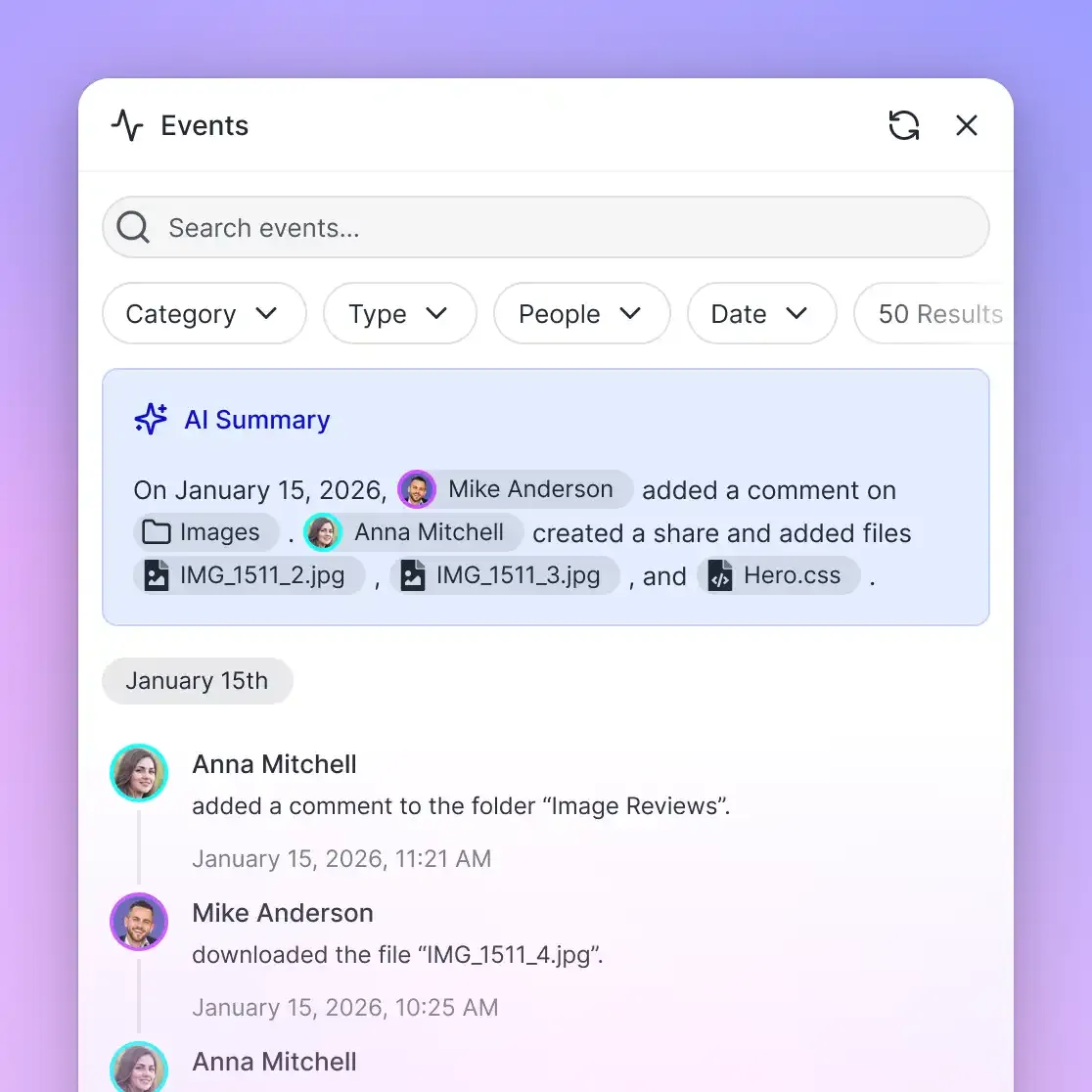


Ground Cursor Code Generation in Live Dropbox Specifications
Sync your enterprise Dropbox folders into an intelligent Fast.io workspace. Query architecture specs from Cursor via remote MCP with single-call hybrid search. Starts with a 14-day free trial.
Step-by-Step Setup: Connecting Cursor to Dropbox via Fast.io MCP
Connecting Cursor IDE to Dropbox storage through Fast.io requires no local background processes or custom middleware. Every organization starts with a 14-day free trial, which requires a credit card. Creating an account is free; doing real work requires an organization on a paid subscription. Subscription plans on Fast.io pricing include Starter at $29/mo, Business at $99/mo, and Growth at $299/mo.
Follow this 4-step setup guide to configure synchronization, obtain credentials, register the remote MCP server in Cursor, and query enterprise files:
1. Configure Dropbox OAuth and Cloud Sync in Fast.io
To establish the connection between Dropbox and your workspace:
- Sign in to your Fast.io organization console.
- Create a dedicated workspace for your project or engineering group (for example,
billing-service-specs). - Open workspace settings and select Cloud Sync (or Cloud Import for a one-time transfer).
- Select Dropbox from the cloud provider list and complete the standard OAuth authorization prompt.
- Choose the Dropbox folders containing your technical specifications, architecture records, or API contracts.
- Set your synchronization preferences: choose one-way sync (Dropbox to Fast.io) or two-way sync, and define your schedule (such as daily, hourly, or manual on-demand triggers).
Fast.io connects to Dropbox server-to-server and synchronizes the files into your workspace without consuming local bandwidth.
2. Enable Workspace Intelligence for Hybrid Indexing
Once documentation arrives in the workspace, activate Fast.io's indexing engine:
- Open the workspace console and verify that the Intelligence toggle is enabled in workspace settings.
- Intelligence Mode automatically parses document layouts, runs OCR on scanned diagrams, extracts text, and generates hybrid search embeddings.
- Verify indexing by testing a sample query in the console search bar to confirm that relevant paragraphs and citations appear.
3. Generate a Scoped Fast.io API Key
To authenticate Cursor without interactive browser prompts:
- In the Fast.io console, navigate to Account Settings and select Developer Access.
- Generate an API key scoped specifically to your project workspace. Scoping permissions ensures Cursor only accesses designated project documentation.
- Copy the generated API key.
4. Configure Remote MCP Server in Cursor and Query Files
Cursor discovers MCP servers through configuration files. You can configure MCP globally in ~/.cursor/mcp.json (macOS and Linux) or %USERPROFILE%\.cursor\mcp.json (Windows), or configure project-level settings in .cursor/mcp.json in your repository root. You can also review configured servers in Cursor Settings under Tools & MCP (or Features > MCP Servers).
Create or edit .cursor/mcp.json in your project root:
{
  "mcpServers": {
    "fastio": {
      "url": "https://mcp.fast.io/mcp/key",
      "headers": {
        "Authorization": "Bearer YOUR_FASTIO_API_KEY"
      }
    }
  }
}
Replace YOUR_FASTIO_API_KEY with your actual workspace token. Save the file. In Cursor Settings under Features > MCP Servers, verify that the fastio server displays an active green status indicator.
With the server active, developers can query files directly in Cursor Composer or Chat using @fastio or natural language instructions:
@fastio Search our synchronized Dropbox specifications for the refund approval policy.
Implement the refund validation logic in src/services/refund-processor.ts based on the enterprise spec.
Cursor invokes the remote MCP server, executes a hybrid search, and receives the exact paragraphs defining the refund policy with file citations. Cursor writes the implementation without loading hundreds of irrelevant specification pages into prompt memory.
Production Workflows: Grounding Cursor Code Generation in Dropbox Specs
With Fast.io registered as an MCP server in Cursor, developers can reference live enterprise specifications directly within Cursor Composer (Cmd+I) and Cursor Chat (Cmd+L). Here are three concrete production workflows illustrating pre-indexed retrieval during active development.
Workflow 1: Implementing Backend Endpoints from Synchronized PRDs
When building backend services, engineers must match endpoint behavior to product requirements defined by technical leads in Dropbox Word documents. Open Cursor Composer inside your repository and submit a prompt:
Examine our synchronized Dropbox technical specifications for user session management.
Implement the POST /api/v2/auth/refresh endpoint in src/controllers/auth.ts,
ensuring token rotation and idle timeout intervals match enterprise security policies.
Cursor invokes the Fastio storage search tool (see mcp.fast.io/skill.md) on the remote Fast.io MCP server, receives the exact passages defining session lifetimes and token rotation rules with document citations, and writes the TypeScript implementation directly into auth.ts.
Workflow 2: Validating Database Migrations Against Enterprise Data Dictionaries
Enterprise data architects often maintain database naming conventions, allowed enum values, and mandatory audit fields inside Excel workbooks hosted on Dropbox. When creating database migrations, a developer prompts Cursor:
Check the enterprise data dictionary in our workspace.
Verify whether prisma/migrations/20260913_add_merchant_accounts/migration.sql
includes all mandatory compliance columns and correct foreign key constraints.
Cursor queries the indexed spreadsheet via MCP, identifies that required columns like kyc_verification_status and audit_created_at were omitted, and updates the SQL migration file before pull request submission.
Workflow 3: Querying Structured Specifications with Metadata Views
When managing large archives of technical documents, unstructured text search may return broad matches. Fast.io provides Metadata Views, a structured document extraction capability that turns documents into a live, queryable database.
Teams describe fields in natural language (such as Microservice Name, Upstream Dependency, Port, Protocol, and Failover SLA). Fast.io automatically extracts values across seven typed schemas: Text, Integer, Decimal, Boolean, URL, JSON, and Date & Time. No manual templates or OCR configuration rules are required.
Cursor queries Metadata Views programmatically over MCP, filtering documents by structured attributes before opening specific files:
Query our Metadata Views for services where Protocol is "gRPC" and Failover SLA is "500ms".
Generate circuit breaker configurations in src/config/resilience.ts for all matching services.
Cursor retrieves structured JSON records in a single MCP tool call, extracting connection parameters without opening dozens of architecture PDFs individually.
Team Governance: Version History, Permissions, and Audit Logs
When multiple engineers and autonomous agents interact with shared documentation, Fast.io provides enterprise governance controls:
- Per-File Version History: Every document and note maintains complete version history. If an agent writes updated documentation or code summaries back to the workspace, prior versions remain restorable.
- Granular Permissions: Permissions can be configured at organization, workspace, folder, and file levels. Teams can grant Cursor read-only access to corporate specifications while allowing write permissions only in designated output directories.
- Collaborative Notes: Fast.io Collaborative Notes brings real-time co-editing to workspaces with live multiplayer cursors for people and agents. Developers and agents can draft implementation plans in shared notes reviewed by teammates live.
- Append-Only Audit Log: Fast.io maintains an immutable audit log recording every file access, search query, and metadata extraction, ensuring visibility into agent operations.
- Ownership Transfer: A developer or agent account can configure the workspace, set up Dropbox synchronization, build Metadata Views, and transfer complete organization ownership to an engineering manager via a claim link while retaining administrative access.
Best Practices for Managing Cursor and Dropbox Integration at Scale
Deploying AI coding assistants across engineering teams requires thoughtful configuration to balance retrieval accuracy, token efficiency, and storage governance. Engineering organizations should adopt four operational practices when connecting Cursor to Dropbox at scale.
1. Maintain Scoped Synchronization Boundaries
Avoid synchronizing entire top-level Dropbox corporate drives into an agent workspace. Enterprise drives contain miscellaneous files, marketing video footage, financial reports, and human resources paperwork that have no relevance to software development.
Establish dedicated Dropbox folders specifically for engineering assets, such as /Engineering/Architecture-Specs, /Product/PRDs, or /Security/Compliance-Standards. Syncing targeted directories keeps the workspace retrieval index dense and focused, reducing semantic noise when Cursor performs vector searches.
2. Pair Remote MCP with Local Ignore Rules
While Fast.io handles remote document indexing, developers must configure local repository boundaries. Ensure that .cursorignore and .cursorindexingignore files are maintained in the root of your Git repository:
- Use
.cursorignoreto exclude local build artifacts, virtual environments, minified bundles, and dependencies likenode_modules/ortarget/. - Use
.cursorindexingignoreto exclude generated code, mock datasets, and large SQL fixtures from local vector embeddings.
This separation of concerns ensures that Cursor indexes code repositories locally using its specialized code parser, while delegating non-code documentation, architecture PDFs, and enterprise spreadsheets to the remote Fast.io MCP index.
3. Use Collaborative Notes for Multi-Agent Alignment
When developers run multiple Cursor sessions concurrently or pair Cursor with other agents like Claude Code or Codex, coordinating context becomes essential. If two agents attempt to write code against the same service specification without shared notes, architectural drift occurs.
Fast.io Collaborative Notes enables humans and agents to co-edit shared design documents in real time. Before starting a complex refactor, prompt Cursor Composer to write its planned module structure into a workspace note. Team members and parallel agents can review the proposed architecture in the shared note before code is merged.
4. Monitor Token Consumption and Retrieval Citations
Train developers to prompt Cursor with targeted retrieval instructions. Instead of asking Cursor to summarize entire specification folders, instruct the agent to locate specific constraints, timeout definitions, or error schemas.
Review the citations returned in Cursor Composer responses. Fast.io MCP returns explicit file names and page references for every retrieved passage. Verifying that generated code aligns with cited specification sections ensures that implementations adhere strictly to enterprise standards.
Sources
References used to verify factual claims in this guide.
-
Composio provides a managed tool router that connects Cursor to Dropbox API tools over the Model Context Protocol.
-
The Model Context Protocol is an open standard designed to connect AI assistants to external data sources and developer tools.
Frequently Asked Questions
How do I add Dropbox as an MCP server in Cursor?
You add Dropbox as an MCP server in Cursor by syncing your Dropbox documentation folders into an intelligent Fast.io workspace and registering Fast.io's remote MCP endpoint in Cursor. Add the configuration to `.cursor/mcp.json` with the URL `https://mcp.fast.io/mcp/key` and your workspace API key in the Authorization header. Cursor can then query indexed Dropbox files directly from Composer and Chat.
Can Cursor AI read PDF and docx files stored in Dropbox?
Yes. When connected through Fast.io's remote MCP server, Cursor searches pre-indexed Dropbox files including PDFs, Word documents (.docx), Excel spreadsheets (.xlsx), and scanned images. Fast.io's Intelligence Mode runs automated text extraction and OCR upon sync, allowing Cursor to retrieve relevant passages with citations without downloading raw binary files.
Why shouldn't I symlink Dropbox folders directly into my Cursor project?
Symlinking Dropbox folders directly into your project repository clutters developer disks, causes Git tracking complications, and degrades Cursor's local codebase indexing. Cursor's background indexer is optimized for source code and struggles when indexing large non-code binary files and living cloud directories, leading to high CPU usage and degraded semantic search.
How does MCP passage retrieval compare to direct Dropbox API tool calls?
Direct Dropbox API tool calls download complete file payloads into prompt memory and require sequential directory traversal, consuming tens of thousands of context tokens and risking API rate limit throttling. Fast.io MCP file search queries pre-indexed passages, returning targeted excerpts in a single tool call while preserving prompt context.
Where is the .cursor/mcp.json configuration file located in Cursor?
Cursor stores project-specific MCP configurations in `.cursor/mcp.json` at the root of your project directory. For global configurations that apply across all projects, Cursor uses `~/.cursor/mcp.json` on macOS and Linux, or `%USERPROFILE%\.cursor\mcp.json` on Windows. You can also view and edit configured servers through Cursor Settings under Features > MCP Servers.
How does Fast.io handle updates when files change in Dropbox?
Fast.io Cloud Sync maintains folders in sync between Dropbox and your workspace on a recurring schedule or on demand. When team members update specifications, spreadsheets, or architectural drawings in Dropbox, Fast.io synchronizes the revised files and updates the hybrid search index automatically.
What are the advantages of remote MCP over local Dropbox sync?
Remote MCP eliminates local disk footprint, avoids workstation CPU overhead from file indexing, and enables zero-install connections across team workstations, remote development containers, and cloud development environments. Developers query indexed passages over Streamable HTTP without maintaining local file mirrors.
Related Resources

Ground Cursor Code Generation in Live Dropbox Specifications
Sync your enterprise Dropbox folders into an intelligent Fast.io workspace. Query architecture specs from Cursor via remote MCP with single-call hybrid search. Starts with a 14-day free trial.