How to Implement Fastio API Real-Time File Event Notifications
File sharing is the practice of distributing digital files between users over a network, but when AI agents collaborate, they require instant context. Fastio API real-time file event notifications solve this by streaming updates via a WebSocket events feed and activity polling, ensuring agents always have the latest context. This guide covers how to monitor feeds, coordinate concurrent writes with advisory file locks, and reduce latency.


What Are Real-Time File Event Notifications?
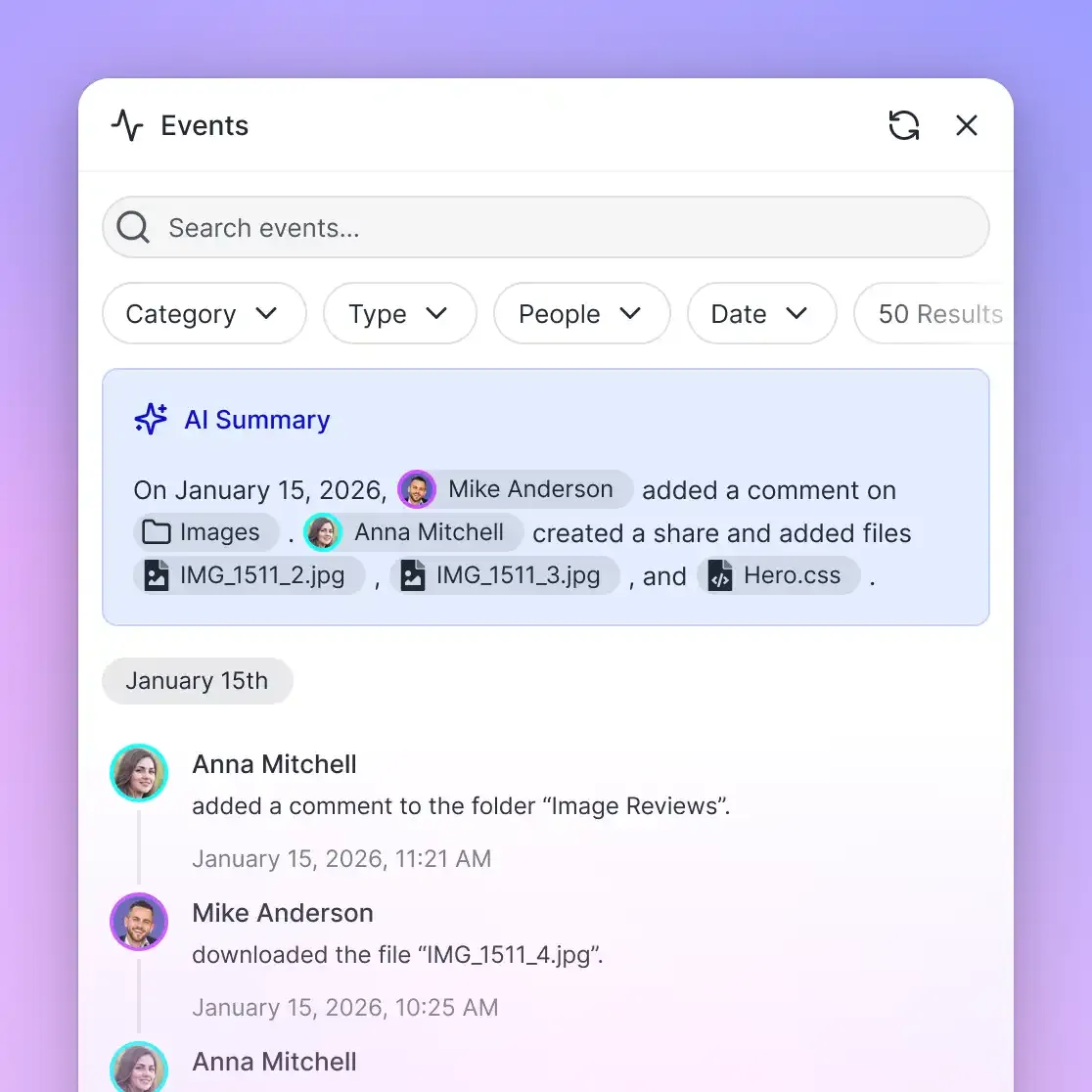
Fastio real-time file events stream updates to your infrastructure instantly, so agents always have the latest context. Rather than forcing your application to continuously poll the server for changes, Fastio proactively pushes event payloads the moment a file is created, modified, or deleted within a workspace.
This push-based architecture is important for AI systems and human-agent collaboration. When an autonomous agent modifies a document or generates a new asset, other participants in the workspace must receive that update immediately. Relying on aggressive polling introduces delays and consumes API quota, slowing down the entire workflow.
For developers integrating with Fastio, these events are delivered through two primary mechanisms: a realtime activity feed you can poll via REST, and a WebSocket events feed for continuous streaming. The Fastio API standardizes the payload schema across both delivery methods. Your handlers can process events consistently regardless of how they are received.
This event-driven approach ensures your local context remains synchronized with the cloud state. It enables reactive workflows where a file upload immediately triggers a background processing job, an intelligence indexing run, or a notification to a connected agent using storage for agents.
Related guides
- How to Manage Custom File Metadata with Fastio APICustom file metadata in Fastio allows developers to attach application-specific key-value pairs to files to improve...
- How to Build an AI File Manager with the Fastio APIMost AI agent tutorials skip the hardest part: giving your agent reliable, searchable file storage that works across...
- How to Upload Files to Dropbox via API: Simple vs Upload SessionsChoosing how to use the Dropbox API to upload file contents depends on asset size and network reliability. The Dropbox...
- How to Generate Branded Share Links via Fastio APIFile delivery is often the weakest link in automated workflows. Using the Fastio API, developers can automate the...
- How to Implement Generative UI File Uploads with Fastio APIGenerative UI file uploads use LLMs to dynamically render interactive upload components backed by the Fastio API based...
- How to Implement API File Versioning: A Complete Developer TutorialFile versioning with the Fastio API lets applications programmatically store, track, and roll back document iterations...
More on this subject: Agent File and Document Workflows (325 guides)
Why Millisecond Latency Matters for AI Workflows
The speed of event delivery directly impacts the reliability of your multi-agent systems. When multiple agents collaborate on a shared file, a delay in receiving a modification event can result in conflicting edits or redundant processing. According to AWS EventBridge, modern event routing architectures deliver event payloads within milliseconds to ensure high-performance synchronization.
Achieving millisecond latency for file modification events changes how applications interact with storage. For example, if a human user drops a video file into a Fastio workspace, an attached AI agent can begin transcribing the audio track before the human even switches tabs.
This rapid latency for file modification events is a basic requirement for the human-agent collaboration loop. When you connect an agent to a Fastio workspace via the remote MCP server, the agent relies on these rapid event signals to stay synchronized. If latency grows, the agent might attempt to read a file that has already been moved, or write to a document that is actively being modified.
Fastio API real-time file event notifications are built to minimize transit time. The system avoids deep queueing delays by routing events directly to your connected feeds. For the fastest delivery, the API supports a WebSocket events feed, which eliminates the overhead of establishing a new connection for every file event.
Core Architecture: WebSocket Feeds vs. Activity Polling
Developers can consume Fastio real-time file event notifications using two distinct architectural patterns. Choosing the right pattern depends on where your consumer code runs and how it manages state.
WebSocket Events Feed (Persistent Streaming) The WebSocket events feed maintains a persistent, bidirectional connection between your application and Fastio. When files, folders, or workspaces change, the system pushes events across the socket. This pattern is ideal for persistent agents, background workers, and interactive dashboards that need immediate notification of changes without repetitive HTTP requests.
Activity Polling (REST Feeds)
Activity polling allows applications to retrieve recent events by querying the REST API. You can search the activity log with GET /current/events/search/ or long-poll the realtime activity feed with GET /current/activity/poll/{entityId}?wait=95&lastactivity={timestamp}. This pattern is well-suited for serverless functions and periodic sync jobs that do not maintain open sockets.
Step-by-Step Guide: Implementing Fastio Real-Time Event Feeds
Implementing real-time file events requires configuring authentication, connecting to the event feed, and handling incoming payloads. Follow these steps to set up a reliable listener for your Fastio workspaces.
Step 1: Obtain a Scoped API Key
Generate a long-lived API key in your Fastio workspace settings under Devices & Agents > API Keys, or programmatically via POST /current/user/auth/key/. Keep this key secure on your server.
Step 2: Connect to the WebSocket Events Feed Establish a secure WebSocket connection to Fastio's events endpoint, passing your Bearer token in the connection headers. Fastio validates the key and opens the event stream.
Step 3: Listen for Storage and Workspace Events Once connected, listen for event records. Fastio streams structured JSON payloads containing event types, entity IDs, timestamps, and metadata whenever files are created, updated, or deleted.
Step 4: Process Events Asynchronously When processing events in production, always offload heavy tasks such as document extraction or AI inference to background workers. Acknowledge and buffer incoming events immediately so your socket listener never blocks.
Handling Concurrent Updates with File Locks and Version History
When building systems that respond to Fastio API real-time file event notifications, you will encounter concurrency challenges. If multiple agents receive an event notification simultaneously, they might both attempt to process and update the same file.
To coordinate concurrent work, event handlers can acquire an advisory file lock before writing. When an agent starts working on a file in response to an event, it calls POST /current/workspace/{workspace_id}/storage/{node_id}/lock/ (or the MCP storage tool action lock-acquire). If another process already holds the lock, the acquire returns HTTP 409, signaling that an update is in progress so the agent can wait or read.
Advisory locks expire automatically unless renewed with heartbeat calls, and can be taken over by anyone with write permission if a worker disconnects. Because locks are advisory rather than exclusive, version history serves as the safety net: every write is preserved under the file's stable node_id.


Give Your AI Agents Persistent Storage
Join Fastio's 14-day Business Trial. Build intelligent, responsive workspaces with a consolidated MCP toolset and real-time event delivery. Explore plans at /pricing/.
Troubleshooting and Common Challenges
Even well-architected event systems encounter operational friction. When implementing Fastio API real-time file event notifications, you must anticipate network unreliability and edge cases.
Missed Events and Disconnections
If your consumer disconnects, it will miss live events during the outage. To recover cleanly, your application should run a reconciliation query against GET /current/events/search/ or poll the activity feed to fetch any events that occurred while disconnected.
Event Ordering Constraints In distributed architectures, events may occasionally arrive out of order. You must design your logic to handle out-of-order delivery. Storing the timestamp included in the Fastio event payload allows your system to sequence events accurately and maintain consistency.
Authentication and Token Renewal Ensure your worker process properly refreshes or validates its scoped Bearer token. Fastio verifies authorization for every stream connection, so expired tokens will terminate the socket.
Best Practices for Production Environments
Deploying an event consumer to production requires defensive programming techniques to keep your infrastructure resilient.
Implement Idempotency Network reconnections mean that you may occasionally process the same event payload twice. Your processing logic must be idempotent. Before taking action on a Fastio file event, check your datastore to see if you have already processed the unique event identifier. If the ID exists, discard the duplicate.
Filter at the Source Reduce extra bandwidth and compute costs by scoping subscriptions. Instead of subscribing to all workspace events, scope your consumers to the specific workspaces or folders relevant to your use case.
Monitor Feed Latency Visibility is the foundation of reliability. Monitor connection state and consumption lag. Alert your engineering team if event throughput stalls unexpectedly, ensuring high availability for your AI agent pipelines.
Sources
References used to verify factual claims in this guide.
-
Modern event routing architectures deliver event payloads within milliseconds to ensure high-performance synchronization.
Frequently Asked Questions
How do I secure real-time event connections in Fastio?
Fastio secures event connections using scoped Bearer API keys over TLS. Agents and services authenticate their requests and WebSocket connections using these human-granted keys to ensure authorized access.
Does Fastio support real-time events?
Yes, Fastio provides real-time event notifications via a WebSocket events feed and a pollable realtime activity feed. These streams deliver instant updates when files are created, modified, or deleted within your workspaces.
What happens if my event consumer disconnects?
If your consumer disconnects, reconnect to the WebSocket events feed and query the audit log or activity feed to catch up on any events that occurred while offline.
How to listen for file changes in Fastio?
You can listen for file changes by connecting to Fastio's WebSocket events feed, or by polling the activity feed and searching events via the REST API.
Are events delivered in exact order?
While events are dispatched chronologically, network latency may cause out-of-order arrival. Always rely on the timestamp and audit log records included in the event payload to determine the true sequence of operations.
How does Fastio handle high-volume event traffic?
Fastio delivers events efficiently over persistent connections and pollable feeds. For high-volume architectures, consume events via a centralized consumer and distribute work across internal queues to process workloads in parallel.
Related Resources

Give Your AI Agents Persistent Storage
Join Fastio's 14-day Business Trial. Build intelligent, responsive workspaces with a consolidated MCP toolset and real-time event delivery. Explore plans at /pricing/.