Fastio API vs AWS EFS for Agent Workspaces: A Practical Guide
Your choice of storage architecture determines if your AI agents can act on their own or need human help. AWS EFS offers traditional POSIX file sharing for containers. Fastio API provides purpose-built agentic workspaces with built-in semantic search and MCP support. We compare both approaches across setup complexity, context retrieval, and moving from static files to intelligent action.

What is the Difference Between Fastio and AWS EFS?
While AWS EFS provides traditional POSIX file sharing for containers, Fastio API delivers purpose-built agentic workspaces with built-in semantic search and MCP support. This difference changes how developers build and scale AI applications.
Amazon Elastic File System (EFS) is a reliable and scalable network file system designed for Linux environments. It provides shared, persistent storage for Amazon EC2 instances, ECS containers, and Lambda functions. When an application needs to append logs, share configuration files across a cluster, or run high-performance computing workloads, EFS provides the necessary low-level infrastructure.
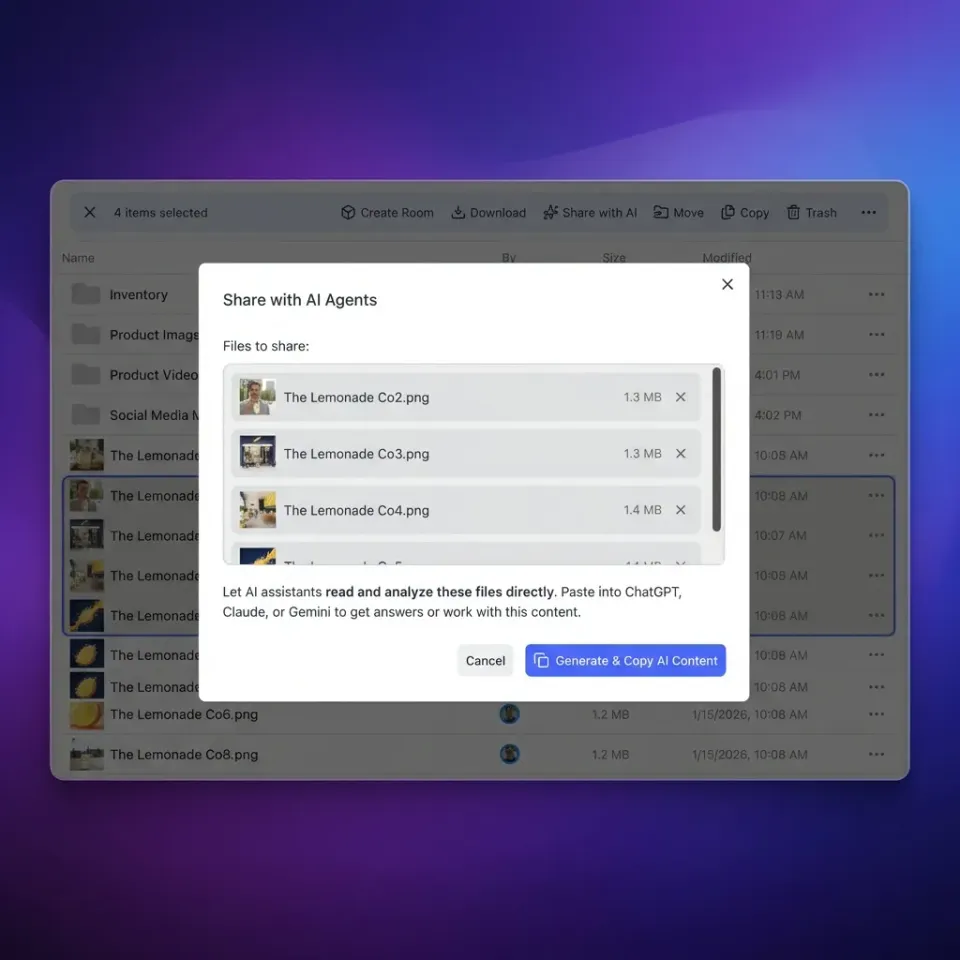
Fastio takes a different approach. It abstracts the file system layer entirely, exposing intelligent workspaces through a modern REST API and Model Context Protocol (MCP) endpoints. Instead of mounting a volume to an operating system, agents and developers interact with Fastio over standard HTTP. The storage layer actively participates in the workflow by automatically indexing content, managing access control, and answering semantic queries.
Helpful references: Fastio Workspaces, Fastio Collaboration, and Fastio AI.
Related guides
- How to Implement Multi-Tenant Workspaces with Fastio APIImplementing multi-tenant workspaces with the Fastio API allows B2B AI applications to guarantee strict data isolation...
- Google Drive File Size Limits: Workarounds for AI Agent WorkspacesGoogle Drive limits individual file uploads to 5TB and daily uploads to 750GB, which can easily freeze multi-agent...
- How to Fix 'File Too Large for Destination File System' in Agentic WorkspacesThe file too large for destination file system error interrupts AI agents working in containerized environments. This...
- Best Cloud Storage for AI Agents: Top 7 Platforms ComparedCloud storage for AI agents provides persistent file access, version control, and API-driven operations that let...
- Top 10 Cloud Storage APIs for AI ApplicationsA cloud storage API for AI is a programmatic interface that lets AI applications store, retrieve, and manage files and...
- Best Document Storage for AI Processing: Top Solutions for 2026AI agents need somewhere to store and retrieve documents. Not every cloud storage platform is up to the task. This...
More on this subject: Agent Memory and Storage (263 guides)
Why Traditional File Systems Struggle with Agent Workspaces
Agent workspaces require context retrieval, which EFS lacks natively. A traditional file system treats data as opaque blocks of bytes. When an AI agent needs information from a document stored on EFS, it must load the entire file into memory and parse it. This process consumes compute resources and exhausts the context window limits of modern language models.
A POSIX file system also forces the agent to rely on filenames, directory structures, and basic metadata for organization. If an agent receives a prompt asking for "the latest Q3 financial projections", it cannot search the contents of EFS directly. It must either download related files to scan them or rely on a secondary application to maintain a search index.
Fastio treats files as living knowledge rather than static data. When a file enters a Fastio workspace, the platform automatically extracts the text, generates embeddings, and makes the content semantically searchable. Agents can query the workspace for meaning rather than matching keywords, allowing them to extract precise insights without downloading large datasets.
Setup Complexity: VPC Networking vs Native API Access
The infrastructure requirements for these two systems highlight their different design philosophies. Fastio API removes the need for the VPC networking required by EFS, allowing developers to deploy autonomous agents in minutes rather than days.
Setting up AWS EFS demands AWS networking expertise. Developers must configure Virtual Private Clouds (VPCs), establish subnets across multiple Availability Zones for redundancy, and manage security groups. You must also provision mount targets and configure IAM roles to ensure that your containers or serverless functions can access the data. If your AI agent runs outside of the AWS ecosystem, such as on a local machine or a managed SaaS platform, connecting to EFS requires establishing a VPN or configuring proxy layers.
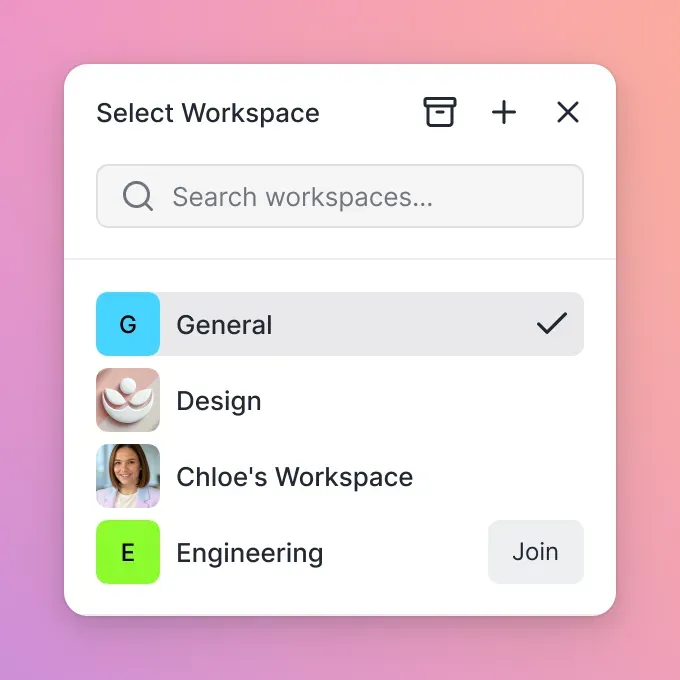
Connecting an agent to Fastio requires only an API key or an OAuth token. The connection occurs over standard HTTPS, making it accessible from any runtime environment. Whether you are building a Python script on your laptop, deploying a container to Google Cloud, or running a serverless function on Vercel, the agent can access its workspace right away. This zero-configuration networking model speeds up development and reduces operational overhead for engineering teams.
Architectural Patterns for Agentic Data Access
Understanding how agents retrieve data under both architectures clarifies the operational differences. The design pattern you choose impacts the performance, reliability, and ongoing costs of your AI application.
In a typical EFS architecture, the retrieval pattern is procedural and heavy on resources. The user provides a prompt to the agent. The agent executes a tool that runs a shell script inside a container. This script must locate the file on the mounted EFS volume, read the contents into memory, and pass the text back to the agent. The agent must then process the raw text, often requiring complex chunking logic to fit the data within its context window. This approach is prone to errors when dealing with large or deeply nested directories.
The Fastio pattern is declarative and efficient. The user prompts the agent. The agent calls the Fastio search API with a natural language query. Fastio processes the query internally, searches its automated vector index, and returns the relevant paragraphs along with citations. The agent then synthesizes the response and delivers it to the user. This simplified pattern reduces token consumption, minimizes latency, and removes the need for custom file-parsing logic.
Context Retrieval: Built-in RAG vs Manual Indexing
According to Amazon Web Services, AWS EFS supports a maximum file size of 47.9 TiB. While this large storage capacity accommodates large datasets, it does not solve the intelligence problem. Storage volume is irrelevant if an agent cannot find the information it needs.
To build an intelligent agent on top of EFS, developers must engineer a separate Retrieval-Augmented Generation (RAG) pipeline. This involves deploying an event-driven service that polls the file system for changes. When a new file appears, the service must extract the text using libraries like Apache Tika, generate embeddings by calling an external LLM, and store those embeddings in a dedicated vector database like Pinecone or pgvector. Maintaining this pipeline requires supervision to handle failed extractions, API rate limits, and database synchronization issues.
Fastio abstracts this infrastructure. Intelligence Mode natively handles the ingestion, chunking, embedding, and storage of document data. The moment a user or agent uploads a file to a workspace, it becomes queryable. Developers can focus on building the agent's core logic rather than maintaining a fragile data pipeline. This native intelligence ensures the agent has access to the most up-to-date information without manual intervention.
MCP Integration: Tools vs Files
The Model Context Protocol (MCP) standardizes how AI models interact with external systems. Support for this protocol defines the difference between a static storage volume and an active agentic workspace.
According to the Fastio Developer Documentation, Fastio provides a consolidated MCP toolset natively. Every core action available in the human-facing user interface has a corresponding agent tool. Agents can create new workspaces, invite users, update permissions, and transfer ownership using standardized API calls. Fastio exposes a remote MCP server at https://mcp.fast.io/mcp/tools (https://mcp.fast.io/mcp/code for coding agents), allowing any MCP-compatible agent to connect directly by signing in or by sending a scoped API key as a Bearer header and gain a suite of tools for natural language file management without installing local server packages.
EFS offers no native MCP integration. An agent attempting to manage an EFS volume must rely on executing low-level shell commands within a container. This approach is brittle and introduces security risks. If the container is not properly sandboxed, an agent might accidentally delete critical system files or expose sensitive data. By replacing procedural shell commands with deterministic MCP tools, Fastio provides a secure and predictable environment for autonomous agents to operate.


Give Your AI Agents Persistent Storage
Stop wrestling with VPCs and manual vector databases. Built for fast api aws efs agent workspaces workflows.
Feature Comparison Table
This comparison highlights the differences between the two storage approaches for AI agent workloads.
The bottom line is that Fastio is designed to give agents context and control, while EFS gives servers raw disk space.
Building Intelligent Workflows with Fastio
Beyond storage, Fastio provides architectural primitives that enable complex agentic workflows. These features address the challenges of building autonomous software.
Ownership transfer is an important capability for client-facing agents. An agent can generate a full project structure, populate it with research or generated assets, and then transfer administrative ownership to a human client. The agent retains the necessary access to continue updating the workspace, but the human assumes control of the billing and final permissions. This pattern is impossible with EFS, where IAM roles and infrastructure boundaries define access.
Fastio also supports cloud imports and API-level advisory file locks. Agents can import files directly from external services like Google Drive or Dropbox without routing the data through their local execution environment. This saves bandwidth and reduces execution time. When multiple agents collaborate in the same workspace, Fastio provides advisory file locks so an agent can signal active work before writing, while file version history with restore preserves every revision regardless and a detailed activity log records who changed what.
Pricing and Limits: Predictable Plans
Cost predictability is a concern when deploying AI agents, as autonomous systems can generate unexpected infrastructure bills. EFS pricing is complicated, calculated based on the chosen storage class, provisioned throughput, and data transfer costs. Tracking how much an agent's read and write operations will cost requires monitoring.
Fastio offers flat plans with seat and storage limits across Starter ($9.99/mo), Business ($49.99/mo), and Enterprise ($199.99/mo) plans. Teams can evaluate the platform with a 14-day Business Trial (credit card required) to test agentic workspaces, semantic retrieval, and collaboration features. Point your team to Fastio Pricing for complete tier details and annual billing discounts.
Sources
References used to verify factual claims in this guide.
-
AWS EFS supports a maximum file size of 47.9 TiB
-
Fastio provides a consolidated MCP toolset natively
Frequently Asked Questions
Is AWS EFS good for AI agents?
AWS EFS provides good raw storage capacity for large datasets, but it lacks the built-in intelligence that AI agents require. Developers must build networking and manual RAG pipelines to make EFS data useful for autonomous agents.
What is the difference between Fastio and AWS EFS?
AWS EFS is a traditional POSIX file system requiring VPC networking and OS-level mounts. Fastio is a purpose-built workspace layer providing built-in semantic search, native MCP tools, and API access for AI agents.
Can I use Fastio with my existing AWS infrastructure?
Yes, Fastio integrates smoothly with applications running on AWS. Because Fastio uses standard HTTPS for its API, your Lambda functions, EC2 instances, and ECS containers can interact with Fastio workspaces without any networking configuration.
How does Intelligence Mode handle large documents?
When you upload a document to a Fastio workspace with Intelligence Mode enabled, the system chunks the text, generates vector embeddings, and stores them in a search index. Agents can then query this index to find specific paragraphs without loading the document.
How can I evaluate Fastio for my AI agents?
Fastio offers a 14-day Business Trial requiring a credit card, giving teams full access to agentic workspaces, MCP connectivity, and built-in Intelligence Mode. For full plan details, see Fastio's pricing page.
Related Resources

Give Your AI Agents Persistent Storage
Stop wrestling with VPCs and manual vector databases. Built for fast api aws efs agent workspaces workflows.