Best Hermes Agent Alternatives for Autonomous AI in 2026
Nous Research Hermes Agent is an open-source autonomous AI agent with self-improving skills and persistent memory, but it is not the right fit for every team. This guide compares seven alternatives that trade off differently on managed hosting, integration breadth, research grounding, and ease of setup, so you can pick the agent that matches your actual workflow.

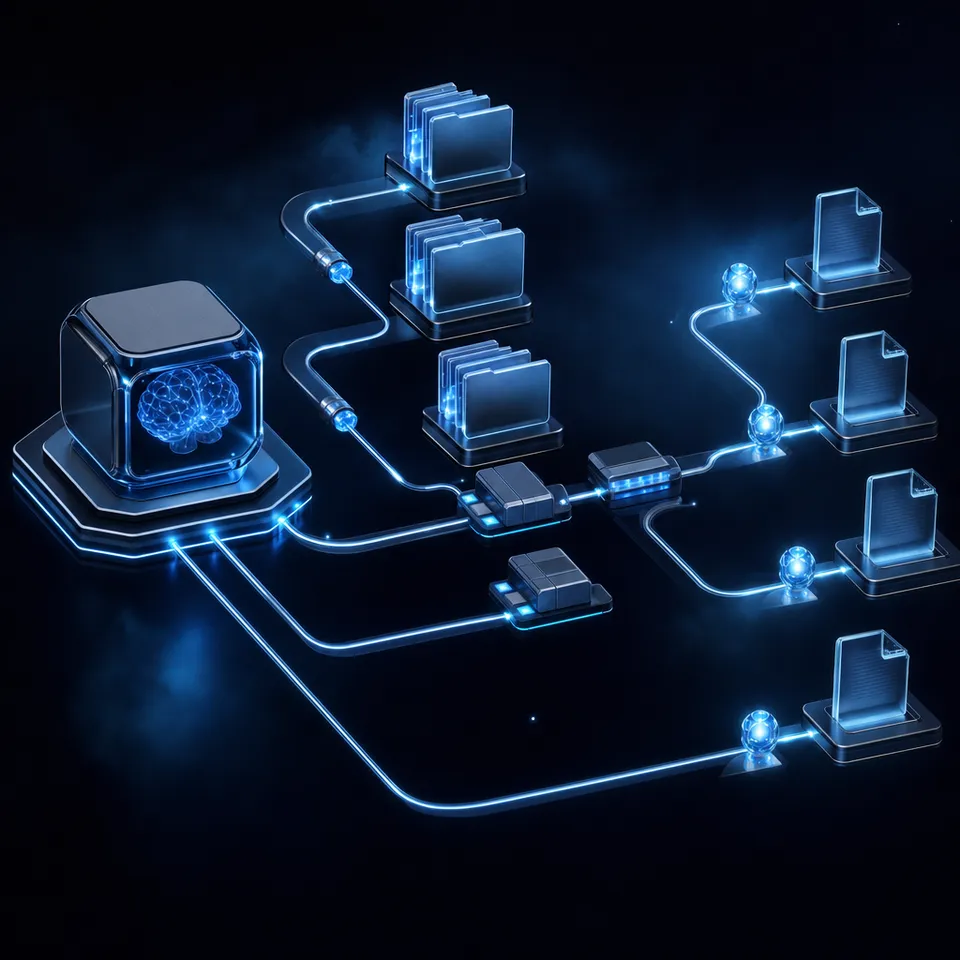
Why Teams Look Beyond Hermes Agent
Nous Research Hermes Agent earned its reputation fast. The MIT-licensed agent crossed 140,000 GitHub stars in under three months and holds the top slot on OpenRouter's daily agent rankings as of May 2026. Its core pitch is a learning loop: the agent creates skills from successful tasks, improves them across sessions, and maintains persistent memory so it never forgets how it solved a problem.
That loop is genuinely unique. No other agent compounds its capabilities over time the way Hermes does. But the same architecture that makes Hermes powerful also creates friction for teams that need something different.
Three patterns drive most switches away from Hermes:
- Self-hosting overhead. Hermes runs on your server, whether that is a VPS, a Docker container, or a Modal instance. You own the uptime, the security patches, and the model API keys. Teams that want a managed agent without infrastructure work often move to Claude Cowork or Manus.
- Setup time. A full Hermes deployment with memory, tools, and gateway configuration takes 2 to 4 hours. OpenClaw gets you running in under 30 minutes with Docker Compose. For quick prototyping, that gap matters.
- Specialized use cases. Hermes is a generalist. If your primary need is deep web research with citations, Perplexity Computer is purpose-built for that. If you need a no-code agent builder for non-technical team members, Lindy AI is more practical than asking everyone to SSH into a server.
The alternatives below are not ranked by quality. Each one solves a different problem. The right choice depends on whether you need managed infrastructure, broader integrations, research depth, or a visual builder.
Related guides
- Best Replit Alternatives in 2026Replit crossed 50 million users in early 2026, but its February pricing overhaul pushed many developers to evaluate...
- Cline and Other Open Source Cursor AlternativesCline markets 8.0M+ installs across platforms as an Apache 2.0 coding agent, which is why "open source cursor...
- Hermes Agent Use Cases: Real-World Applications for Autonomous AINous Research Hermes Agent is an open-source autonomous agent that learns from experience, creates reusable skills, and...
- Best Storage for Hermes Agent Autonomous Workflows: Local vs Cloud WorkspacesAutonomous agent operations require persistent file layers to retain context across task execution cycles. This guide...
- Hermes Agent vs AI Generator Checker: Autonomous AI Loops vs Single-Pass ScoringAI content checkers assess static text using statistical perplexity scores, while Nous Research Hermes Agent provides...
- How to Build a Hermes Agent Telegram Bot With Persistent File StorageHermes Agent's messaging gateway connects to Telegram as a persistent background process, handling file attachments,...
More on this subject: Hermes Agent (100 guides)
How we evaluated these alternatives
Agent tools are easy to compare badly, because feature lists all look similar and none of them tell you what it is like to run the thing. We scored on four things that actually change the decision.
Who operates it. Self-hosted means you own uptime, patching, and API keys. Managed means you trade that control for someone else's operations team and your data sitting on their infrastructure. This is usually the first fork in the road and it eliminates about half the list on its own.
Time to a working agent. Not time to install, time until it does something useful. A tool that runs in ten minutes but needs a week of prompt tuning is slower than one that takes an afternoon to set up correctly.
Generalist or specialist. Hermes is a generalist. Several alternatives here are deliberately narrower, and a specialist that matches your actual job usually beats a generalist that technically covers it.
Who has to use it. A framework that requires SSH access is a non-starter if the people who need the agent are not engineers.
Here is how the seven compare. This review was last checked on September 2, 2026. Deployment, licensing, capabilities, trade-offs, and pricing change quickly, so verify each item in the vendor's current documentation before choosing.
One caveat worth stating plainly: none of these is a storage system. Whichever you pick, you still have to decide where the agent's output lives once the process exits, and that decision is independent of this table.
OpenClaw and Claude Cowork
1. OpenClaw is the most popular open-source AI agent by star count, with over 350,000 GitHub stars. Where Hermes focuses on self-improvement over time, OpenClaw focuses on getting something working immediately. Docker Compose gets you a running agent in under 30 minutes.
OpenClaw uses a plan-execute-reflect loop: it generates a task plan, executes each step, and reviews its own results before proceeding. It ships with substantial pre-configured tools for web search, file operations, and code execution. Model support is broad, accepting any OpenAI-compatible API without prompt tuning.
Strengths:
- fast path from zero to a working agent
- Largest community and plugin ecosystem
- Built-in tools cover most common automation tasks out of the box
- Any OpenAI-compatible model works without adjustment
Limitations:
- Memory system uses built-in defaults that are difficult to customize
- Single-agent architecture with task decomposition, not true multi-agent orchestration
- Security defaults designed for local laptops can become dangerous on public servers with open ports
Best for: Teams that want a working autonomous agent today and prefer ecosystem breadth over long-term skill compounding.
Pricing: Free and open source (MIT license), self-hosted.
2. Claude Cowork is Anthropic's answer to the self-hosted agent model. Instead of running on your server, Claude Cowork runs on your desktop, accessing local files, folders, and applications directly. Anthropic launched it in January 2026 as a research preview for Pro and Max subscribers.
The core difference from Hermes is that Claude Cowork is fully managed. No server provisioning, no model API keys, no Docker configuration. You give it a goal, and it works across your local applications to deliver a finished result. The Dispatch feature lets Claude work autonomously while you step away, and sub-agent coordination allows it to break complex work into parallel tasks.
Strengths:
- Zero infrastructure management
- Direct access to local files and desktop applications
- Sub-agent coordination for complex multi-step workflows
- Strong reasoning from Claude's underlying models
- Includes pre-built agentic workflows across finance, operations, sales, and more
Limitations:
- Requires a Pro ($20/month) or Max subscription
- Desktop-bound, so it cannot run on a headless server or VPS
- No self-improving skill system like Hermes
- Closed source with no self-hosting option
Best for: Knowledge workers who want managed autonomous AI on their desktop without touching infrastructure.
Pricing: Included with Claude Pro ($20/month) or Claude Max.
Manus and Perplexity Computer
3. Manus is a cloud-first autonomous agent built for tasks that run for hours without supervision. Where Hermes and OpenClaw expect you to stay somewhat connected during execution, Manus is designed for true hand-off autonomy. Give it a goal, close your laptop, and check back later.
The agent runs inside a full virtual computer with a browser, terminal, and file system. It can gather information, run scripts, manage files, and compile results entirely in the background. The Pro plan supports up to 20 concurrent tasks running in parallel. A recent addition, Wide Research mode, expands the agent's source coverage for complex or niche research topics.
Strengths:
- True background execution for hours-long tasks
- Full virtual computer environment (browser, terminal, file system)
- Up to 20 concurrent parallel tasks on Pro
- New Web App Builder creates full websites with database and Stripe integration
- Mail and Slack integration for automated communications
Limitations:
- Invite-only access as of May 2026
- Designed for individual use, not multi-agent orchestration
- No self-improving skill system
- Cloud-only, no self-hosting option
Best for: Individual operators who need an agent to run long, complex research or data-gathering tasks without supervision.
Pricing: Free tier available. Usage-based paid plans for heavier workloads.
4. Perplexity Computer is an autonomous agent that orchestrates 19 different AI models simultaneously to complete complex, multi-step tasks. Launched in February 2026, it runs asynchronously in a secure cloud sandbox with browser-agent capabilities.
The key differentiator is research grounding. Perplexity Computer inherits the citation-heavy approach of Perplexity's search engine. Every claim the agent makes during a research workflow comes with source attribution. For teams whose primary agent use case is competitive analysis, market research, or due diligence, that grounding is more valuable than Hermes's skill-building loop.
Perplexity also launched a companion product called Personal Computer at their Ask 2026 developer conference. This runs on a dedicated local device like a Mac Mini, giving the cloud-based agent persistent access to local files, apps, and sessions.
Strengths:
- Citation-grounded research output
- 19-model orchestration for complex tasks
- Async cloud sandbox execution
- Personal Computer option for local file access
Limitations:
- Requires Perplexity Max subscription ($200/month)
- Research-focused, less suited to general automation
- No open-source option
- No self-improving skill system
Best for: Research-heavy workflows where citation accuracy and source attribution matter more than general task automation.
Pricing: Perplexity Max at $200/month.
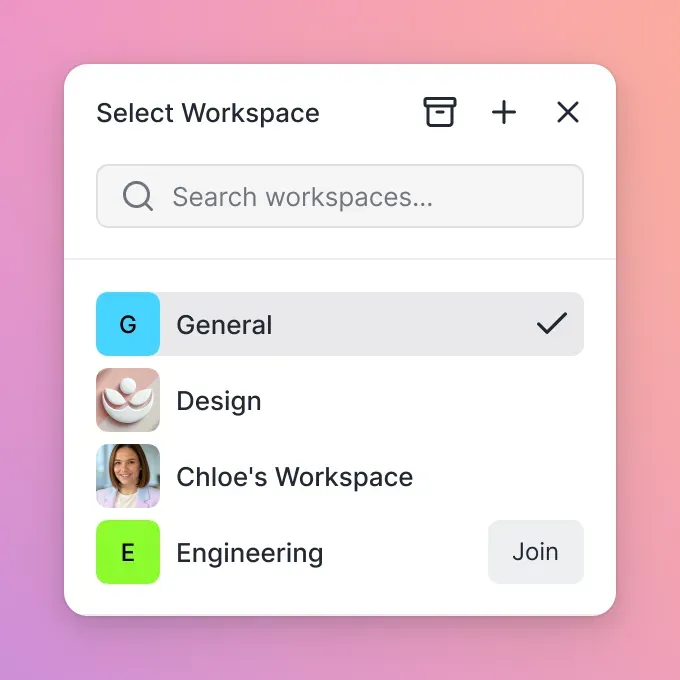


Persist your agent's files across sessions and teams
A shared file workspace for agents and people, with MCP access.
Lindy AI, AutoGen, and LangGraph
5. Lindy AI takes a fundamentally different approach from Hermes. Instead of a terminal-first agent for developers, Lindy is a visual workflow builder that lets non-technical users create AI agents across SaaS integrations. The platform includes pre-built templates for common workflows.
Lindy's strongest feature is email management. The agent reads context, prioritizes by urgency, and drafts replies that match your tone over time. The Computer Use feature allows Lindy agents to navigate websites directly, clicking buttons, filling forms, and extracting data from dashboards when no API integration exists. Gaia, Lindy's voice AI, handles phone calls for appointment scheduling, lead qualification, and customer support.
Strengths:
- Visual workflow builder accessible to non-technical users
- SaaS integrations
- Voice AI for phone calls (Gaia)
- Computer Use for browser automation without APIs
Limitations:
- No self-hosting option
- Voice calls billed separately at $0.19/minute
- Less autonomy depth than Hermes or OpenClaw
- Credit-based pricing can get expensive at scale
Best for: Non-technical teams that need SaaS workflow automation without writing code.
Pricing: Free tier with 400 credits/month. Starter at $19.99/month, Pro at $49.99/month, Business at $299/mo.
6. AutoGen is maintained by Microsoft and provides a framework for building multi-agent conversation patterns. Unlike Hermes, which is a ready-to-run agent, AutoGen is a toolkit for developers who want to define how multiple agents communicate, delegate, and resolve disagreements.
The framework excels at structured multi-agent workflows where different agents play defined roles. A manager agent coordinates, a coder agent writes code, a reviewer agent checks output, and a planner agent sequences tasks. This pattern maps well to software development, document review, and research synthesis workflows.
Strengths:
- Flexible multi-agent conversation patterns
- Strong integration with Microsoft's Azure ecosystem
- Active research community with frequent updates
- Good documentation and tutorials
Limitations:
- Framework, not a ready-to-run agent
- Requires significant development time to build workflows
- No built-in messaging gateway
- No persistent memory system out of the box
Best for: Developers building custom multi-agent systems who want fine-grained control over agent communication patterns.
Pricing: Free and open source.
7. LangGraph is LangChain's graph-based orchestration framework for stateful, multi-step AI agents. Version 1.0 shipped in 2026, and the framework is used in production by Uber, JPMorgan, BlackRock, and Cisco.
LangGraph models agent workflows as directed graphs where nodes are actions and edges are transitions. This makes complex branching logic like retries, human-in-the-loop approval, and parallel execution explicit and debuggable. The LangGraph Platform provides managed deployment with persistence, streaming, and monitoring.
Strengths:
- Graph-based workflow modeling makes complex logic explicit
- Production-proven at enterprise scale
- Built-in persistence and state management
- LangGraph Platform for managed deployment
Limitations:
- Steep learning curve for the graph abstraction
- Tightly coupled to the LangChain ecosystem
- Not a standalone agent, requires building on top of the framework
- Heavier than needed for simple single-agent tasks
Best for: Enterprise teams building production agent systems that need explicit state management and complex branching workflows.
Pricing: Open source framework. LangGraph Platform has managed pricing.
File storage for agents, not a ranked alternative
File storage is a separate layer from the seven agent tools ranked above. Fast.io is a file workspace for agents and people, not a Hermes Agent alternative. Teams can share files through a workspace with MCP access. Paid plans are Starter at $9.99/mo, Business at $49.99/mo, and Enterprise at $199.99/mo.
How to Choose the Right Alternative
The alternatives above split into three categories based on what you are actually optimizing.
If you want a managed agent and no infrastructure work: Claude Cowork for desktop autonomy, Manus for long-running background tasks, or Perplexity Computer for research-heavy workflows. All three handle the hosting and model orchestration for you.
If you want open-source self-hosting with a different tradeoff: OpenClaw for the largest ecosystem and fast setup, AutoGen for custom multi-agent patterns, or LangGraph for stateful graph-based orchestration. These require your own infrastructure but give you full control.
If you need non-technical users to build agents: Lindy AI is the only option on this list with a visual workflow builder and 5,000+ pre-built integrations.
One consideration that cuts across all alternatives is file persistence and handoff. Hermes stores files on your server, which works until those files need to reach a human collaborator, a client, or another agent. Most alternatives either store files temporarily in a sandbox or rely on local disk. Treat storage as a separate decision from the agent ranking.
Sources
References used to verify factual claims in this guide.
-
Hermes Agent crossed 140,000 GitHub stars in under three months
-
OpenClaw has over 350,000 GitHub stars
-
Hermes Agent holds the top slot on OpenRouter daily agent rankings
-
Perplexity Computer orchestrates 19 different AI models simultaneously
-
LangGraph v1.0 released in 2026, used in production by Uber, JPMorgan, BlackRock, and Cisco
Frequently Asked Questions
What is the best alternative to Hermes Agent?
It depends on your use case. OpenClaw is the best drop-in replacement for developers who want open-source self-hosting with a larger ecosystem. Claude Cowork is best for managed desktop autonomy without infrastructure work. Manus is best for long-running background tasks. Perplexity Computer is best for citation-grounded research.
Is OpenClaw better than Hermes Agent?
OpenClaw has a larger community (350,000+ GitHub stars vs 140,000+) and faster setup time. Hermes has a unique self-improving skill system that no other agent matches. OpenClaw is better for quick deployment and broad model compatibility. Hermes is better for long-term autonomous operation where the agent needs to compound its capabilities over time.
What are the top autonomous AI agents in 2026?
The most widely used autonomous AI agents in 2026 are Hermes Agent (most used on OpenRouter), OpenClaw (largest GitHub community), Claude Cowork (managed desktop agent from Anthropic), Manus (cloud-first long-running tasks), and Perplexity Computer (research-focused multi-model agent). Each targets a different use case rather than competing on the same axis.
Can I use Claude instead of Hermes Agent?
Yes. Claude Cowork is Anthropic's autonomous agent product, available with a Pro or Max subscription. It works on your desktop rather than a server and requires no infrastructure management. The tradeoff is that you lose Hermes's self-improving skill system and multi-platform messaging gateway. Claude Cowork is best for knowledge work tasks like document drafting, data analysis, and multi-application workflows.
Do I need to self-host Hermes Agent alternatives?
Not necessarily. Claude Cowork, Manus, Perplexity Computer, and Lindy AI are all managed services. OpenClaw, AutoGen, and LangGraph are self-hosted open-source tools. The managed options cost more monthly but eliminate server maintenance, security patching, and model API key management.
How do I migrate files from Hermes Agent to another agent?
Hermes stores files in its local workspace directory. To migrate, copy those files to your new agent's storage layer. A shared cloud workspace can prevent another file migration if you switch agents again later.
Related Resources

Persist your agent's files across sessions and teams
A shared file workspace for agents and people, with MCP access.