How to Use MCP for Agent Workflows
MCP (Model Context Protocol) standardizes tool calls in multi-agent systems. This guide covers how to use MCP for agent workflows on Fastio, including setup, examples, and comparisons. Fastio MCP server offers a consolidated toolset via Streamable HTTP for stateful file access in workspaces.


What is MCP?
MCP stands for Model Context Protocol. It standardizes tool calls across different AI models and agent frameworks for reliable external system interactions.
MCP uses persistent sessions to maintain state between tool calls. This allows agents to perform multi-step workflows without losing context or re-authenticating each time.
The protocol handles authentication, tool discovery, and session management automatically. Fastio's MCP server exposes a consolidated toolset covering file storage, workspace management, sharing, AI chat, and more.
Agents connect over Streamable HTTP. Coding agents such as Claude Code and Cursor use https://mcp.fast.io/mcp/code, Claude and most other MCP clients use https://mcp.fast.io/mcp/tools, and ChatGPT connects through the Fastio plugin, with a custom MCP server at https://mcp.fast.io/mcp/operations as an alternative.
Each tool supports specific actions such as list, create, update, delete, and specialized operations like RAG queries or ownership transfer.
The tool schema is automatically generated from the Fastio API. This means when new features launch, they immediately appear as MCP tools without code changes. The protocol handles versioning transparently.
With MCP, context persists across calls. Tokens and session state are managed server-side, simplifying agent orchestration in production environments. Learn more about our AI product capabilities.
Related guides
- Best MCP Clients for 2026: Connect Your AI to Any ToolMCP clients are AI interfaces like Claude Desktop, Cursor, or specialized IDEs that implement the Model Context...
- Best MCP Tools for AI Agent Development in 2026MCP tools extend AI agent capabilities through the Model Context Protocol standard. This guide compares essential MCP...
- MCP Server Examples: Practical Implementations for AI AgentsThe Model Context Protocol ecosystem has grown past 1,000 public servers, but finding the right implementation for your...
- How to Connect AI Agents to Google Docs with MCPAn MCP server for Google Docs exposes document read, write, and search capabilities to AI agents through the Model...
- How to Connect AI Agents to Azure Blob Storage via MCPAn Azure Blob Storage MCP server exposes cloud containers and object storage to AI agents using standard Model Context...
- Box MCP Server Setup and AI Agent Storage IntegrationA Box MCP server allows AI agents to interact with Box enterprise files and folders using the standardized Model...
More on this subject: MCP and Model Context Protocol (244 guides)
MCP vs Function Calling and A2A
Function calling (OpenAI, Anthropic) requires custom schemas and manual state. MCP standardizes with ready tools.
MCP reduces integration time with a consolidated toolset and automatic session management.
The key advantage is state preservation. With function calling, each request must include all context. MCP maintains session state server-side, reducing payload size and enabling longer-running workflows. A2A focuses on agent-to-agent communication but lacks the file operations that MCP provides.
For teams building agent workflows today, MCP offers the fast path to production. You skip the schema design phase and get straight to business logic.
When to Choose MCP
Use MCP for file-heavy agent workflows. Function calling for simple APIs. A2A for agent-to-agent chat.
How to Set Up Fastio MCP
Follow these steps to set up Fastio MCP for your agent workflows. See the Fastio MCP docs for details.
Step 1: Create an account. Sign up at Fastio to create your organization and start a 14-day Business Trial.
Step 2: Authenticate. Interactive clients sign in through the browser with OAuth when they connect. Headless agents use long-lived, scoped API keys granted by an administrator, sent as an Authorization: Bearer header on the connection.
Step 3: Create a workspace. Create a dedicated workspace for your project and enable Intelligence Mode so files are indexed for RAG.
Step 4: Connect your MCP client. Add Fastio's remote MCP endpoint for your client (https://mcp.fast.io/mcp/tools for most MCP clients, https://mcp.fast.io/mcp/code for coding agents) to your agent configuration.
Step 5: Test the connection. Verify that your agent can list workspaces and perform file operations using Fastio's consolidated toolset.
Once authenticated, your agent has persistent access to workspaces and sharing tools across long-running workflows.
Visit https://fast.io/storage-for-agents/ for dashboard access and API reference.


Give Your AI Agents Persistent Storage
Fastio gives teams shared workspaces, MCP tools, and searchable file context to run mcp for agent workflows workflows with reliable agent and human handoffs.
MCP Agent Workflow Examples
Here are practical examples of MCP workflows using Fastio tools. They show multi-step agent tasks.
Example 1: Multi-Agent Data Pipeline
Agent 1 uploads dataset to the workspace using Fastio MCP storage tools.
Agent 2 analyzes the data with RAG, querying indexed files with citations once Intelligence is enabled.
Agent 3 packages results in a branded Send share with recipient access controls.
This pattern works well for ETL pipelines where one agent gathers data, another processes it, and a third delivers the output. Each agent maintains its own session state, so the pipeline can pause and resume without losing progress.
Example 2: RAG Knowledge Base
- Enable Intelligence Mode on the workspace.
- Upload documents or import them from external cloud storage via URL import.
- Query the indexed documents with natural language chat to get answers with citations.
This setup enables question-answering over document collections. The workspace acts as a knowledge base that agents can query using natural language.
Example 3: Human-AI Handoff
Agent builds workspace, then transfers: org transfer-token-create, send https://go.fast.io/claim?token=xxx to human.
Human claims, agent retains admin. Perfect for delivering client projects.
The handoff pattern solves a common problem: agents create assets that need human review. Instead of exporting files, the agent transfers workspace ownership while keeping administrative privileges.
Best Practices for MCP Agent Workflows
Follow these best practices when building production MCP agent workflows. See our storage for agents documentation for detailed API reference.
Keep sessions short-lived to reduce auth token exposure. Rotate credentials regularly using the org token management APIs. Use workspace isolation to separate test and production environments.
Monitor credit usage with the MCP org tool (action=limits). Set up alerts when usage exceeds 80% of monthly limits. Reserve 1,000 credits for critical operations.
Implement idempotent operations where possible. Check if files exist before uploading. Acquire advisory file locks before modifying shared files to coordinate concurrent writes safely. Log all tool call failures for debugging.
Test error handling by simulating network failures and auth expirations. Ensure agents can recover gracefully and resume workflows from checkpoints.
For multi-agent setups, establish clear communication protocols. Use the share create endpoint for structured data passing between agents rather than direct workspace access.
Advanced MCP Pipelines for Agent Workflows
Here are advanced patterns for production-scale MCP workflows.
Remote Protocol Access: Connect AI clients directly to https://mcp.fast.io/mcp/tools over Streamable HTTP without installing local server runtimes or container packages.
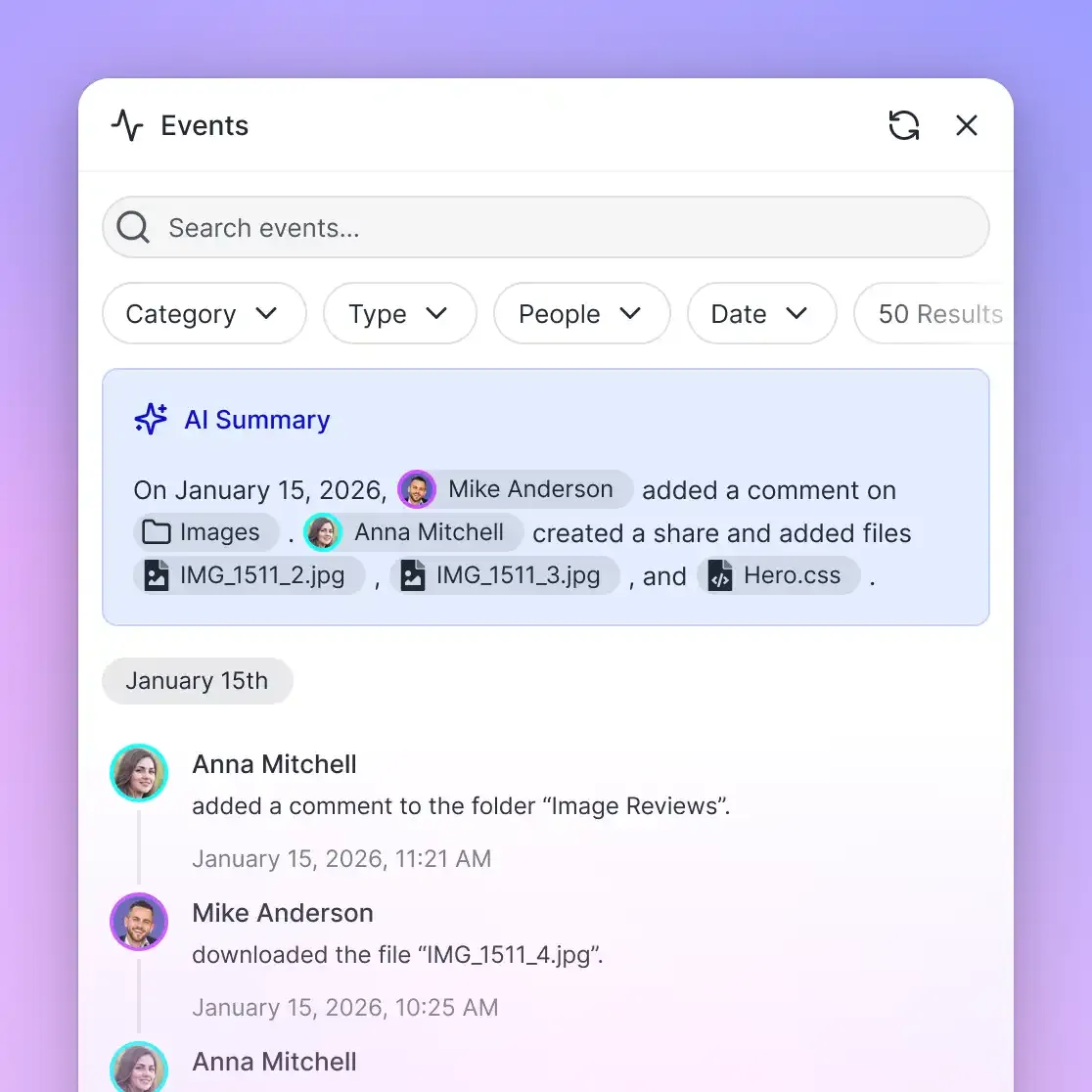
Reactive Workflows with Event Feeds: Monitor real-time file updates through Fastio's WebSocket events feed or poll the activity feed to coordinate multi-agent sequences.
Concurrent Safety: Coordinate multi-agent edits using advisory file locks via the storage tool (lock-acquire, lock-status, lock-release); concurrent lock attempts return HTTP 409 so other agents can wait, while version history preserves every write regardless.
Cloud Storage Imports: One-time cloud import pulls files from Google Drive, OneDrive, Dropbox, Box, or public URLs without local file downloads.
Error Handling: Check authentication credentials before workflows begin and implement exponential backoff for transient network issues.
Rate Limiting: The MCP server enforces rate limits per workspace. Monitor response headers to track usage. Design agents to handle 429 responses gracefully by implementing backoff strategies.
Batch Processing: For large file operations, structure uploads systematically to reduce round trips and maintain organized workspace hierarchies.
Monitoring: Track credit consumption in the dashboard. Set up alerts when usage approaches plan limits, and upgrade to Business or Enterprise as needed.
Sources
References used to verify factual claims in this guide.
-
Fastio MCP server provides a consolidated toolset Fastio's MCP server exposes a consolidated toolset covering file storage, workspace management, sharing, and AI chat
-
70% faster integration time
-
Fastio offers a 14-day Business Trial Monthly credits meter AI work on Fastio plans Generous file size limits on Fastio plans Fastio plans provide persistent storage and monthly credits Fastio workspaces provide persistent storage for teams Set up alerts when usage exceeds 80% of monthly limits Reserve 1,000 credits for critical operations Design agents to handle 429 responses gracefully by implementing backoff strategies
-
Multiple workspaces per organization on Fastio plans
-
Consolidated toolset via Streamable HTTP Create account with organization and workspace Verify email with auth email-verify tool Create organization and workspace with Fastio tools Create workspace with org create-workspace tool Test session with auth status tool Upload files with upload create-session, chunk and finalize actions Analyze files with RAG using ai chat-create and chat_with_files Create send share with share create tool Query files with ai chat-create type chat_with_files and folders_scope Handle 402 errors by transferring ownership Consolidated toolset ready for integration Step 2: Verify your email Step 3: Create an organization Step 4: Create a workspace Step 5: Test the session Detailed activity logs track human and agent actions Verify authentication before starting multi-step agent workflows
Frequently Asked Questions
MCP agent workflow example?
One agent uploads a file, another analyzes it with RAG, and a third creates a branded share. All via MCP tools.
MCP vs other protocols?
MCP gives stateful tools, unlike stateless function calling or A2A messaging. Use MCP for file workflows.
Integrate MCP with Claude?
In Claude, open Customize, then Connectors, add a custom connector with https://mcp.fast.io/mcp/tools, and sign in to Fastio in the window that opens. A consolidated toolset is ready to go.
What plans are available for MCP workflows?
Fastio offers Starter at $9.99/mo (250 GB, 100,000 credits/mo), Business at $49.99/mo (5 TB), and Enterprise at $199.99/mo (25 TB), with a 14-day Business Trial available.
Related Resources

Give Your AI Agents Persistent Storage
Fastio gives teams shared workspaces, MCP tools, and searchable file context to run mcp for agent workflows workflows with reliable agent and human handoffs.