How to Migrate from Amazon S3 to Fastio API
Migrating from Amazon S3 to Fastio API replaces raw object storage with intelligent workspaces for agentic teams. Fastio unifies file storage, semantic search, RAG chat, and MCP tools in one API, eliminating separate vector databases and relational layers. This guide delivers a 5-step zero-downtime plan with scripts for syncing petabyte-scale buckets, code examples, and verification steps.

Why Migrate from Amazon S3 to Fastio
Amazon S3 handles object storage well for basic needs. Developers often pair it with vector databases like Pinecone for RAG, relational DBs for metadata, and custom sharing logic. This splits your stack across services, increases costs, and complicates agent workflows.
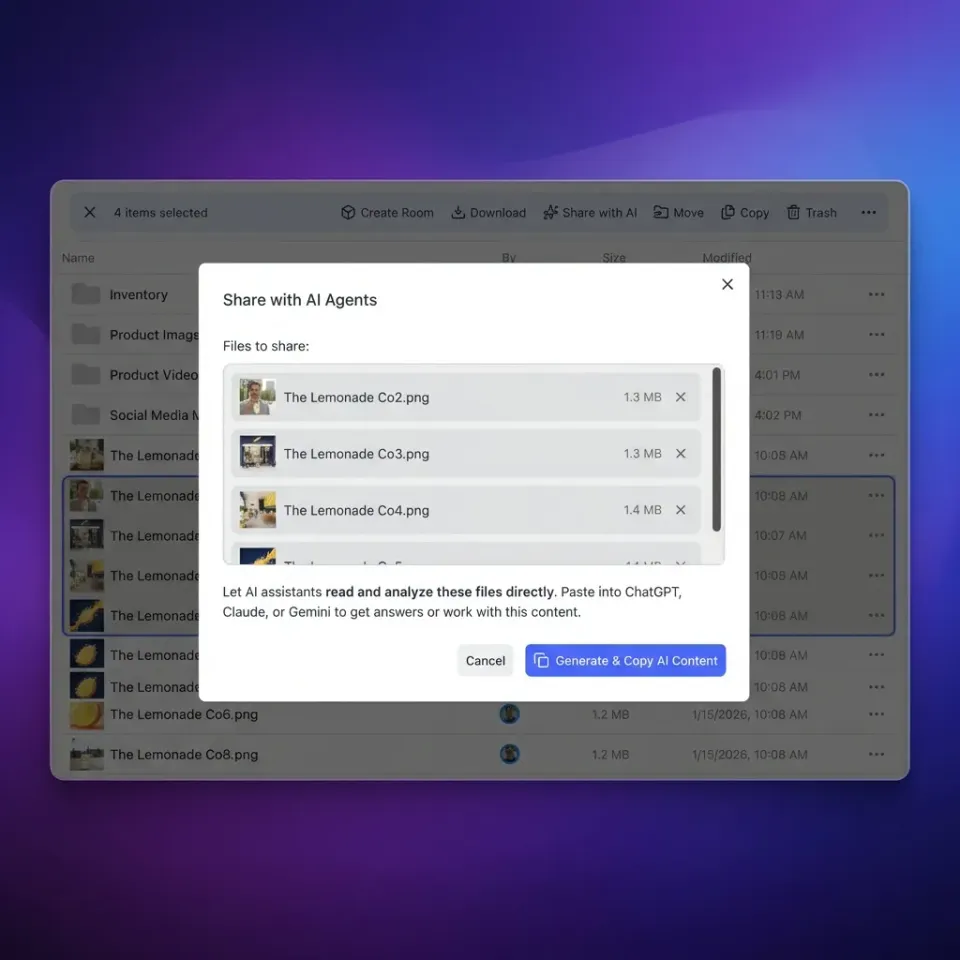
Fastio provides object-like storage through workspaces but adds native intelligence. Upload files and they auto-index for semantic search and RAG chat. Agents access a consolidated MCP toolset for full CRUD, advisory file locks, and ownership transfer.
Benefits include scalable cloud storage, no infrastructure management, and unified APIs for storage, AI, and collaboration. For agentic teams, this streamlines architecture without custom integrations.



Migrate Your S3 Data Today
Build intelligent workspaces for your agents with collaborative storage and RAG search.
Related guides
- Fastio API Presigned URLs Implementation GuideFastio API presigned URLs allow your applications to grant secure, time-limited, direct access to files without...
- How to Build a Fastio API Golang ImplementationBuilding a Fastio API Golang implementation allows developers to manage workspaces, upload files concurrently, and...
- How to Automate User Offboarding with Fastio APIAutomating user offboarding with the Fastio API lets you revoke access and transfer file ownership instantly. Manual...
- How to Automate the Fastio API Ownership Transfer WorkflowOwnership transfer via the Fastio API enables autonomous agents to securely hand off completed workspaces and files to...
- Fastio API vs Pinecone: Best Context Storage for AgentsGuide to fastio api pinecone agent context: When building AI agents, your context storage architecture determines how...
- How to Implement Semantic Search with Fastio APIHow to implement semantic search with Fastio API starts with enabling Intelligence Mode on a workspace. This...
More on this subject: Agent Integrations and APIs (192 guides)
Fastio vs Amazon S3 Comparison
Fastio suits agentic workflows where S3 feels like commodity storage. Use S3 for pure archival; Fastio for active team/agent use.
Cost Breakdown
S3 charges for storage, API calls, and data egress. Fastio offers flat plans starting at $9.99/mo and a 14-day Business Trial requiring a credit card.
Migration Prerequisites
Review your S3 bucket size, object count, and access patterns. Check each file against your plan's maximum upload (25 GB on Starter, 50 GB on Business, 100 GB on Enterprise) or plan splitting. Get AWS credentials with read access. Sign up for a Fastio account and start a 14-day Business Trial requiring a credit card.
Install tools:
- AWS CLI v2
- Python 3.10+ with boto3, requests
- jq for JSON processing
Test Fastio API access with curl after auth.
Step 1: Set Up Fastio Organization and Workspace
Create agent account via API:
curl -X POST https://api.fast.io/current/user/ \\
  -u email:password \\
  -d name="Migration Admin"
Create org and workspace:
ORG_ID=$(curl -s -X POST https://api.fast.io/current/org/create/ \\
  -H "Authorization: Bearer $JWT" \\
  -d "domain=my-migration-org" -d "name=My Org" | jq -r .response.id)

WS_ID=$(curl -s -X POST "https://api.fast.io/current/org/$ORG_ID/create/workspace/" \\
  -H "Authorization: Bearer $JWT" \\
  -d "folder_name=migrated-bucket" -d "name=Migrated Bucket" | jq -r .response.id)
Enable intelligence for auto-indexing.
Step 2: Inventory S3 Bucket
List objects and metadata:
aws s3 ls s3://your-bucket --recursive --summarize \\
  --page-size 1000 > s3-inventory.json
Parse for total objects, size, last modified. Identify files larger than your plan's maximum upload to split or skip.
Step 3: Zero-Downtime Data Transfer
Use presigned S3 URLs + Fastio web-import for server-side copy (no local bandwidth).
Python script (migrate_s3.py):
import boto3
import requests
import json
import time
from concurrent.futures import ThreadPoolExecutor

s3 = boto3.client('s3')
FASTIO_BASE = 'https://api.fast.io/current'
headers = {'Authorization': f'Bearer {jwt_token}'}
ws_id = 'your_ws_id'
parent_id = 'root'

def presign_and_import(key):
    presign_url = s3.generate_presigned_url('get_object',
        Params={'Bucket': 'your-bucket', 'Key': key},
        ExpiresIn=3600)
    resp = requests.post(f'{FASTIO_BASE}/web_upload/',
        headers=headers,
        data={'profile_type': 'workspace', 'profile_id': ws_id,
              'folder_id': parent_id, 'source_url': presign_url,
              'file_name': key.split('/')[-1]})
    if resp.json().get('result'):
        print(f'Migrated {key}')
    else:
        print(f'Failed {key}: {resp.text}')

# List keys
paginator = s3.get_paginator('list_objects_v2')
keys = []
for page in paginator.paginate(Bucket='your-bucket'):
    keys.extend(obj['Key'] for obj in page.get('Contents', []))

# Batch import (parallel 10)
with ThreadPoolExecutor(max_workers=10) as executor:
    executor.map(presign_and_import, keys)

# Poll import status if needed
Run in batches for PB scale. Monitor with /web_upload/. Incremental: import only modified since last sync.
Step 4: Update Code from S3 SDK to Fastio API
Replace boto3 put_object with Fastio upload.
S3 example:
s3.put_object(Bucket='bucket', Key='file.txt', Body=data)
Fastio:
# Small file: one multipart request creates the session and uploads it
requests.post(f'{FASTIO_BASE}/upload/',
    headers=headers,
    data={'name': 'file.txt', 'size': len(data), 'action': 'create',
          'instance_id': ws_id, 'folder_id': 'root'},
    files={'chunk': ('file.txt', data)})

# Large file: POST /upload/ to create a session, then
# POST /upload/{id}/chunk/?order=N&size=N per chunk (up to 3 in parallel),
# then POST /upload/{id}/complete/
Use MCP for agents.
Step 5: Verify and Cut Over
Compare object count/size S3 vs Fastio storage list.
Test reads from Fastio preview URLs.
Update app config to point to Fastio endpoints.
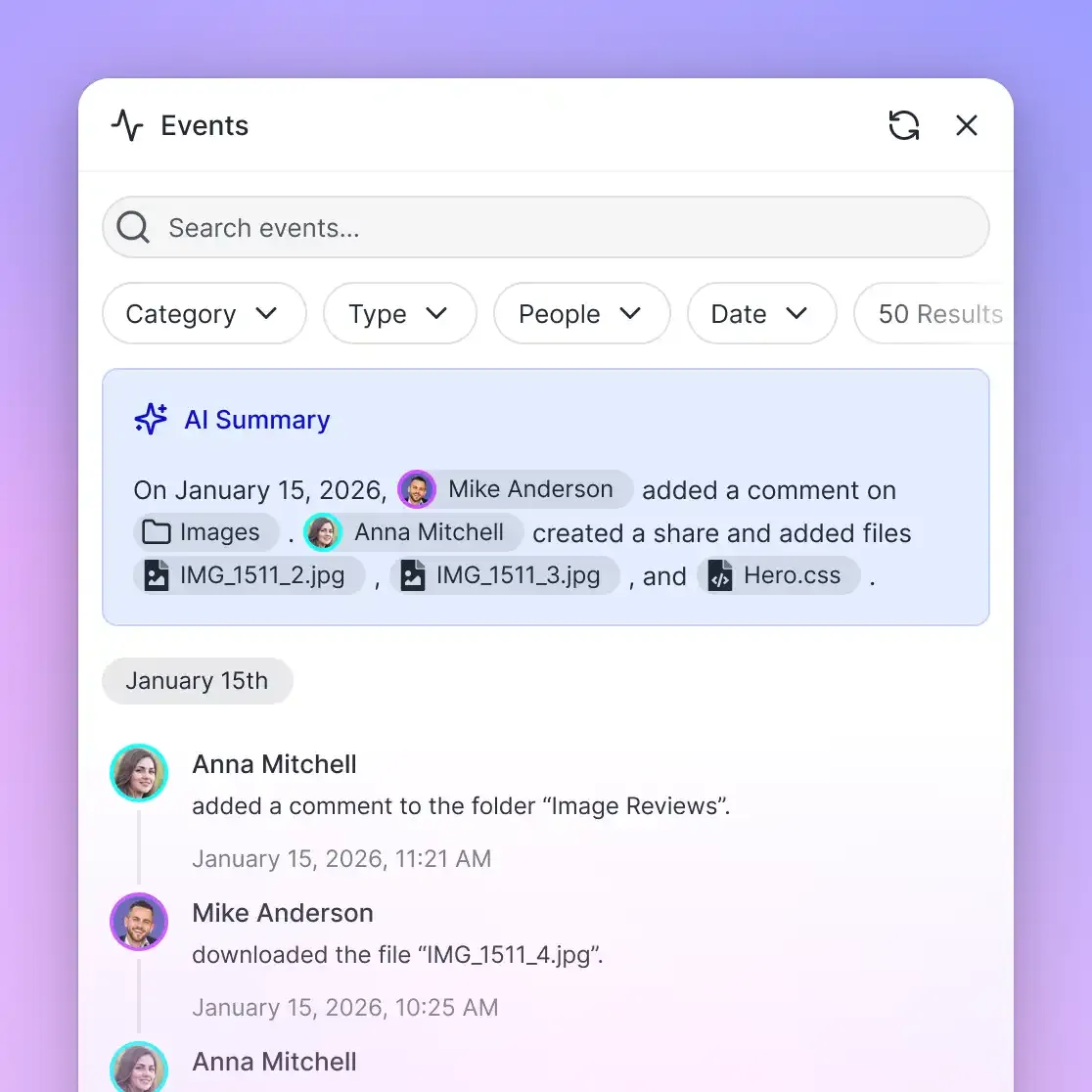
Monitor activity logs. Go live with dual-write during transition.
Petabyte-Scale Tips
- Parallelize with 100+ threads
- Use S3 inventory reports for delta sync
- Split files above your plan's maximum upload (25 to 100 GB by plan) with ffmpeg or zip
- Throttle requests (Fastio rate limits)
- Dual-read until confident
Frequently Asked Questions
Is Fastio API compatible with S3?
No direct S3 compatibility, but object operations map closely. Use scripts to sync data and update SDK calls to Fastio REST API.
How do I move data from AWS S3 to Fastio?
Generate presigned S3 URLs and use the Fastio /web_upload/ endpoint. Python script above handles batching and parallelism.
What plans does Fastio offer for migration?
Fast.io offers Starter ($9.99/mo for 250 GB), Business ($49.99/mo for 5 TB), and Enterprise ($199.99/mo for 25 TB), plus a 14-day Business Trial requiring a credit card. See /pricing/.
Does Fastio support S3 multipart uploads?
Not the S3 multipart API itself; Fastio uses its own chunked uploads (create a session, upload the chunks, then complete), with a maximum file size of 100 GB on the Enterprise plan.
Can agents automate the migration?
Yes, use MCP server with auth/upload/storage tools.
How can agents automate file lifecycle in Fastio?
Agents can poll the activity feed or monitor WebSocket events, triggering file management operations directly via the REST API or MCP server.
Related Resources

Migrate Your S3 Data Today
Build intelligent workspaces for your agents with collaborative storage and RAG search.