How to Use OpenClaw File Sharing for Agentic Teams
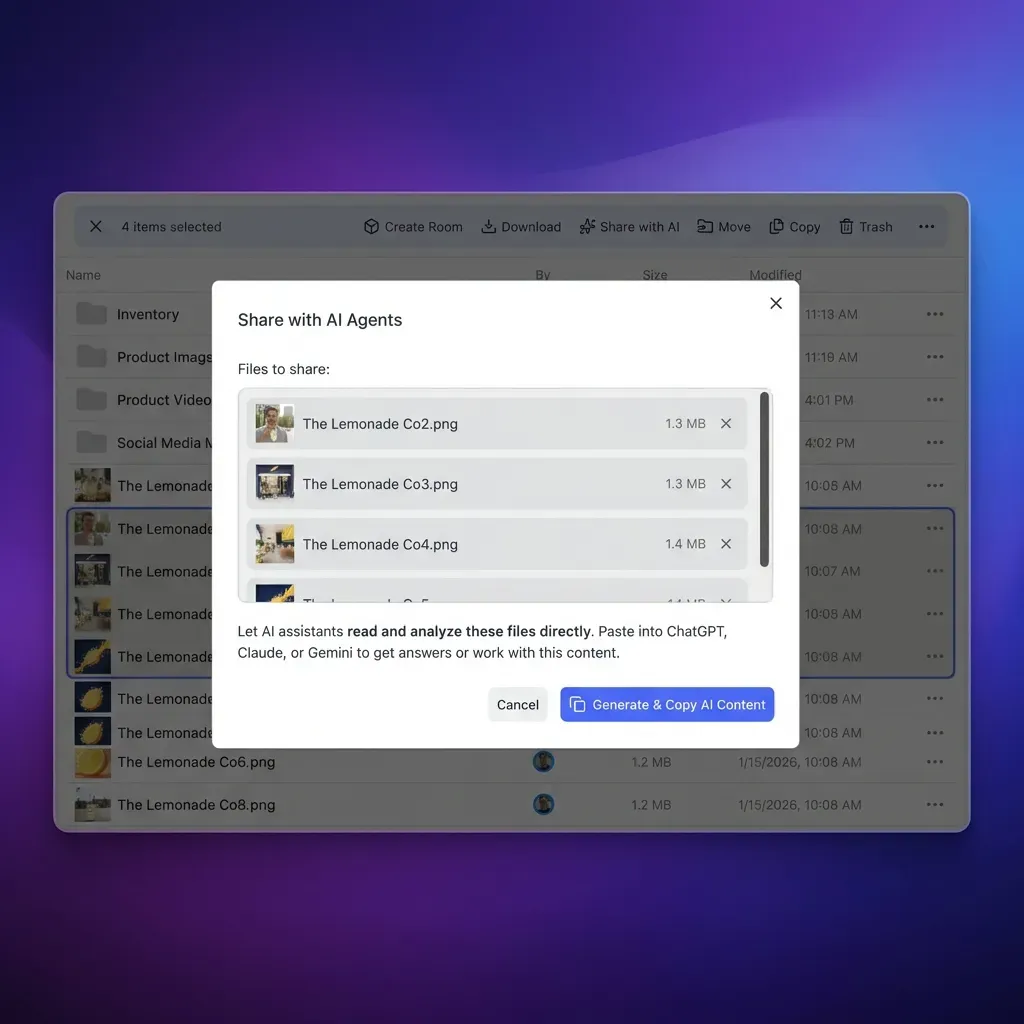
OpenClaw file sharing lets agentic teams access files securely in Fastio workspaces via the remote MCP server. Agents handle uploads, advisory file locks, versioning, and searches independently while audit logs track changes.


What Is OpenClaw File Sharing?
OpenClaw file sharing gives agents and teams secure, versioned access via remote MCP.
OpenClaw is an agent framework that connects agents to Fastio workspaces. Agents manage files using natural language prompts.
Key components:
- Fastio MCP Server: Powers a consolidated MCP toolset via Streamable HTTP. See MCP docs.
- Workspaces: Shared folders for multi-agent and human collaboration.
- Intelligence Mode: Indexes files for semantic search and RAG queries once enabled.
Unlike traditional storage, files are indexed by meaning. Query "find budget docs mentioning Q1 overruns" gets cited results.
Agent teams use it for workflows where agents generate reports, analyze data, and hand off to humans via shared workspaces and ownership transfer.
Automatic versioning tracks every change. Audit logs record all actions for compliance.
Related guides
- How to Enable Secure File Sharing in Claude CoworkDeploying AI agents safely requires strict data governance and access control. This guide covers how to implement...
- Implementing a Cline File Handoff Workflow for TeamsApproximately 75% of software developers manually review every AI-generated code snippet before merging [Netcorp 2026...
- How to Set Up File Storage in OpenClaw WorkspacesOpenClaw agents need files that stick around between sessions in shared workspaces. Developers set up persistent...
- Paperclip vs OpenClaw: A Practical Comparison for AI Agent TeamsPaperclip and OpenClaw solve different problems in the AI agent stack. Paperclip orchestrates multi-agent teams with...
- 7 Practical OpenClaw Use Cases for AI Agent TeamsOpenClaw connects messaging apps, LLMs, and automation skills into a single agent framework that runs on your own...
- How to Set Up OpenClaw with Google Gemini ModelsOpenClaw's Gemini integration connects your agent to Google's full model family, including Gemini 3.1 Pro for chat,...
More on this subject: OpenClaw Setup and Guides (199 guides)
What Are the Pros and Cons of OpenClaw File Sharing?
OpenClaw file sharing works well for workflows with heavy agent use.
Pros:
- Tracks every file change automatically.
- Version history with restore avoids overwrites during multi-agent edits.
- Semantic search handles plain-language queries with citations.
- Connects directly via remote MCP URL with no local server packages needed.
- Fastio plans provide persistent storage starting with 250 GB on Starter.
Cons:
- Learning curve: Requires configuring remote MCP connection.
- Credit limits: Heavy usage burns through included credits.
- Dependency: Needs Fastio to be up and running.
Agent teams prefer it over traditional cloud storage for MCP support.


Need persistent storage for OpenClaw agents?
Set up OpenClaw file sharing with Fastio workspaces. Multi-agent access with advisory file locks, version history, granular permissions, and event feeds.
OpenClaw File Sharing vs Traditional Cloud Storage
Traditional cloud storage like Dropbox, Google Drive, or Box leaves gaps for agentic teams. OpenClaw file sharing through Fastio fills them.
Here's a comparison:
Traditional storage limits agent access. Fastio gives agents full workspace access.
See also storage for OpenClaw for more integrations.
How to Connect OpenClaw to Fastio via MCP
Start by creating an account and obtaining an API key at /storage-for-agents/.
Configure OpenClaw to connect directly to the remote Fastio MCP server at https://mcp.fast.io/mcp/tools (Streamable HTTP) with your scoped key as an Authorization: Bearer header. Clients connect via URL without installing or running local server containers.
OpenClaw connects to the remote endpoint and handles authentication via scoped API keys or PKCE browser login. Agents can now access your workspaces.
Test it: "List files in my default workspace." You should see the contents listed.
How to Perform Basic File Operations
OpenClaw agents handle CRUD operations (create, read, update, delete) with natural language.
Uploading Files
Agents upload generated content, pull from URLs, or import from services.
- "Generate a quarterly report summary and upload to 'reports' workspace as 'Q1-summary.pdf'."
- "Import dataset from https://example.com/data.csv to 'analysis' folder." Fastio handles large file uploads and streaming automatically.
Listing and Searching Files
List: "List all files in marketing folder, sort by recent." Keyword: "Find uploads from last week in marketing with 'campaign budget'." Semantic: "Locate budget spreadsheets on Q1 revenue and summarize."
Downloading and Sharing Files
Download: "Download latest 'analysis.pdf' from project workspace." Share: "Make branded share link for 'report.pdf', with an expiration date, password protected, email to client@external.com." Creates secure portals with previews.
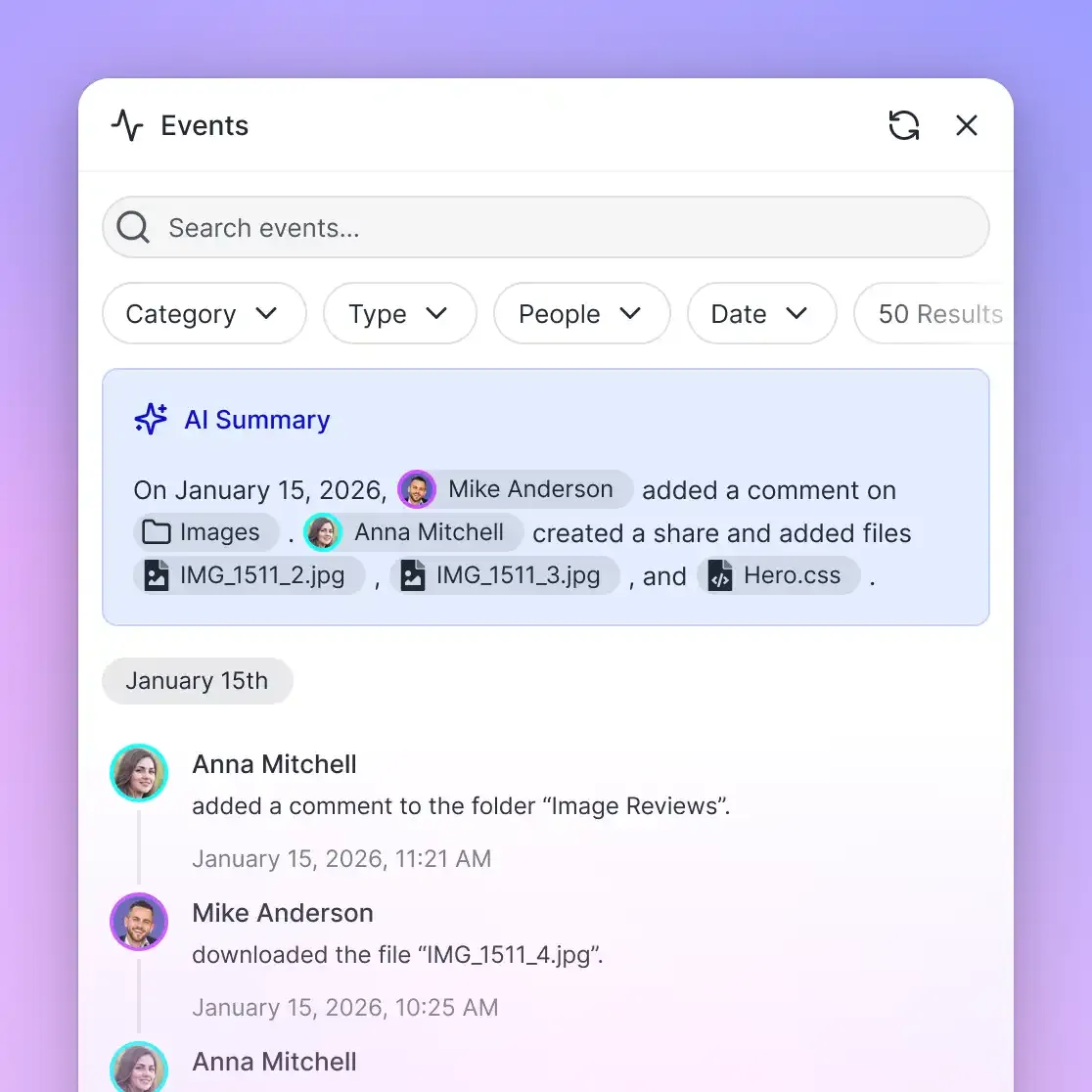
Logs all actions; query with "Show workspace activity from the last day."
Handle Large Files
Fastio supports large file uploads with automatic streaming.
How to Coordinate Multi-Agent Access with File Locks and Version History
Fastio coordinates multi-agent workflows through advisory file locks, automatic version history, and granular permissions to ensure data integrity.
Before writing to a shared file, an agent acquires an advisory file lock via MCP (storage actions lock-acquire, lock-status, lock-release) or REST API. Other agents see who holds the lock and can wait or read. The lock expires automatically unless renewed by heartbeat, and can be taken over by anyone with write permission.
When an agent updates a file, Fastio preserves the previous revision in version history with complete restore capabilities, ensuring no data is lost even if concurrent writes bypass locks.
A detailed activity log records every upload, edit, rename, and download across agents and humans.
Example: A data analysis agent acquires a lock on a summary file while a visualization agent reads the current version without write collisions.
Define clear tool contracts and fallback behavior so agents fail safely when dependencies are unavailable. This improves reliability in production workflows.
How to Monitor File Events with Realtime Feeds
Agents track file changes using Fastio's realtime activity feed or WebSocket events feed in real time.
Poll the activity feed or subscribe to the WebSocket stream to receive instant notifications on file uploads, edits, and shares.
Agent prompt: "Watch project folder, summarize daily changes."
Build workflows that react to changes as they happen. Event streams include file metadata and timestamps for reliable event processing.
How to Enable Semantic Search and Intelligence Mode
Turn on Intelligence Mode in workspace settings.
Files are indexed for semantic search and RAG queries once Intelligence is enabled for the workspace.
"Summarize Q1 reports." Returns citations.
Pairs well with OpenClaw commands. Responses include citations and confidence scores for reliable agent use.
Sources
References used to verify factual claims in this guide.
-
Fastio MCP Server provides a consolidated toolset via Streamable HTTP
Frequently Asked Questions
How does OpenClaw handle file sharing?
OpenClaw connects to Fastio workspaces via the remote MCP server. It handles file uploads, branded shares, versioning, and semantic searches with natural language.
OpenClaw file sharing vs traditional cloud storage?
Traditional cloud storage lacks MCP-native tools, agent ownership transfer, and built-in RAG. Fastio offers persistent workspaces with versioning, audit logging, and realtime event feeds.
What plans are available for OpenClaw agents?
Fastio plans include Starter ($9.99/mo, 250 GB), Business ($49.99/mo, 5 TB), and Enterprise ($199.99/mo, 25 TB), with a 14-day Business Trial available at /pricing/.
How does Fastio prevent multi-agent conflicts?
Fastio helps agents coordinate writes through advisory file locks, backed by automatic file version history with restore, granular permissions, and a detailed activity log of all agent actions. Agents acquire a lock before writing, and version history preserves every revision as a safety net.
How do agents detect file changes in Fastio?
Agents poll the realtime activity feed or subscribe to the WebSocket events feed to react immediately when files are uploaded or modified.
Does it support any LLM?
Works with Claude, GPT-4, Gemini, LLaMA, and local models via standard MCP clients.
Related Resources

Need persistent storage for OpenClaw agents?
Set up OpenClaw file sharing with Fastio workspaces. Multi-agent access with advisory file locks, version history, granular permissions, and event feeds.