How to Import Google Drive Files to OpenClaw
OpenClaw agents pull files from Google Drive into Fastio workspaces. The import handles bulk folders via OAuth and keeps their folder structure. Files index for RAG queries when Intelligence Mode is enabled. Set it up with the Fastio ClawHub skill. No local downloads needed.

What is OpenClaw Google Drive Import?
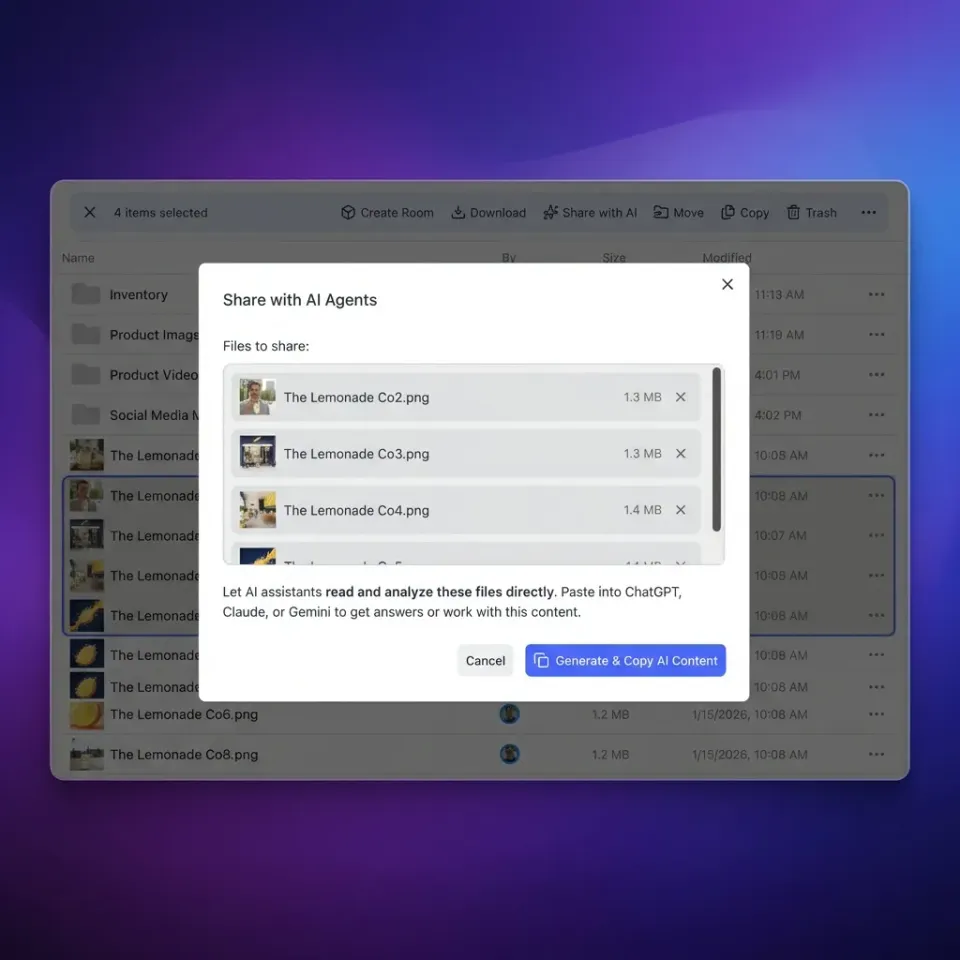
OpenClaw Google Drive import pulls files and folders from Google Drive directly into Fastio workspaces. No local downloads required. It uses Fastio's Cloud Import and supports whole folders.
Connect OpenClaw to the remote Fastio MCP server at https://mcp.fast.io/mcp/tools using a consolidated MCP toolset. Agents authenticate with scoped keys sent as an Authorization: Bearer header to access workspace tools and import Drive files. See the storage for OpenClaw guide for more details. Fastio streams them server-side to the workspace.
Turn on Intelligence Mode to index files automatically. Drive documents become searchable for AI chat and RAG. Agents can ask things like "Summarize all Q4 financial reports from the imported Drive folder" and get cited answers.
Bulk imports copy entire folders and keep the structure. Plan storage runs into terabytes, so full Drive migrations fit.
Skip manual downloads. Agents handle analysis instead of file transfers.
Related guides
- How to Connect CrewAI to Google Drive FilesConnecting CrewAI agents directly to Google Drive often floods prompt context windows and triggers API rate limits...
- Manus AI Google Drive Integration vs. Fast.io Cloud ImportComparing the Manus AI Google Drive Connector and Fast.io Cloud Import reveals how developers can choose between...
- How to Set Up OpenClaw Google Workspace Integration for Gmail, Drive, Calendar and SheetsOpenClaw's Google Workspace plugin connects your AI agent to six Google services through one OAuth authorization. This...
- How to Set Up OpenClaw with Google Gemini ModelsOpenClaw's Gemini integration connects your agent to Google's full model family, including Gemini 3.1 Pro for chat,...
- OpenClaw vs Google ADK: Which Agent Framework to Choose in 2026OpenClaw has 346K GitHub stars and runs autonomous agents on user-owned infrastructure. Google ADK has 18K stars and...
- How to Build a Google Calendar Scheduling Agent with OpenClawOpenClaw's heartbeat system turns a Google Calendar connection into a scheduling agent that checks your day, creates...
More on this subject: OpenClaw Setup and Guides (199 guides)
Prerequisites
Get these ready before your OpenClaw Google Drive import.
Install OpenClaw and set up an agent. It works with Claude, GPT-4, Gemini, or Ollama models.
Create a Fastio account. Fastio offers an official 14-day Business Trial (credit card required) or Starter ($9.99/mo), Business ($49.99/mo), and Enterprise ($199.99/mo) plans. Check pricing details for full limits.
Connect OpenClaw to the remote Fastio MCP server at https://mcp.fast.io/mcp/tools: Connects OpenClaw directly with a URL to a consolidated MCP toolset for workspaces and files.
Make sure Drive files or folders are accessible to the OAuth account. Owned or shared files work best.
Test by asking the agent to list tools. It should show Fastio ones.
Step-by-Step Import Process
Here are the steps to import Google Drive files to OpenClaw with the Fastio remote MCP server. Includes tool examples and fixes for issues.
1. Authenticate with Fastio.
Tell your agent: "Authenticate with Fastio." It handles OAuth and opens a browser if needed. Session sticks around.
2. Create or select a Fastio workspace.
Tell your agent: "Create a workspace called Drive Imports with Intelligence Mode on." It uses the organization write tool's create-workspace action, which takes a name and a folder name; indexing is off unless the agent turns it on, and it draws credits for each page it indexes. Note the workspace ID it returns, or ask the agent to list your existing workspaces.
3. Connect Google Drive with Cloud Import.
A workspace admin turns on cloud import for the workspace. Then the person who owns the Drive account connects it by signing in to Google in the browser. The connection belongs to that person, and only they can choose which of its folders to import.
4. Import single files.
To pull in one file by its link, ask the agent to import it into the workspace. It uses web import (the upload write tool's web-import action), which takes the workspace, a destination folder or the root, and the URL, then downloads the file in the background. A private Drive file needs a Google access token in the link:
https://www.googleapis.com/drive/v3/files/{fileId}?alt=media&access_token={oauth_token}
Web import returns as soon as the job is queued; ask the agent to check the job's status before relying on the file.
5. Bulk import folders.
In Cloud Import, pick the Drive folder to bring in. Fastio copies it with its subfolders and keeps the structure. Monitor progress via activity feed polling.
6. Check import and test RAG.
Ask the agent to list the files in the workspace, then ask a question about them, such as "Summarize key points from the imported Drive files." The AI write tool's ask action answers with citations once the files are indexed. Check its citations.


Ready to Import Drive Files to OpenClaw?
Terabyte-scale storage, multiple workspaces, and included credits for AI work. Pull Drive files into RAG-ready workspaces. [Get started](/storage-for-agents/).
Bulk Import Support and Permissions
Bulk import works well for migrating entire projects or departments from Google Drive. Cloud Import copies the folder you choose with its subfolders, preserving the original hierarchy in the Fastio workspace. This means subfolders and their contents are copied exactly. This keeps your organization after the import.
Imported files become ordinary workspace content, so access to them follows Fastio's own permissions: workspace membership, plus share settings when you share them. Set these with Fastio's member management after the import.
Storage comes with your plan, from 250 GB on Starter up to 25 TB on Enterprise, so migration size is rarely the constraint. Credits meter the AI side of the import, including document ingestion, so a page-heavy PDF library draws more credits than the same volume of plain files. For very large migrations, move in batches so you can watch credit usage as you go. Advisory file locks and version history coordinate updates in multi-agent environments.
Imports use resumable streaming, so network issues don't lose progress. Monitor job status using the activity feed or WebSocket events feed in production pipelines.
RAG Workflows with Imported Drive Files
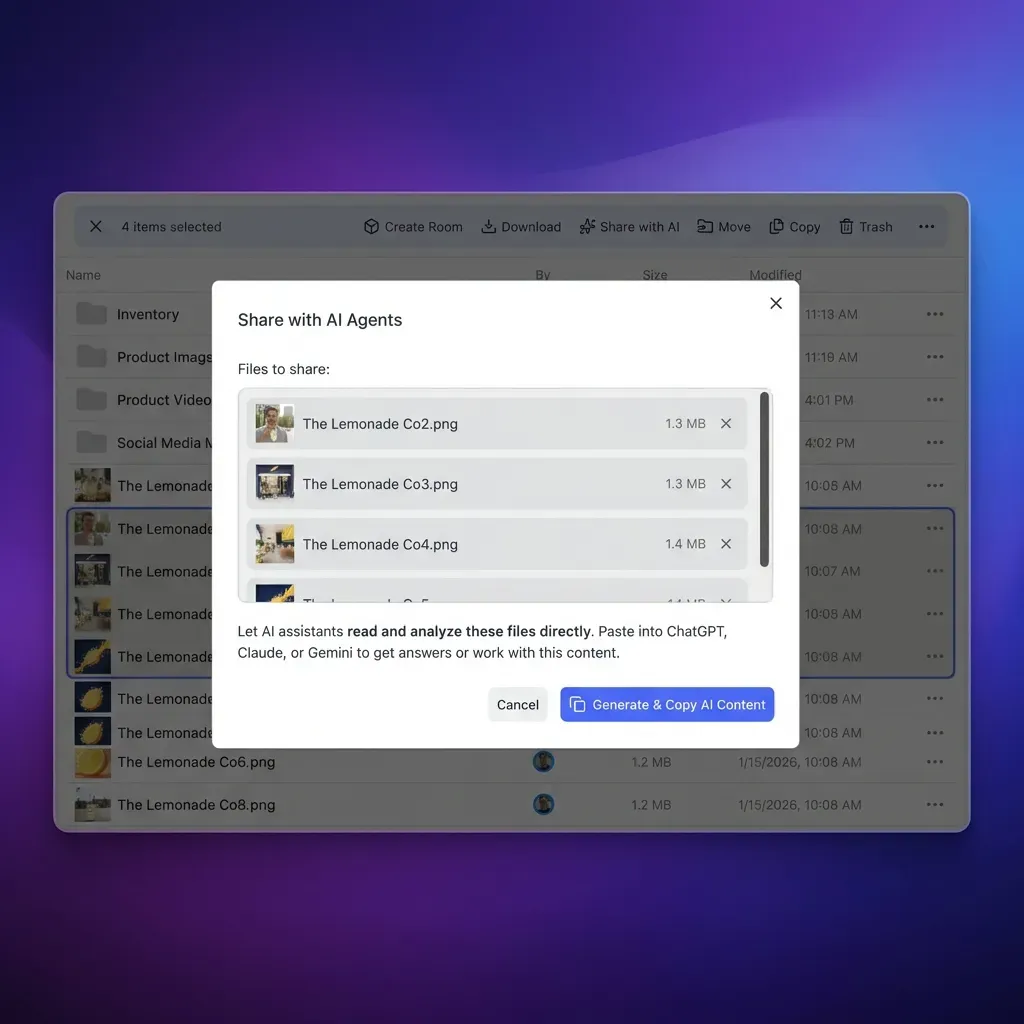
Once imported, Drive files enable RAG workflows in OpenClaw agents using Fastio's Intelligence Mode.
Enable Intelligence Mode on the workspace to automatically index documents, spreadsheets, and code files. Agents query with natural language, receiving cited responses from relevant content chunks. For instance, attaching the Drive folder to the question "Summarize risks in Q4 financial reports" scopes the answer to that folder, pulling passages from multiple PDFs.
Post-query, agents can edit notes in the workspace, create branded shares for delivery, or transfer ownership to humans. Chain to other agents for deeper analysis, like visualization tools, or generate reports. See AI chat docs for advanced scoping.
This turns static Drive storage into a dynamic, queryable knowledge base for research, compliance audits, financial reporting, and more. No separate vector database needed.
Troubleshooting Common Issues
OAuth errors: Use owned/shared files. Regenerate token. Check browser CORS.
Very large file: Use a resumable upload, or split the file before importing.
Slow indexing: Page-heavy PDFs take longer and draw more credits. Watch ai_state and monitor progress via the activity feed.
Permission denied: Need admin/member role. Check the workspace member list.
No credits: Included credits refresh with your billing period. Overage runs $10 per 100,000 credits, or move up a plan.
Hangs: Check Drive quotas. Import a smaller folder first. Check the import's progress in the activity feed.
Common Use Cases
Google Drive imports enable powerful OpenClaw agent workflows across industries.
Research Agents: Pull academic papers, datasets, or reports. Query "key findings from 2023 climate studies across imported docs" for cited summaries spanning multiple files.
Compliance and Audit: Import policies, logs, and contracts. Search for specific clauses like "GDPR requirements" or track access via activity logs. Perfect for regulatory reviews.
Onboarding and Client Delivery: Import templates and contracts into shares. Use branded portals and transfer ownership to clients seamlessly.
Multi-Agent Pipelines: Import raw data, pass to analysis agents for processing, generate reports, and deliver via shares. Activity feeds notify downstream agents of completion.
Persistent Knowledge Base: Archive research chats, analysis notes, and key excerpts. Intelligence Mode indexes everything for future reference queries.
These workflows use Fastio's RAG, versioning, and collaboration features beyond simple storage.
Best Practices and Cost Tips
Follow these best practices for efficient OpenClaw Google Drive imports to Fastio.
Start Small: Begin with single files or small folders to validate the workflow before bulk operations.
Estimate Costs: Ingest one sample PDF and read the actual credit draw before running the full job.
Monitor Activity: Poll the activity feed or connect to WebSocket events for import completions, especially for large folders.
Optimize RAG Queries: Attach the relevant folder to a question to limit search space and reduce token usage.
Plan for Scale: When a project outgrows the workspace it was built in, transfer ownership to hand it off to a human owner on their own plan.
Hybrid Backup Strategy: Retain Drive as primary archive, use Fastio for active querying and collaboration.
Multi-Agent Safety: Acquire an advisory file lock before edits so other agents wait on 409 errors, while automatic version history preserves every revision.
Review pricing regularly as usage grows.
Sources
References used to verify factual claims in this guide.
-
Fastio MCP server provides consolidated tools for workspaces
Frequently Asked Questions
How to import Google Drive to OpenClaw?
Connect OpenClaw to Fastio MCP, authenticate, authorize Drive via OAuth, and run import tools.
Does OpenClaw have Google Drive integration?
Yes, through Fastio. Cloud Import pulls Drive folders into a workspace, and OpenClaw works with the files there through Fastio's remote MCP server.
Can I bulk import folders?
Yes. Cloud Import copies a Drive folder with its subfolders and keeps the structure.
Are permissions preserved?
Folder structure is preserved. Access to the imported files is set in Fastio, through workspace membership and share permissions.
How much does Fastio cost?
Fastio offers a 14-day Business Trial requiring a credit card, then paid Starter ($9.99/mo), Business ($49.99/mo), and Enterprise ($199.99/mo) plans.
How does RAG work post-import?
Intelligence Mode auto-indexes files for search and chat.
Related Resources

Ready to Import Drive Files to OpenClaw?
Terabyte-scale storage, multiple workspaces, and included credits for AI work. Pull Drive files into RAG-ready workspaces. [Get started](/storage-for-agents/).