How to Build Multi-Agent Workflows in OpenClaw
OpenClaw multi-agent workflows let multiple agents coordinate on tasks like data processing or report generation. Fastio provides the shared workspaces agents need, with advisory file locks for safe concurrent access and built-in RAG for common knowledge. This guide walks through setup, MCP configuration, coordination patterns, and human handoffs.


What Are Multi-Agent Workflows in OpenClaw?
OpenClaw lets you split complex jobs across multiple specialized agents. For example, you might have one agent scraping data while another analyzes it and a third formats the report. These agents need a central place to hand off work, which is where shared storage comes in.
Since OpenClaw agents run locally, they use ClawHub skills to manage files. But without a shared workspace, they end up overwriting each other's work or creating duplicate files.
Fastio gives your agents a shared workspace where they can store files safely. We include advisory file locking to help agents coordinate writes and an Intelligence mode that indexes everything so agents can find what they need instantly.
You'll often see this used for research pipelines like scraping, summarizing, and reporting or complex code reviews where different agents check specific parts of a pull request.
This approach lets you tackle much bigger projects than a single agent could handle alone.
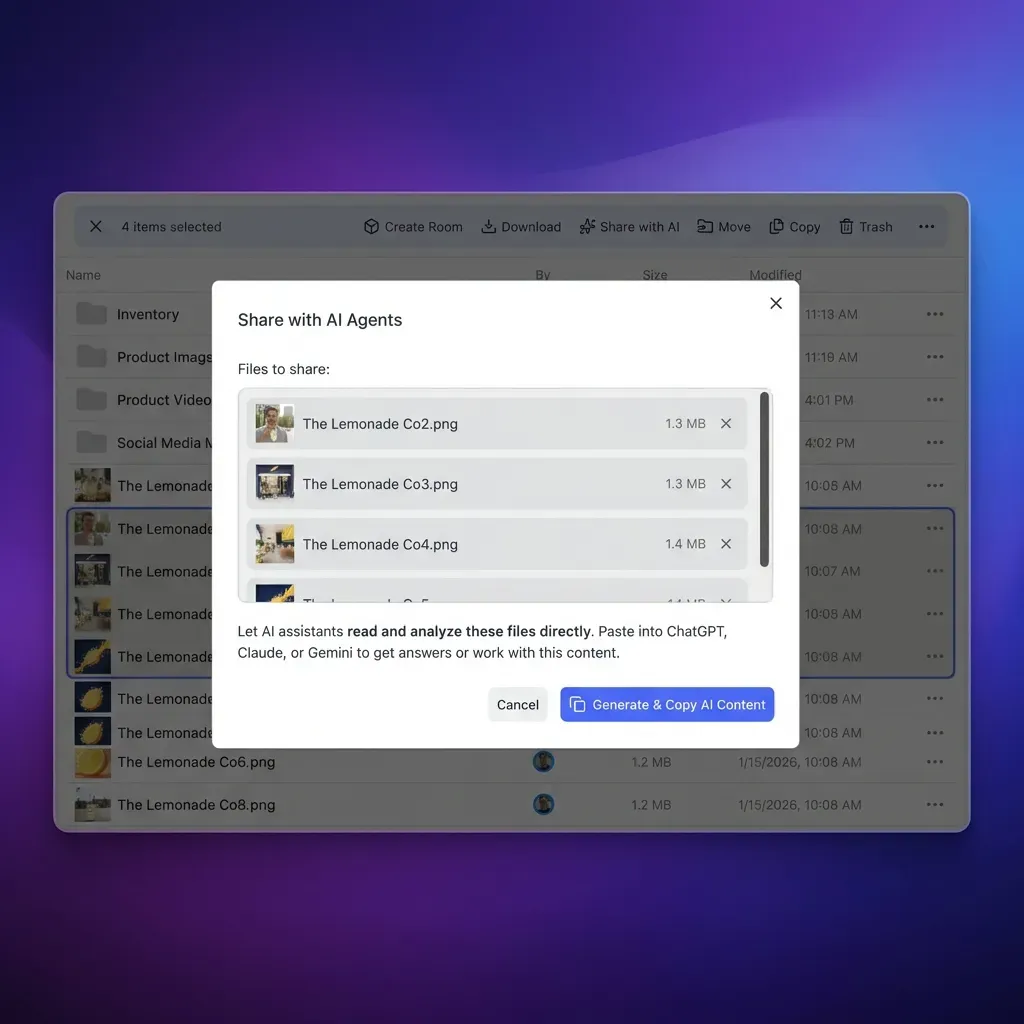
Why Shared Storage Matters
Agents need persistent files that last between sessions. Local storage makes collaboration difficult. Fastio workspaces keep files available even if an agent restarts.
Workspaces organize your files by project, with permissions to control access. Agents join as members.
Related guides
- How to Build Claude Cowork WorkflowsAgentic workflows handle repetitive data processing, but setting them up requires structure. Learn how to build Claude...
- How to Build a Hermes Agent Code AI Checker WorkflowA code AI checker workflow uses Hermes Agent subagents to analyze codebase pull requests for AI generation markers and...
- OpenClaw A2A Protocol: Agent-to-Agent Communication for Multi-Agent WorkflowsThe A2A protocol hit 150 supporting organizations in its first year, but native OpenClaw support was closed as "not...
- How to Set Up OpenClaw Multi Agent WorkspacesOpenClaw agents share files, context, and tasks in Fastio multi-agent workspaces. Access consolidated MCP tools for...
- How to Build Custom Agents in OpenClawOpenClaw hit 3.2 million monthly active users in April 2026, yet most deployments still run a single default agent...
- How to Build OpenClaw Cloud WorkspacesOpenClaw cloud workspaces give multi-agent teams shared storage with built-in RAG. Agents save files that last,...
More on this subject: OpenClaw Setup and Guides (199 guides)
Set Up Fastio Workspaces for OpenClaw Agents
First, grab a Business Trial account at fast.io/storage-for-agents. Create an API key in Settings > Devices & Agents > API Keys, or with POST /current/user/auth/key/.
Point OpenClaw at the Fastio MCP server. Use Streamable HTTP at https://mcp.fast.io/mcp/tools. You can also install the ClawHub skill in the next section.
Seed the shared workspace by importing a file the pipeline will use:
{"jsonrpc":"2.0","id":1,"method":"tools/call",
 "params":{"name":"upload","arguments":{"action":"web-import","url":"https://example.com/report.pdf",
 "profile_type":"workspace","profile_id":"1234567890123456789"}}}
You can also create an organization with POST /current/org/create/ and a workspace with POST /current/org/{org_id}/create/workspace/. Workspace intelligence indexes uploads so Ripley, the built-in RAG agent, can answer from those files.
Invite other agents as workspace members with POST /current/workspace/{workspace_id}/members/{email_or_user_id}/.



Start OpenClaw Multi-Agent Workflows
Agents collaborate in shared intelligent workspaces with version history, Ripley, and branded shares.
Install the Fastio ClawHub Skill
OpenClaw agents connect to Fastio's remote MCP server to manage workspaces and files.
Configure the remote MCP server in OpenClaw:
{
  "mcpServers": {
    "fastio": {
      "url": "https://mcp.fast.io/mcp/tools",
      "headers": {
        "Authorization": "Bearer YOUR_FASTIO_API_KEY"
      }
    }
  }
}
There is no local package or container to install. Connect directly over Streamable HTTP to access Fastio's consolidated MCP toolset.
Tool List
Here are the main tools you'll use:
- upload: Import or stream files into a workspace
- storage: List, search, move, copy, and read details
- find: Unified search across a workspace or share
- ai: Ask Ripley for a cited answer
- share: Branded Send, Receive, and Exchange portals
- event: Activity log
Coordinate Agents with File Locks
Fastio coordinates multi-agent updates using advisory per-file locks alongside file version history with restore and a detailed activity log. An agent acquires a file lock before writing, heartbeats it while working, and releases it when done. Another agent that tries to lock the same file gets an HTTP 409 error and can wait or read. If a holder disappears, the lock expires automatically or can be overridden by anyone with write permission. Every write is versioned regardless.
Agents manage locks and inspect activity through the remote MCP storage tool (using lock-acquire, lock-status, and lock-release) or via the REST API at https://api.fast.io/current/:
POST https://api.fast.io/current/workspace/{workspace_id}/storage/{node_id}/lock/
Granular permissions ensure each agent writes to its designated folder, while the audit log, activity feed polling, and WebSocket events feed track operations across the pipeline.
How to Use RAG for Shared Context
Intelligence mode indexes your files so agents can query the workspace through Ripley. Use the MCP ai tool (ask). It returns a cited, read-only answer and requires profile_type.
{"jsonrpc":"2.0","id":1,"method":"tools/call",
 "params":{"name":"ai","arguments":{"action":"ask","profile_type":"workspace","profile_id":"1234567890123456789"}}}
For example, asking "Summarize risks in Q1 reports" returns an answer with citations pointing to the exact pages.
This lets agents share knowledge without needing to duplicate context. Semantic search (GET /current/workspace/{workspace_id}/storage/search/) finds concepts like "contract indemnity" even if those exact words aren't used.
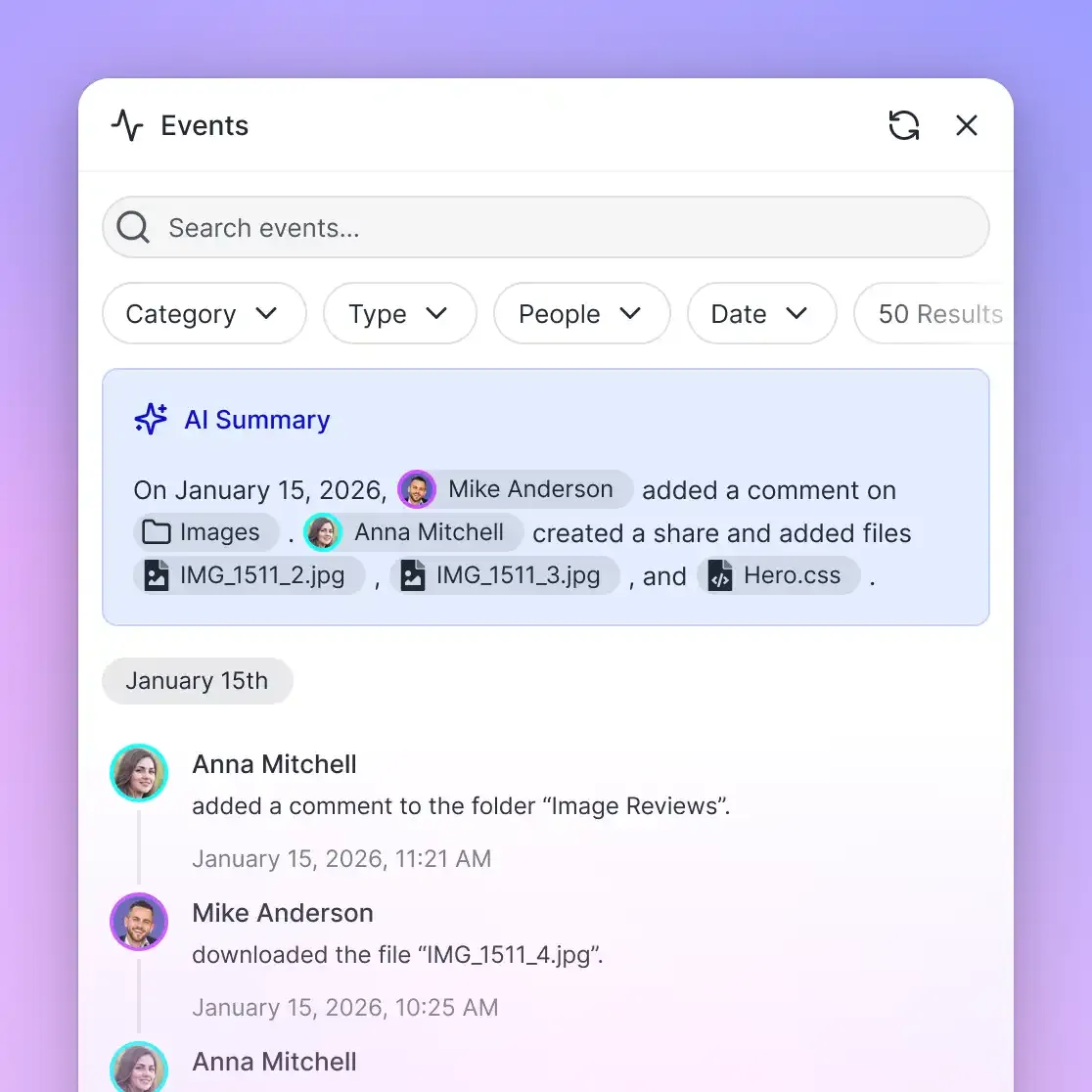
Human-Agent Collaboration and Handoffs
Agents can invite humans to workspaces, too. You can use the web UI to preview files and leave comments.
Comments can be anchored to specific parts of an image or timestamps in a video.
For handoffs, invite the person as a workspace member with POST /current/workspace/{workspace_id}/members/{email_or_user_id}/. The agent keeps working in the same workspace. For people outside the org, create a branded Send, Receive, or Exchange share with POST /current/workspace/{workspace_id}/create/share/.
Agents watch for new files with GET /current/activity/poll/{entityId}?wait=95&lastactivity={timestamp} or GET /current/events/search/.
Define clear tool contracts and fallback behavior so agents fail safely when dependencies are unavailable. This improves reliability in production workflows.
Sources
References used to verify factual claims in this guide.
-
Fastio MCP server at https://mcp.fast.io/mcp/tools with tools/call for upload, storage, and ai Ripley answers through the MCP ai tool with action ask and requires profile_type File activity via GET /current/events/search/ and GET /current/activity/poll/{entityId}
Frequently Asked Questions
What are multi-agent workflows in OpenClaw?
They split complex tasks across multiple agents using shared storage. Fastio provides the workspaces, version history, and RAG needed to coordinate them.
How does OpenClaw share context for agents?
By using indexed workspaces. When you enable intelligence, agents can query shared files through Ripley and get answers with citations.
How does OpenClaw connect to Fastio?
OpenClaw connects directly to Fastio's remote MCP server at `https://mcp.fast.io/mcp/tools` with a scoped API key to access storage, search, sharing, and Ripley AI.
How is concurrent access handled?
Fastio maintains file version history with restore capabilities, granular permissions, and a detailed activity log to safely coordinate agent updates.
Can agents hand off to humans?
Yes. Invite the person as a workspace member, or send a branded Send, Receive, or Exchange share. The agent can keep working in the same workspace.
Related Resources

Start OpenClaw Multi-Agent Workflows
Agents collaborate in shared intelligent workspaces with version history, Ripley, and branded shares.