Overleaf Storage Limits: Project Ceilings, Compile Timeouts, and Asset Sync
The Overleaf storage limit governs project performance through a 50MB single-file upload ceiling, a 7MB limit on editable text, and compile timeouts of 10 seconds on free plans and 240 seconds on premium tiers. While total project capacity is technically uncapped, projects above 500MB frequently encounter Git sync failures and memory faults. Managing large technical papers requires optimizing image assets and offloading raw datasets to external workspaces.

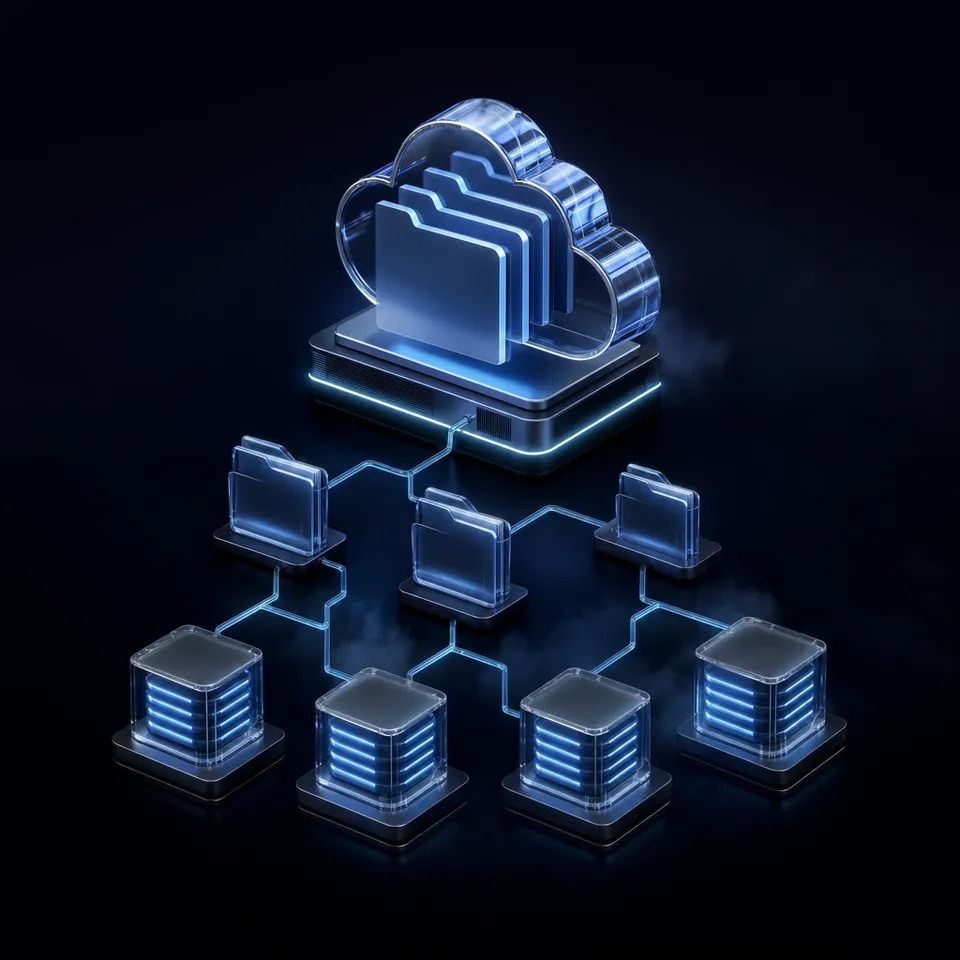
Understanding the Overleaf Storage Limit Hierarchy
Overleaf officially recommends keeping individual LaTeX projects under 500MB and caps single file uploads at 50MB to prevent compile engine overload. While authors often assume Overleaf operates like an elastic cloud drive, the platform runs on shared Linux compilation containers bound by strict memory, disk, and runtime thresholds. When a project accumulates high-resolution figures, bloated bibliographies, or raw experiment data, it triggers hard operational boundaries that halt work.
Understanding how Overleaf governs resources requires distinguishing between single-file upload ceilings, aggregate text boundaries, repository thresholds, and compile runtime allocations. Many teams search for the documented Overleaf storage limit only after encountering failed zip imports, stalled git pushes, or compiler crashes.
The table below outlines the operational limits enforced across Overleaf plan tiers:
These boundaries exist because LaTeX compilation is not a passive document rendering operation. Every time an author clicks Recompile, the engine orchestrates a complete software build cycle, parsing macros, executing font expansions, and processing graphic streams.
The Reality of Project Ceilings and the 1GB Boundary
Community discussions frequently cite a strict 1GB project storage cap on Overleaf. According to official Overleaf plan limits documentation, total project size is technically uncapped on both free and premium tiers. However, Overleaf explicitly notes that practical technical constraints appear once a project grows beyond moderate thresholds. Overleaf recommends keeping total project sizes under 500 MB, or less than 100 MB when using Git or GitHub synchronization.
When a repository accumulates excessive binary files, background synchronization daemons struggle to compute diffs across large assets. Projects that swell above 4 GB begin failing during core operational routines, including project cloning, zipping, and administrative backups. The real bottleneck is rarely raw disk allocation in isolation. Instead, projects cross practical capacity thresholds when authors commit multi-gigabyte scientific image sets, microscope captures, or machine learning model checkpoints directly into the LaTeX document root. Keeping repository payloads lean keeps compile sandboxes responsive.
Text File Ceilings and the 7MB Boundary
Beyond aggregate media volume, Overleaf enforces strict quotas on editable text content. The platform caps editable text files, which include .tex, .bib, .sty, and .cls documents, at 7 MB total per project. Any single editable text file cannot exceed 2 MB.
When an individual document crosses this threshold, the web-based editor disables collaborative text synchronization and interactive editing to maintain browser stability. The editor flags the file as read-only or refuses to load it in the browser pane. This issue most commonly strikes projects with uncurated BibTeX databases. Exporting an entire group library from reference managers like Zotero or Mendeley can produce a single bibliography file containing thousands of records with full abstracts and embedded file paths, quickly breaching the 2 MB single-file ceiling. Restricting reference exports to cited keys keeps text volumes well beneath platform limits.
Related guides
- Approaching Pooled Storage Limit: Warning Fixes, Offloading Large Files, and Cloud SyncThe approaching pooled storage limit warning is an administrative notification triggered when an organization's...
- Cerebras Context Window Limits: 128K Token Specs, Tier Ceilings, and Storage WorkaroundsThe Cerebras context window provides sequence lengths up to 128,000 tokens on paid developer tiers and 64,000 tokens on...
- GitHub Storage Limits: Account Quotas, Package Caps, and WorkaroundsGitHub storage limits are plan-level quotas governing combined storage for GitHub Actions artifacts, GitHub Packages,...
- Google Cloud Storage File Size Limits: Object, Upload, and Composite CapsGoogle Cloud Storage enforces an individual object limit of 5 TiB per file. While single-stream HTTP PUT uploads face...
- Google NotebookLM Storage Limits: Google Drive Quotas, Account Caps, and Scaling WorkspacesThe Google NotebookLM storage limit encompasses an account-wide allowance of up to 100 notebooks, each holding up to 50...
- Google Drive File Size Limits: Workarounds for AI Agent WorkspacesGoogle Drive limits individual file uploads to 5TB and daily uploads to 750GB, which can easily freeze multi-agent...
More on this subject: Agent Memory and Storage (277 guides)
Why Large Projects Trigger Compiler Timeouts
A project size limit exceeded message is only one way a bloated project fails. More frequently, oversized assets manifest as compiler timeouts. When an author initiates compilation, the server executes latexmk, which runs multiple sequential passes through pdflatex, xelatex, or lualatex, alongside auxiliary tools such as biber or bibtex. The compiler must parse the entire source tree, resolve dynamic cross-references, compute mathematical equation layouts, and write the output PDF.
Free tier accounts receive an allocation of 10 seconds of compilation runtime per build. Premium tiers (Standard, Pro, and Student subscriptions) extend this runtime allowance to 240 seconds. If the compilation script fails to terminate cleanly within that window, the execution container kills the process and returns a timeout error.
Uncompressed graphics, recursive macros, and inefficient layout packages represent the three most common triggers for compiler timeouts. When dozens of raster figures are embedded in full resolution, the TeX engine spends excessive CPU cycles decompressing pixel matrices on every compilation pass. Understanding how the compiler processes specific file types is critical to diagnosing timeouts before upgrading plan tiers.
Image Processing Overhead and Format Traps
Images represent the largest source of bloat in technical publications. However, file size on disk does not always correlate with compilation burden. The format chosen determines the exact computational pathway the engine follows:
- High-Resolution PNG and JPEG: The
pdfTeXengine must unpack compressed raster images into uncompressed bitmap arrays in volatile memory before embedding them into the PDF stream. Embedding dozens of uncompressed raster figures forces the compiler to read, decode, and write extensive bitmap data on every compilation pass. - Encapsulated PostScript (EPS): The modern
pdfLaTeXengine cannot parse PostScript code directly. When it encounters an.epsfigure, it invokes theepstopdfpackage, which launches a Ghostscript child process in the background. Compiling dozens of EPS files initiates separate Ghostscript subprocesses, easily surpassing the 10-second runtime ceiling on free accounts. - Scalable Vector Graphics (SVG): LaTeX has no native parser for SVG code. Using the
svgpackage requires calling Inkscape through system shell escape commands (--shell-escape), converting vector paths to PDF in real time. This process introduces severe CPU latency during builds.
Converting all diagrams, plots, and charts directly into native vector PDF files before uploading them eliminates runtime conversion steps and keeps compilation fast.
Heavy Packages and Floating Element Loops
Certain macro packages place enormous computational strain on the TeX interpreter. For example, the tabularray package offers clean syntax for intricate tables, but it processes table matrices by tokenizing the entire block into Lua or macro memory. In documents with multi-page data appendices, tabularray can multiply compile times by an order of magnitude compared to traditional tabular or booktabs environments.
Chemistry and technical packages require careful selection. Recent editions of mhchem introduce extensive parsing routines that can slow compilation. Swapping mhchem for chemformula often reduces build times by substantial margins.
Another major driver of timeouts is floating element placement. When an author applies the strict [H] placement specifier from the float package to dozens of consecutive figures, the TeX page-breaking algorithm enters iterative layout loops attempting to satisfy impossible vertical constraints without breaking pages. Replacing [H] with flexible placement parameters like [hbt!] and inserting periodic \clearpage commands lets the queue flush cleanly without exhausting the compiler timeout.


Decouple Heavy Assets from Overleaf with Fastio Workspaces
Keep LaTeX projects fast and lean by storing raw datasets, appendices, and high-resolution figures in high-capacity Fastio workspaces. Connect AI assistants via the Model Context Protocol (see https://mcp.fast.io/docs) to query project intelligence without triggering compiler timeouts. Monthly plans start with a 14-day free trial (credit card required).
Step-by-Step Optimization to Shrink Project Footprints
When an Overleaf repository approaches recommended capacity ceilings or compile jobs consistently timeout, methodical restructuring resolves the issue without sacrificing print resolution. Rather than guessing which assets cause the breakdown, apply structured diagnostic steps to isolate and compress offending components.
Step 1: Diagnose with Stop on First Error and Fast Draft Mode
Before compressing images, verify that a hidden syntax error is not stalling the build. In the Overleaf editor, click the arrow beside the Recompile button and select Stop on first error. In standard mode, LaTeX attempts to recover from non-fatal warnings, continuing execution while printing errors to the background log. Multiple cascading warnings can cause latexmk to hang until the timer expires. Stop on first error forces the compiler to halt immediately at the offending line.
Next, toggle the compile setting to Fast [draft] mode. This instructs the graphics driver to replace every \includegraphics call with an empty rectangular bounding box matching the image dimensions. If the document compiles rapidly in Fast [draft] mode but crashes or times out in Normal mode, oversized graphic assets are definitively confirmed as the root bottleneck.
Automating Image Downsampling and PDF Compression
Do not upload raw camera captures, microscope TIFFs, or 600 DPI raster plots into the project root. For photographs, downsample images to 300 DPI (standard print resolution) or 150 DPI (screen review resolution) and save them as compressed JPEGs.
For vector diagrams exported as bulky PDFs, background metadata, unneeded font subsets, and hidden layers can bloat file sizes. Run Ghostscript on local machine terminals to linearize and strip unnecessary data from PDF figures before uploading:
gs -sDEVICE=pdfwrite -dCompatibilityLevel=1.5 -dPDFSETTINGS=/ebook -dNOPAUSE -dQUIET -dBATCH -sOutputFile=figure1_optimized.pdf figure1_raw.pdf
To batch compress a directory of high-resolution PNG assets to JPEG format with ImageMagick while preserving dimension ratios, run:
magick mogrify -format jpg -quality 85 -density 300 -resize 2000x2000\> *.png
Replacing uncompressed image directories with optimized assets dramatically reduces repository volume, helping prevent compile timeouts.
Externalizing TikZ and Vector Diagrams
Complex diagrams drawn with TikZ or pgfplots require the TeX engine to calculate coordinate geometry, line intersections, and mathematical curves on every single compile. A manuscript with five dense TikZ architectural charts can easily add thirty seconds to the build cycle.
To eliminate repetitive recalculation, enable TikZ externalization. This compiles each diagram once into a standalone PDF, caching the rendered vector output in the project directory for subsequent passes. Add the following lines to your document preamble:
\usepackage{tikz}
\usetikzlibrary{external}
\tikzexternalize[prefix=figures/compiled/]
Confirm that the target directory (figures/compiled/) exists in your Overleaf file tree. Once compiled, Overleaf includes the cached PDF directly, bypassing the heavy mathematical processing on future runs.
Pruning Bibliographies and Modularizing Sources
Large research documents benefit from modular architecture. Instead of maintaining a monolithic main.tex spanning twenty thousand lines, separate each chapter or section into independent files within a sections/ folder. Load these modules into the master document using \include{sections/chapter1}.
During active writing and drafting, use the \includeonly{...} command in the preamble:
\documentclass{article}
\includeonly{sections/chapter2}
\begin{document}
\include{sections/chapter1}
\include{sections/chapter2}
\include{sections/chapter3}
\end{document}
The compiler maintains cross-reference auxiliary data from the entire manuscript while parsing only the active chapter, reducing compile duration down to a few seconds.
Sanitize bibliography files using command-line utilities like bibtool to strip unreferenced entries and bulky abstract = {...} fields:
bibtool -x document.aux -i master_library.bib -o references.bib
With this workflow, only cited entries enter the project, keeping text payloads well within platform boundaries.
Decoupling Heavy Research Assets with External Workspaces
The core architectural issue driving teams into Overleaf storage limits and compile timeouts is an architectural anti-pattern: treating the LaTeX repository as a digital asset management system. Academic research papers, technical monographs, and data-intensive reports consist of two distinct categories of files:
- Presentation Source: LaTeX markup, class definitions, bibliography files, and final optimized vector figures. These files belong directly in Overleaf and maintain a compact repository footprint.
- Research Corpus: Raw datasets (CSV, Parquet, HDF5), high-resolution uncompressed imaging, full experimental protocols, video demonstrations, and revision appendices. These assets easily reach tens or hundreds of gigabytes.
Attempting to force the research corpus into Overleaf triggers upload rejections, slows down real-time collaboration, and risks project corruption during Git synchronizations. The correct operational strategy decouples the research corpus into an external, high-capacity workspace while linking finished artifacts to the document.
Evaluating Storage Strategies for Research Teams
Teams managing project limits have several architectural paths for managing heavy files outside Overleaf:
- Local Hard Drives and Network Shares: Keeping raw files on individual workstation drives avoids cloud costs but breaks collaboration. Remote co-authors cannot access underlying data, version tracking across revisions is lost, and file loss risks are high.
- Object Storage (Amazon S3, Google Cloud Storage): Cloud buckets accommodate terabyte-scale data payloads with high durability. However, object storage lacks collaborative document tools, requires custom credential management, and provides no built-in document indexing or natural-language discovery for non-developer collaborators.
- Traditional Cloud Storage (Dropbox, Google Drive): General file sync tools provide folder sharing and basic desktop sync. However, they lack native AI intelligence, enforce synchronous file locking that causes conflicted copies, and provide no semantic search across research literature.
- Fastio Shared Workspaces: Fastio provides shared workspaces built specifically for human teams and AI agents. Files uploaded to a workspace are indexed automatically for hybrid search (full-text, semantic meaning, and metadata), allowing researchers and automated assistants to query datasets and documentation without storing raw multi-gigabyte corpora inside the writing environment.
High-Capacity Storage and Plan Specifications
Unlike LaTeX compile environments that enforce restrictive 50MB single-file limits and 500 MB recommended ceilings, Fastio workspaces accommodate massive datasets, video recordings, and archive packages. Every organization operates on a dedicated plan tier with clear resource allowances:
Monthly plans start with a 14-day free trial that requires a credit card, allowing research groups to establish workspaces, configure team permissions, and test data pipelines. Organizations requiring additional seats on the Enterprise plan can add members for $1 a month each (up to 200). Extra storage beyond plan limits is billed at $0.015 per GB a month, and additional bandwidth is $0.04 per GB.
Review plan structures on the Fastio pricing page or explore purpose-built storage for AI agents.
Advisory File Locks and Scheduled Cloud Sync
Multi-author technical writing often involves concurrent data processing. While one researcher updates Python plotting scripts, another analyzes statistical output, and a third edits LaTeX text.
To coordinate concurrent writes between humans and automated scripts, Fastio provides advisory per-file leases in workspace storage. Leases are acquired and released programmatically through Model Context Protocol (MCP) actions (lock-acquire and lock-release on the storage_manage tool, with lease verification via lock-status on the storage tool). These locks inform collaborators who is actively modifying a dataset or figure while per-file version history preserves every saved version. A detailed activity log tracks modifications across workspace assets, recording uploads, edits, moves, and deletions without logging passive file views or downloads.
Teams with existing institutional storage can use Cloud Sync. Cloud Sync connects Google Drive, Dropbox, Box, and OneDrive folders to a Fastio workspace, one-way or two-way, on a schedule or on demand. This allows research teams to aggregate lab files from university Google Drive accounts or lab Dropbox folders without manual re-uploading, keeping the primary workspace unified and searchable.
Connecting AI Agents to Research Workspaces via MCP
As research workflows integrate AI coding assistants and analysis agents, managing project context becomes critical. Feeding raw experimental spreadsheets, 500-page regulatory filings, or comprehensive literature surveys directly into LLM chat windows quickly exhausts model context limits or incurs unsustainable token fees.
By pairing Overleaf with an intelligent workspace, researchers can employ AI agents to query the external corpus and generate concise LaTeX summaries and tables. When Intelligence Mode is enabled on a Fastio workspace, files are indexed automatically for hybrid search across full-text, semantic meaning, and structured metadata values.
AI assistants connect to the workspace through the Model Context Protocol (MCP) using Streamable HTTP. See the Fastio MCP setup guide for client instructions. Rather than attempting to upload multi-gigabyte files into Overleaf or pasting massive texts into chat windows, the assistant queries the indexed workspace and returns precise citations and formatted LaTeX markup directly to the author.
Connecting Assistants via Streamable HTTP
Fastio hosts a remote MCP server accessible over Streamable HTTP across dedicated endpoints tailored to specific assistant environments:
https://mcp.fast.io/mcp/toolsfor Claude desktop, mobile, and web applications, as well as general orchestration runtimes.https://mcp.fast.io/mcp/codefor coding assistants including Claude Code, Cursor, Cline, and terminal agents.https://mcp.fast.io/mcp/operationsfor custom ChatGPT and Codex configurations.
For example, a developer configuring Claude Code connects the remote workspace by executing:
claude mcp add --transport http fast-io https://mcp.fast.io/mcp/code
After signing in with OAuth in the browser, the coding assistant gains direct access to workspace tools, allowing it to search documentation, inspect figure revisions, and extract structured tables without touching local disk storage.
Structured Data Extraction with Metadata Views
When preparing systematic reviews, meta-analyses, or clinical trial reports, authors must often extract quantitative metrics from dozens of source publications. Manually compiling these figures into LaTeX tables is slow and error-prone.
Using Metadata Views, researchers can convert collections of research papers into structured, queryable tables. Users specify the target fields in natural language, such as sample size, primary endpoint, p-value, or statistical model. AI designs a typed schema (supporting Text, Integer, Decimal, Boolean, URL, JSON, and Date & Time formats), scans matching PDFs in the workspace, and populates a filterable spreadsheet.
AI agents can then query these extracted values over MCP, automatically generating formatted LaTeX booktabs code ready for insertion into Overleaf. This workflow decouples literature analysis from the authoring platform so that Overleaf remains lightweight and free from storage limit errors.
Sources
References used to verify factual claims in this guide.
-
The Overleaf storage limit restricts LaTeX project sizes to recommended ceilings under 500 MB and 100 MB for Git sync, with single file uploads capped at 50 MB, editable text material limited to 7 MB per project and 2 MB per file, while projects exceeding 4 GB experience operational copy failures. Overleaf collaboration limits restrict project sharing to 10 collaborators on Standard and Student subscriptions, while Pro subscriptions allow an unlimited number of collaborators.
Frequently Asked Questions
What is the storage limit on Overleaf?
Overleaf does not enforce a rigid hard cap on total project storage, listing project capacity as unlimited across plans. However, Overleaf officially recommends keeping total project size under 500 MB (and under 100 MB when using Git or GitHub sync) to maintain optimal performance. Single file uploads are capped at 50 MB, editable text material is limited to 7 MB per project, and individual text files cannot exceed 2 MB.
How do I fix project size limit exceeded on Overleaf?
To resolve project size errors on Overleaf, first compress or downsample large raster graphics to 300 DPI, convert diagrams to optimized vector PDFs, and externalize complex TikZ figures. Next, prune unreferenced citations and bulky abstracts from your bibliography files. Finally, offload heavy raw datasets, video files, and supplementary appendices to an external cloud workspace like Fastio, keeping only essential LaTeX markup in Overleaf.
Can you increase the Overleaf compile time limit?
Yes. Subscribing to an Overleaf premium plan (Standard, Pro, or Student) increases the compile timeout limit from 10 seconds on the free tier to 240 seconds. If a project still times out on a premium plan, optimize image sizes, replace slow packages like tabularray with standard tabular environments, and use Fast draft mode to isolate slow components.
What is the difference between the recommended project size and the single file limit on Overleaf?
The 50 MB ceiling is a strict upload limit enforced on each individual file uploaded to Overleaf. In contrast, the 500 MB figure is Overleaf's recommended ceiling for the aggregate project repository to maintain compiler stability and smooth Git synchronization.
Why does my project compile locally but time out on Overleaf?
Local TeX distributions (such as TeX Live or MiKTeX) run directly on your workstation hardware without strict execution timeouts, using local CPU and memory resources. Overleaf compiles projects inside shared cloud containers with strict resource governance (10 seconds on free accounts, 240 seconds on premium plans). Differences in TeX Live versions between your machine and Overleaf can also trigger package incompatibilities.
How does offloading assets to an external workspace prevent compile errors?
Decoupling raw research datasets, high-resolution media, and supplementary appendices into an external workspace keeps the Overleaf project repository lightweight. Because the LaTeX compiler only processes the text and final production-ready vector figures, build times remain well within the 10-second or 240-second timeout window, preventing memory overruns and sync failures.
Related Resources

Decouple Heavy Assets from Overleaf with Fastio Workspaces
Keep LaTeX projects fast and lean by storing raw datasets, appendices, and high-resolution figures in high-capacity Fastio workspaces. Connect AI assistants via the Model Context Protocol (see https://mcp.fast.io/docs) to query project intelligence without triggering compiler timeouts. Monthly plans start with a 14-day free trial (credit card required).