How to Set Up Paralegal AI Agent Workspace
Paralegal AI agent workspaces let paralegals and agents share documents, case files, and client materials. Fastio adds semantic search, RAG chat, and MCP tools. Paralegals stay in control of sensitive docs. This guide covers setup and workflows.

What Is a Paralegal AI Agent Workspace?
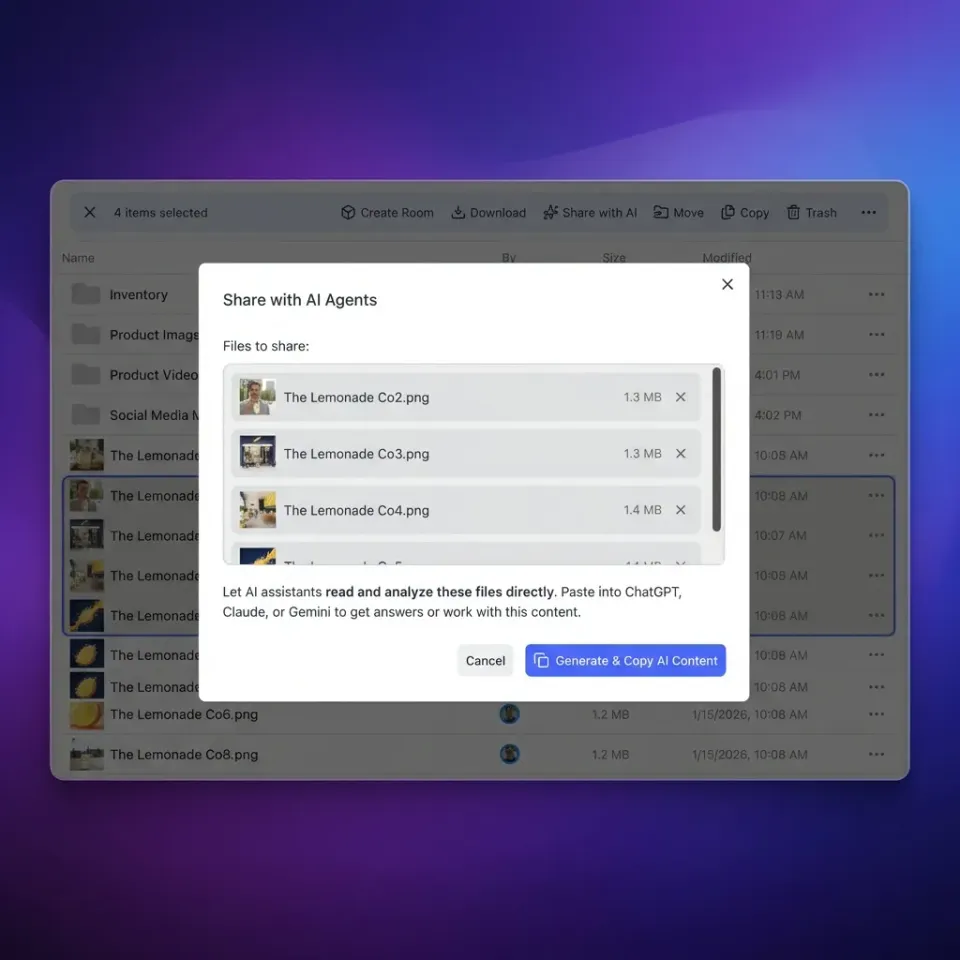
A paralegal AI agent workspace is a shared folder environment where paralegals and AI agents work on the same files. Agents handle document review and data extraction. Paralegals handle strategy and oversight, and, critically, own the final call on anything that goes to a client or court.
In Fastio, workspaces are organization-owned, so files stay with the firm if a paralegal or agent account changes. Files are indexed and searchable once Intelligence is enabled for the workspace. You can query the full case file in plain language: "Find all mentions of breach clauses in Q1 contracts" returns cited passages, not a list of file names.
Most firms that hit friction with legal AI aren't using bad tools; they have files scattered across four different drives with no consistent ownership. Centralizing into workspaces with audit trails and clear permissions solves that before agents ever touch a document.
See also: Fastio Workspaces, Fastio Collaboration, Fastio AI.
Related guides
- How to Choose a File Management Platform for ParalegalsGuide to paralegal file management platform: Paralegals organize case documents, share securely with clients, and...
- How to Set Up a Legal Due Diligence WorkspaceA legal due diligence workspace is a centralized digital environment where legal teams review, organize, and share...
- How to Set Up Google Drive for Law FirmsEstablishing a structured folder hierarchy in Google Drive is essential for legal compliance and efficient retrieval....
- How to Set Up an Immigration Document Portal for Your Law FirmImmigration cases generate dozens of documents from petitioners, beneficiaries, employers, and government agencies. An...
- Law Firm Workspace: Centralizing Matter Files, Client Portals, and Team CollaborationManaging active legal matters requires a unified digital environment where attorneys, paralegals, and clients...
- How to Set Up a Secure Legal Document Exchange PortalA step-by-step operational guide to structuring a secure portal for legal document exchange. Learn how to organize...
More on this subject: Legal Teams (211 guides)
Why Paralegals Benefit from AI Agent Workspaces
Paralegals spend a lot of their day on work that doesn't require legal judgment: sorting documents, checking citations, pulling dates from depositions. AI agents can do those tasks faster. The benefit isn't headcount reduction; it's that paralegals get time back for client contact and case strategy.
The legal AI market is growing quickly (from $3.11 billion in 2025 to a projected $10.82 billion by 2030, per MarketsandMarkets), and firm adoption is accelerating. That's context, not a reason to rush. The firms getting real value are the ones that started with a narrow use case, measured the outcome, and expanded from there.
Fastio supports multiple agents in one workspace. Each agent gets its own access credentials and shows up separately in audit logs, so you always know which agent touched which file. Once Intelligence is enabled for the workspace, the full case file becomes a searchable knowledge base: query it in plain language and get back cited passages. Agents connect via MCP over Streamable HTTP or SSE, which means they have access to the same file operations the UI exposes without any custom integration work.
Files can be imported from Google Drive, OneDrive, Box, or Dropbox via OAuth, so agents don't need to touch local storage. When an agent finishes a task, ownership can be transferred to a paralegal for review. The agent keeps audit access if you need it for chain-of-custody records.


Start Paralegal Agent Workspaces on Fastio
Shared storage with version history, RAG, and MCP tools for legal teams. Start your 14-day Business Trial.
Key Fastio Features for Legal AI Collaboration
A few specific features matter most in legal agent workflows.
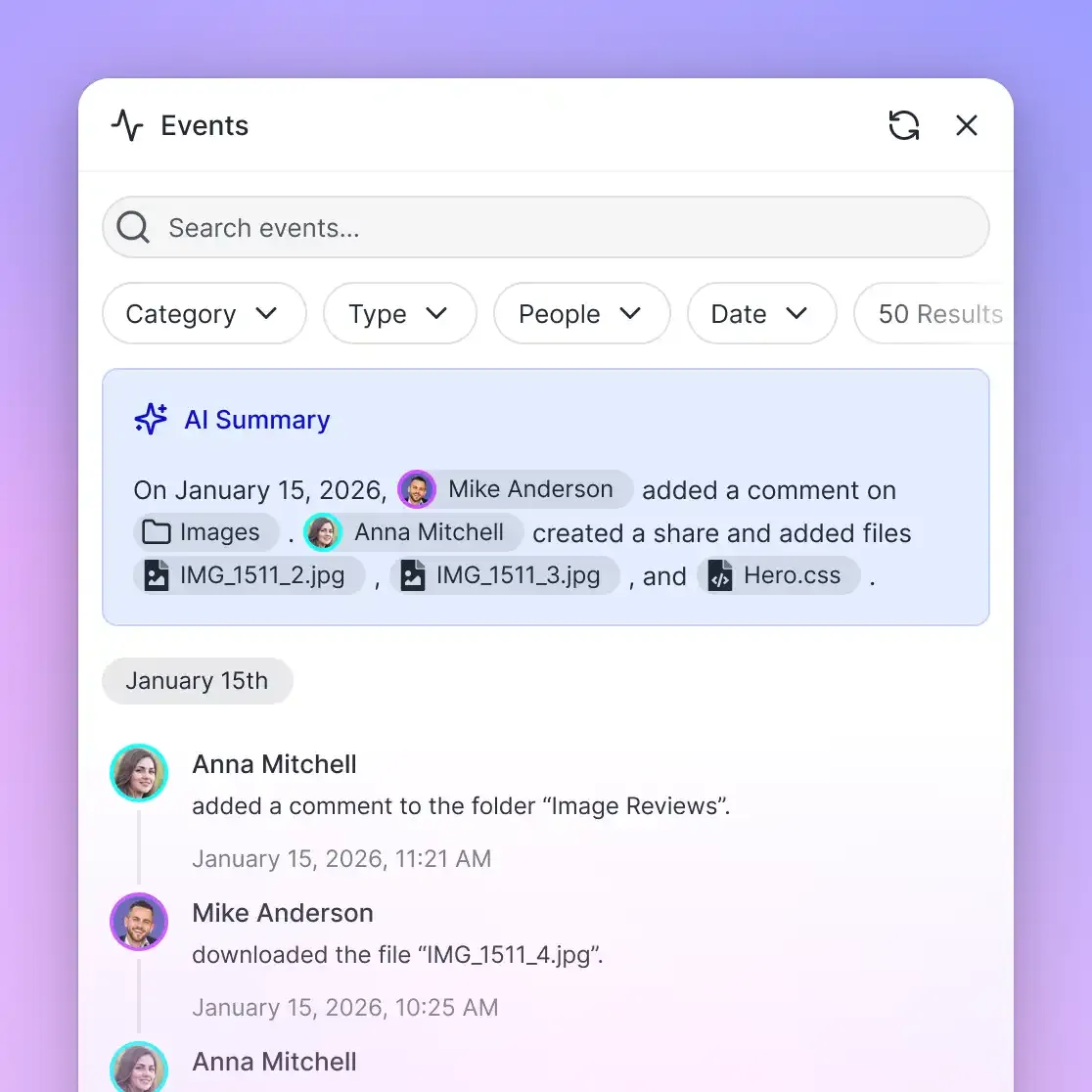
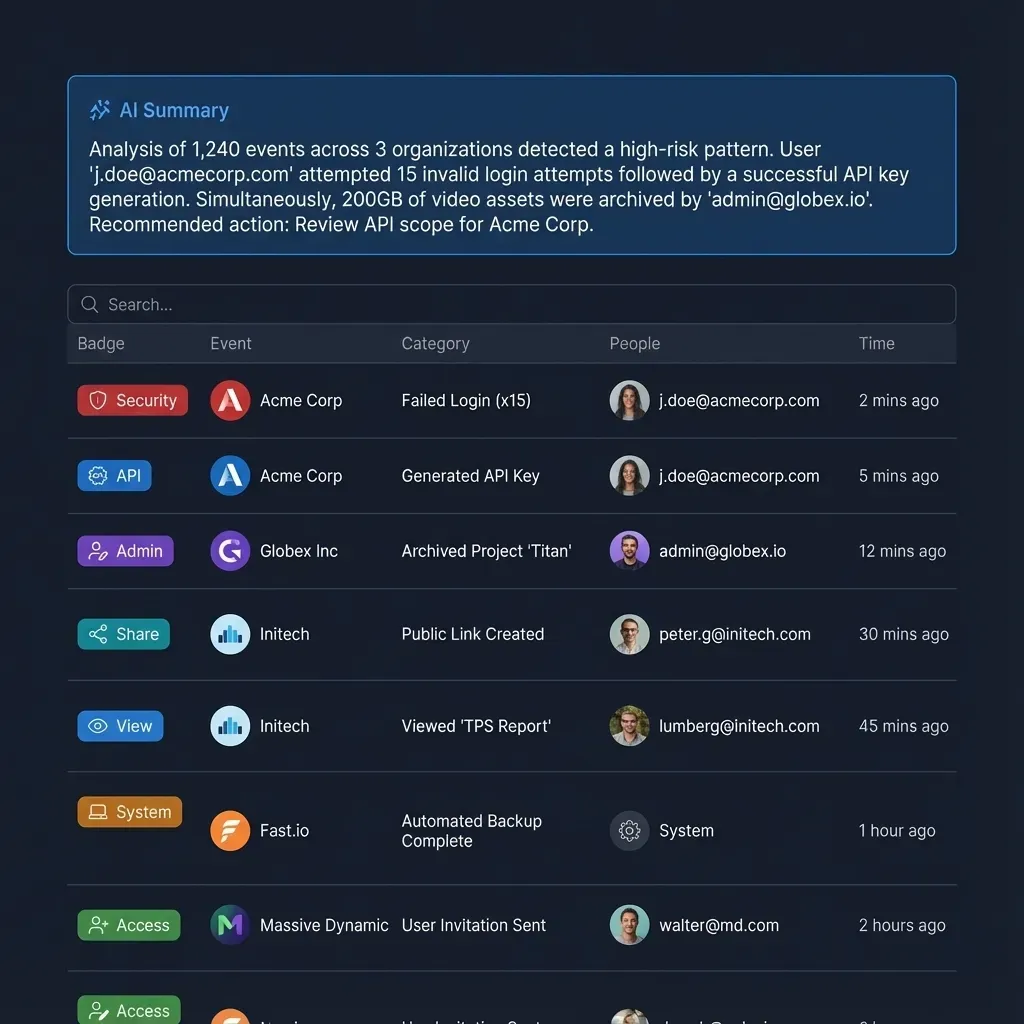
Audit logs record every view, edit, and access event, exportable for compliance reviews or e-discovery chain-of-custody documentation. Permissions are set at the org, workspace, folder, or individual file level, so agents can be restricted to read-only on sensitive matters while paralegals keep edit rights.
Data rooms are branded client portals with built-in analytics: you can see which documents a client has opened, when, and for how long. Intelligence Mode is a RAG toggle: turn it on, files index for search, and agents (or paralegals) can query the case with citations. The remote MCP server gives agents access to file and search operations without any custom code.
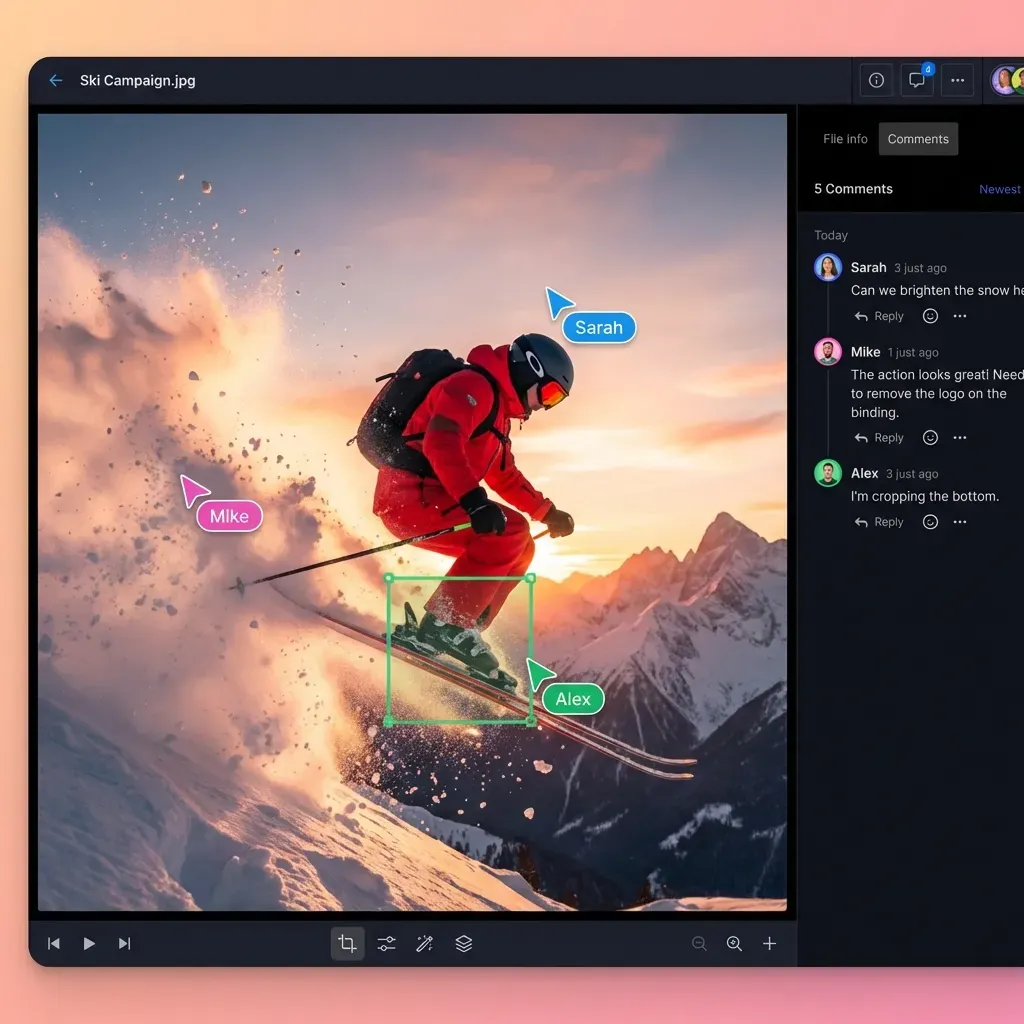
File version history is worth calling out specifically: when multiple agents work on overlapping documents, version history with restore prevents accidental overwrites from creating permanent data loss. For multi-agent e-discovery workflows, this is essential.
Step-by-Step Setup for Paralegal AI Agent Workspace
Set up in minutes.
Sign up: Start the 14-day Business Trial at fast.io/pricing (credit card required; see pricing plans).
Organization: Create the organization in your firm's name, so the firm owns the files rather than individual users.
Workspace: Create a private workspace for each matter, for example "Smith v Jones".
Intelligence Mode: Turn it on so the workspace indexes files for search and RAG chat.
Invite: Invite paralegals as owners, and add agents by email invite or API key.
Agents:
- MCP: Remote MCP server at
https://mcp.fast.io/mcp/tools - OpenClaw: Connect via remote MCP URL
- LLMs: Claude, GPT, or Gemini
- MCP: Remote MCP server at
Upload: Drag files into the workspace, import them from connected cloud accounts (OAuth) or URLs, or use chunked uploads for large files.
Test: Ask the workspace chat a question such as "What are the deposition dates?" and check that the answer cites its sources.
Event Feeds: Use activity polling or WebSocket streams to follow changes in the workspace.
Permissions and versioning: Check who can view and edit the workspace, and rely on version history to recover earlier drafts.

Integrating OpenClaw for Quick Agent Start
OpenClaw: Connect to Fastio remote MCP server at https://mcp.fast.io/mcp/tools with an API key. Commands like "Upload contract to Smith case, summarize risks." Any LLM, no local install.
MCP Tool Examples for Paralegals
Examples: create workspace, upload files, query documents with citations, acquire advisory file locks with lock-acquire before editing. Scoped API key auth.
Real-World Workflows: Paralegal + AI Agent Examples
Example workflows.
E-Discovery:
- Upload docs.
- Agent1 RAG for "privileged", extracts cited.
- Agent2 risk summary, flags.
- Version history prevents data loss.
- Paralegal reviews/export. Audit chain-of-custody.
Contract Review:
- Upload contracts.
- Agent flags unusual clauses.
- Mode highlights vs templates.
- Paralegal edits.
- Realtime activity feed client update.
Data Room:
- Agent imports Drive files.
- Compliance check/redact.
- Build room.
- Transfer ownership.
- View analytics.
Daily:
- Search "Acme NDA".
- Case timeline chat.
- Agent chain: extract>analyze>summarize.
Review cycles get shorter without changing the security model. Establish document access rules, audit trail requirements, and retention policies before rollout so the staging environment matches production. That makes it much easier to debug any issues before they affect a live matter.
Best Practices, Scaling, and Troubleshooting
Start with one matter type, not the whole firm. Run a pilot on a single practice group, measure review time before and after, and use that data to make the case for expanding. Agents should analyze; paralegals should approve. That is not a limitation of the technology; it is the right division of labor given the stakes.
Version history and event feeds are both essential in production. With version history, concurrent agents can restore previous states if an accidental overwrite occurs. With event feeds, you maintain the ability to trigger downstream steps (notifications, status updates, client updates) when files change. Check logs weekly and watch credit consumption, especially on matters involving large document sets.
For scaling: Fastio plans provide pooled terabyte storage and support separate organizations per client for clean permission boundaries. Training agents on matter-specific documents improves retrieval accuracy noticeably compared to generic prompts.
Common issues and fixes: | Issue | Likely cause | Fix | |-------|-------------|-----| | No citations in RAG results | Intelligence Mode off, or files not re-indexed | Toggle on, re-upload affected files | | Unexpectedly high credit use | Unbatched prompts on large document sets | Batch queries; set per-session limits | | Agent access denied | Role not granted at correct level | Grant via Collaboration settings | | Conflicting edits | Agent updated existing file | Restore previous version from version history | | OAuth import failing | Token expired | Reconnect source in integrations panel |
Run API backup tests quarterly. One firm running a pilot on a single practice group cut NDA review time from two hours to under 30 minutes once agents handled clause extraction and flagging. Keep agent permissions scoped to the active matter only: workspace-wide access makes audit trails harder to read. Teams that track weekly credit usage and cycle time from day one have the data to justify expanding to more practice groups before the quarter ends.
Sources
References used to verify factual claims in this guide.
-
Legal AI software market expected to grow from USD 3.11 billion in 2025 to USD 10.82 billion by 2030
-
Fastio provides legal teams generous storage
Frequently Asked Questions
What are AI agents for paralegals?
Agents do review, research, citations, extraction. Paralegals do analysis. Fastio MCP brings them in.
How do I set up an agent workspace?
Start a 14-day Business Trial, create a new workspace, turn on Intelligence, and connect agents via MCP. Steps above.
Is Fastio secure for legal documents?
Yes: encryption, logs, permissions, and audit trails. Data rooms for sharing.
Can agents transfer workspaces to humans?
Yes, build then transfer ownership. Keep admin optional.
What plans does Fastio offer for legal teams?
Fastio offers Starter ($9.99/mo), Business ($49.99/mo), and Enterprise ($199.99/mo) plans with a 14-day Business Trial. See pricing for details.
Does it support multi-LLM?
Yes: Claude, GPT, Gemini via MCP/OpenClaw.
Related Resources

Start Paralegal Agent Workspaces on Fastio
Shared storage with version history, RAG, and MCP tools for legal teams. Start your 14-day Business Trial.