How to Design Self-Healing Workspaces for Multi-Agent Systems
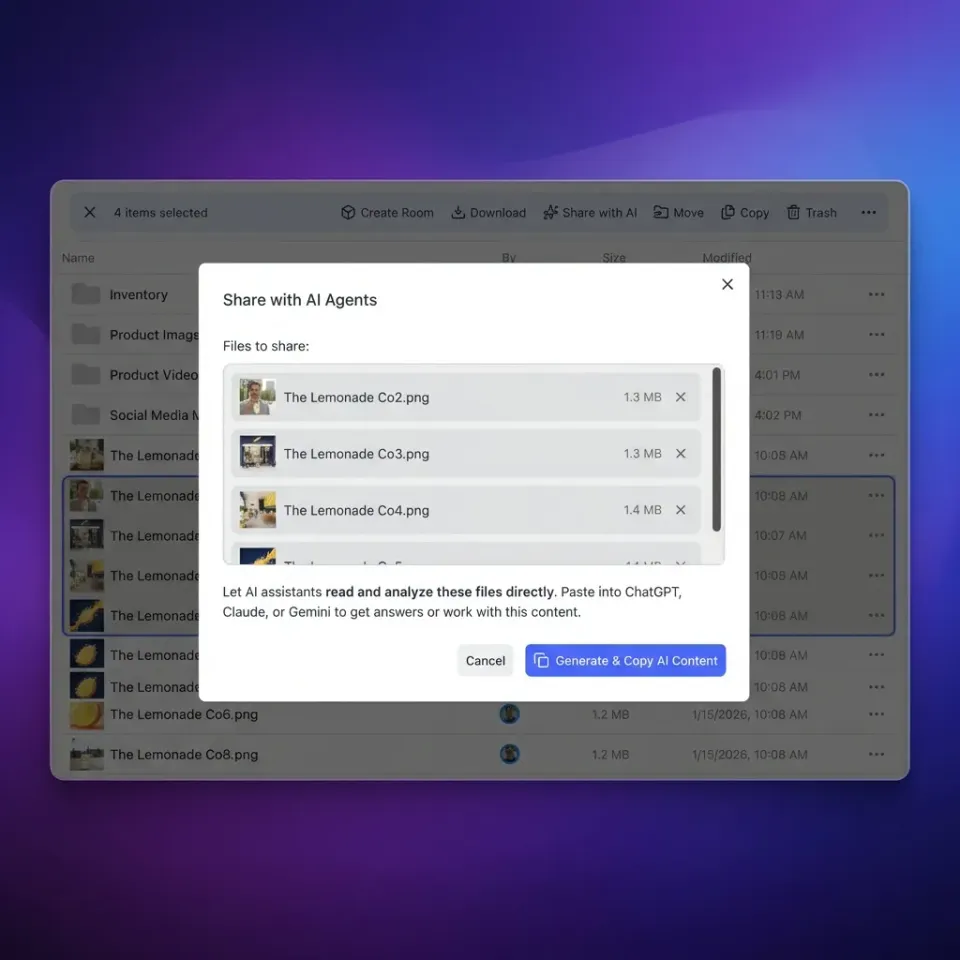
Self-healing workspaces help multi-agent systems recover from tool failures and state drift automatically. By using automated monitors and file-event triggers, these workspaces keep a persistent record of a project's state. This coordination layer helps autonomous agents keep their context and pick up where they left off after a crash or stall.

Why Resilient Agent Workspaces Matter
We're seeing multi-agent systems move out of the lab and into production, which means reliability is now the big hurdle. Standard software environments usually treat agents as temporary processes, but if you're building autonomous systems, you need a workspace that actually tracks state. It's better to think of the agent as just one piece of a larger puzzle that includes storage, networking, and state management.
Many AI projects fail to deliver what they promised. A lot of that comes down to how unstable agents get when they hit a weird tool response or the environment shifts. When an agent stalls, it often loses all the work it just did. That leads to expensive, repetitive loops. This is especially frustrating in complex tasks like software engineering or data analysis, where an error at the final step can wipe out hours of progress.
The workspace needs to be the source of truth. If it's just a passive folder, the agent has to hold everything in its own limited memory. An intelligent workspace can see when an agent has drifted off-course and give it the context it needs to get back to work. Building AI teams that can run for days without a crash starts with this shift toward workspace-assisted resilience.
Helpful references: Fastio Workspaces, Fastio Collaboration, and Fastio AI.
Related guides
- How to Implement Dynamic Resource Allocation for Multi-Agent Shared StorageDynamic resource allocation in agentic storage prevents race conditions and data corruption by managing file locks and...
- Building Shared Workspaces for LangGraph Multi-Agent TeamsA shared workspace for LangGraph teams gives agents a central spot to access shared files, state, and tools. We'll look...
- How to Orchestrate Cross-Vendor AI Agent Teams in Shared WorkspacesMixing models like GPT-4, Claude, and Gemini is often the best way to build a high-performance AI strategy. Each model...
- Implementing Collaborative Prompt Versioning for Shared Agent EnvironmentsTeams working on AI agents need a way to track changes to their instructions. When multiple people edit the same...
- How to Set Up a Collaborative GeoJSON Review for AI Mapping AgentsValidating GeoJSON data is one of the most expensive parts of building autonomous systems. When mapping agents and...
- How to Evaluate Collaborative RAG Performance in Shared Agent MemoryEvaluating collaborative RAG helps teams understand how multiple agents use a unified memory without creating noise or...
More on this subject: Team Collaboration (125 guides)
What is a Self-Healing Multi-Agent Workspace?
These workspaces use monitors and file triggers to help agent teams recover without someone having to step in. Unlike basic cloud storage, these workspaces are part of the workflow. They track file changes and support realtime activity feeds and WebSocket events when updates happen. This helps identify "silent failures" where an agent is still running but hasn't actually made progress in a while.
In this setup, the storage layer works like a flight data recorder. Every change is logged and indexed. If an agent crashes while processing files, the next agent doesn't have to start over. It reads the current state, sees what's already done, and continues from the last stable point. It does this by checking the actual files against the expected state in the project config.
This approach handles context loss directly. Research shows that context rot, where a model's ability to remember details drops as conversations get longer, is a main reason agents stall. By moving state to a self-healing workspace, the agent can focus its memory on the current task while the workspace handles the history. This allows for workflows that are much longer than what a standalone agent could manage.


Build a Self-Healing Workspace
Stop losing progress to context loss. Use Fastio's consolidated MCP toolset and intelligent workspaces once enabled to build resilient multi-agent systems.
Solving Context Loss and Agent Stalls
Context management is easily the biggest bottleneck in multi-agent design. When an agent gets close to its token limit, it starts to experience "catastrophic forgetting." It might forget the original goal, lose track of where it saved its files, or forget what it found in previous steps. This isn't just a bug, it's a basic limitation of how large language models are built. Anthropic has documented how context rot happens: as the token count goes up, accuracy goes down. For multi-step jobs, success rates can tank as the conversation goes on. Some benchmarks show task completion dropping after only a few turns. This is usually why agents get stuck in infinite loops, repeating the same broken tool call until they just stop. A self-healing workspace fixes this by acting as an external brain. Instead of the agent trying to remember every single detail of a large multi-file migration, it just checks the workspace for the current status. The workspace gives it an up-to-date view of reality that doesn't depend on the agent's internal memory. This keeps the mission-critical data safe even if the agent process restarts. By making the workspace the source of truth, you decouple the agent's intelligence from the task's state, which makes the whole system much more reliable.
How Intelligent RAG Helps with Recovery
Most people think of Retrieval-Augmented Generation (RAG) for static knowledge, but here it helps with dynamic recovery. With "Intelligence Mode" turned on, every file is indexed as it changes. This lets a recovery agent ask plain-language questions about the project's state.
If an agent was supposed to optimize all images in a folder but crashed halfway through, a recovery agent can just ask: "Which images are already done?" The workspace uses its index to give a list based on file metadata. This is much faster than scanning every file again or having the agent keep its own database of completed work.
Intelligent RAG also helps find why things failed. If an agent stops making progress, a supervisor agent can check the logs for the last few changes. If the logs show the agent was editing the same file over and over without changing anything, the supervisor knows it's stuck in a loop. It can then step in with a new prompt or switch to a better model. This works because the workspace understands the context of the files it holds.
Architectural Patterns for Self-Correcting Teams
Building a self-healing system takes more than just simple retry logic. You have to design for concurrency and persistent state.
Persistent tool state via MCP
The Model Context
Protocol (MCP) lets agents interact with workspaces using standard tools. In a self-healing setup, these tools should be stateless for the agent. The agent says what it wants to do, and the workspace handles the work and logs the state. If the agent fails, the MCP server keeps the history and the physical files, so a recovery agent can see the last successful step. This connects the LLM's temporary context to permanent storage.
Version history and permissions for concurrent access
Multi-agent systems can run into race conditions where two agents try to change the same file at once. Self-healing workspaces use automatic per-file version history and granular permissions to resolve this. When an agent updates a file, previous revisions remain recoverable, and the audit log records the change. This prevents conflicts from corrupting state.
Realtime activity and event feeds
A self-healing workspace keeps supervisors informed. It uses realtime activity feeds or WebSocket event streams to alert monitoring services if things go quiet. For example, if a "result.json" file has not been updated in a minute during a run, supervisor processes can detect the stall and trigger a recovery workflow. This catches failures in seconds, keeping downtime to a minimum.
Building a Self-Healing Workspace
To build one, you should separate the agent's logic from the environment's state. This helps the system recover smoothly when things go wrong.
- Set Up a Managed Workspace: Use a workspace that supports automated indexing. This makes every file searchable by any agent in the system immediately.
- Turn on Intelligence Mode: This lets agents use RAG to see the history. When an agent starts, it should first ask: "What's the current progress?" This stops it from repeating work.
- Monitor Event Feeds: Poll the realtime activity feed or connect to the WebSocket events stream when files are created or updated. If expected events stop arriving, a supervisor process can detect stalls and intervene.
- Use a Recovery Agent: Create an agent specifically to handle failures. When a stall is detected, the supervisor sends the workspace URL and state summary to this agent. The recovery agent then uses the workspace's intelligence to fix the issue.
- Use URL Import for External Data: If your agents need data from Google Drive or Dropbox, use URL Import to pull it into the workspace. This creates a local copy that the self-healing logic can use without worrying about external API issues.
By following these steps, the agent becomes a modular part that you can restart or swap out without losing progress. This lets you scale multi-agent teams for real-world production.
Ownership and Human-Agent Collaboration
Self-healing systems still need to work well with humans. A fully autonomous workspace can be hard to understand if things go wrong. To fix this, workspaces need clear ownership and collaboration features.
In many cases, an agent might build a prototype and then hand it to a human for review. A self-healing workspace makes this easy by letting the agent "own" the workspace while it builds. If it hits a problem it can't solve, it can transfer ownership or invite a human. The person then enters the workspace with full access to the history and files.
This human-in-the-loop setup is an important safety net. It means the system handles technical failures on its own but can escalate logic errors or creative decisions to a person. Once the person fixes the issue, they can give control back to the agent. This keeps projects moving even when they hit the limits of what AI can do.
Impact of Self-Healing Architectures
Moving to self-healing architectures improves uptime and success rates. While these systems are still evolving, the data shows that structural guardrails are necessary for reliability.
Reports from The Register show that success rates for complex tasks suffer when agents manage their own state. But when those agents use workspaces with automated recovery, failure rates drop. The agents don't have to guess the state; they can just read it.
Key metrics for these systems include:
- Mean Time to Recovery (MTTR): How fast a new agent can pick up a failed task.
- Context Integrity: How well the agent understands the state after a restart.
- Efficiency: The reduction in wasted tool calls and tokens.
Teams using self-healing workspaces say they can run workflows for hours without someone checking on them. This stability makes AI agents useful for enterprise automation in areas like legal work or financial analysis. Investing in workspace architecture is a key part of a successful AI strategy.
Sources
References used to verify factual claims in this guide.
-
Between 60% and 80% of AI initiatives fail to deliver their expected value.
Frequently Asked Questions
How do AI agents recover from errors?
AI agents recover by using monitors and external workspaces to track progress. If an error happens, the agent can try again or check the workspace to find where it left off. Self-healing workspaces help by keeping the project state safe even if the agent crashes.
What is a self-healing multi-agent system?
It's a network of agents supported by a workspace that catches and fixes failures automatically. It uses triggers and indexing so that if one agent fails, another can take over immediately with all the context it needs.
Why is context loss common?
It happens because models have limited memory. As an agent does more work, it forgets the early instructions. This 'context rot' leads to stalls. Moving the project state into an external workspace gives the agent a long-term memory it can query.
How can I monitor agent activity for stalls?
You can monitor agents using Fastio's realtime activity feed or WebSocket events feed. By polling activity or listening to events, supervisor processes can track file updates and detect stalled runs immediately.
Does Fastio support file locking?
Yes. Fastio provides advisory per-file locks via its REST API and MCP storage tool. Agents acquire a lock before writing, heartbeat it while working, and release it when done. If a lock expires or is left behind, it can be overridden, and every write is backed by automatic version history.
Related Resources

Build a Self-Healing Workspace
Stop losing progress to context loss. Use Fastio's consolidated MCP toolset and intelligent workspaces once enabled to build resilient multi-agent systems.