How to Set Up AI Agent Blob Storage for Tool Calling
Blob storage gives AI agents a place to save tool outputs and state reliably. Chatbots can only hold short conversations in memory, but agents running multi-step tasks need storage for workflows, outputs, and memory between runs. This guide shows why generic storage falls short for agents, production features you need, and step-by-step setup for Fastio workspaces with the 14-day Business Trial.


What Is AI Agent Blob Storage?
AI agent blob storage holds unstructured data like tool outputs, images, JSON states, and CSVs from analysis. Access it via REST APIs or MCP designed for LLMs. Unlike chatbots (one-shot responses), agents run loops: plan → tool call → observe → repeat. Each cycle produces blobs. Without persistence, restarts lose history, wasting tokens. Fastio keeps blobs in the workspace. Agents create or join workspaces and upload with the consolidated MCP toolset. Enable Intelligence on the workspace to query by meaning with citations. Storage grows with your needs. Benefits:
- Versioning: Git-like history for tool artifacts.
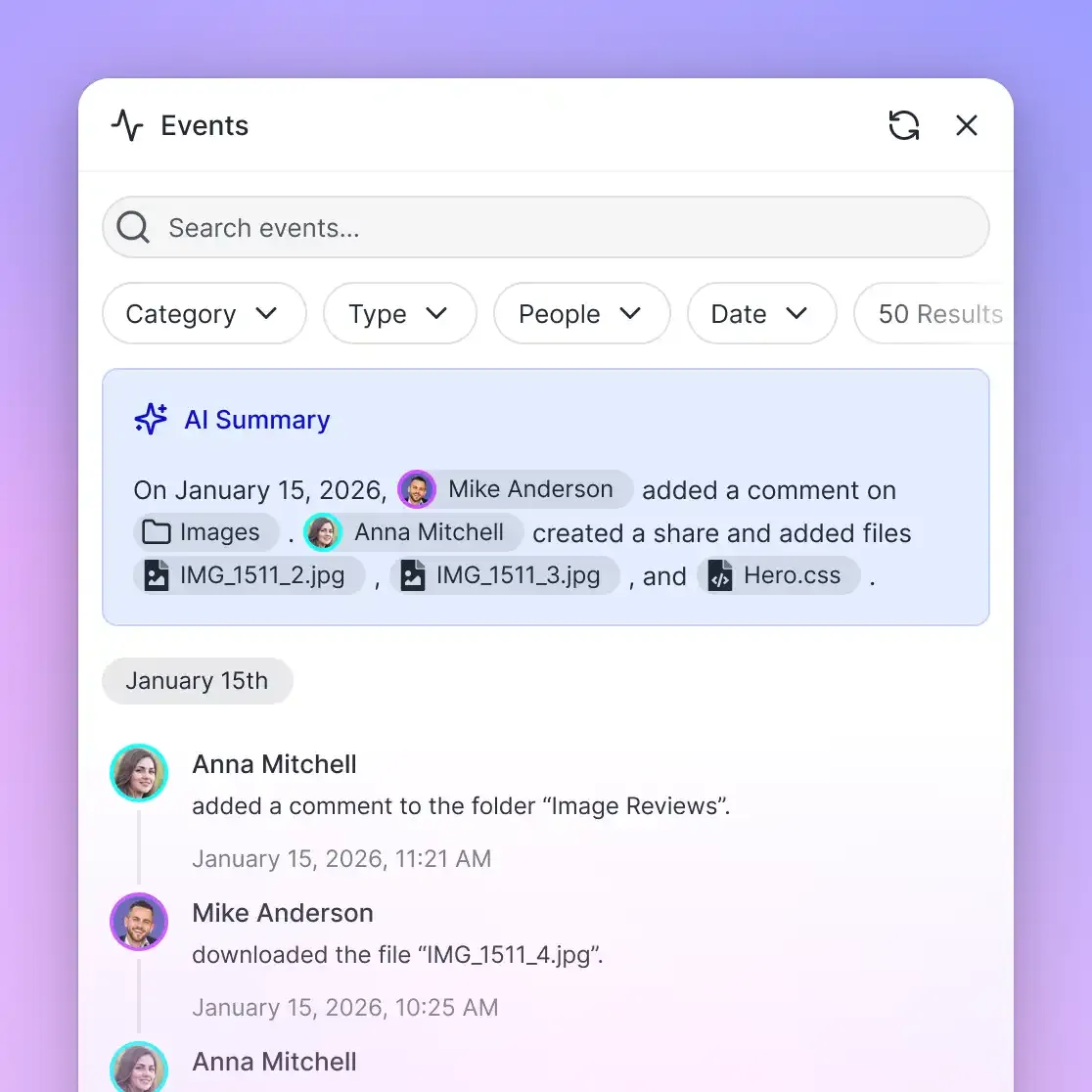
- Permissions and Audit Trails: Granular access control and a detailed activity log manage multi-agent actions.
- Realtime Events: The WebSocket events feed and activity polling keep agents updated on changes.
- Intelligence: Once enabled on the workspace, query blobs by meaning with citations. Example: An agent analyzes sales data into CSV blob v1, then iterates to v2 with filters.
Helpful references: Fastio Workspaces, Fastio Collaboration, and Fastio AI.
Related guides
- How to Set Up CodeSandbox AI Agent StorageCodeSandbox AI agent storage bridges ephemeral sandboxes to persistent workspaces. Agents in CodeSandbox need reliable...
- How to Set Up Persistent Storage for AutoGPTPersistent storage lets AutoGPT save task memory and files between runs. Otherwise, agents forget everything and stick...
- How to Build Persistent Storage for Agentic WorkflowsAgentic workflow storage lets autonomous agents maintain state, share files, and persist progress across long-running...
- How to Choose AI Storage: Fastio API vs Supabase StorageYour storage backend dictates what your AI agents can actually do. Supabase Storage works great for standard web apps,...
- How to Add Persistent Storage for LLM Tool CallingPersistent storage for LLM tool calling keeps agent state, files, and outputs indefinitely. LLMs forget context without...
- How to Set Up Agentic AI Storage for Persistent Agent MemoryAgentic AI storage provides persistent file and data access that autonomous agents need to complete multi-step tasks...
More on this subject: Agent Memory and Storage (263 guides)
Why Traditional Cloud Storage Falls Short for Agents
AWS S3 and Azure Blob Storage handle scale and basic reliability. They fall short for AI agents, though.
Concurrency Issues: S3 has no built-in locks; multiple agents writing 'state.json' cause overwrites. Azure leases exist but require custom logic.
Versioning Gaps: Basic versioning, but no tool call tagging or LLM session links.
Integration Overhead: Custom SDKs without MCP for LLMs. RAG calls for separate databases like Pinecone. Changes mean polling. Agents produce lots of persistent data: JSON plans, CSV analyses, images from vision tools. In Fastio, once Intelligence is enabled for the workspace, files are indexed for RAG with citations. Granular permissions and version history manage concurrent agent writes. Agents create or join workspaces and collaborate with humans via remote MCP.
Comparison Table:
Fastio gets you from idea to working storage in minutes, not weeks.
Concurrent Access Problems
In multi-agent swarms, say Agent A writes a sales forecast to forecast.csv while Agent B reads it for visualizations. Without locks, B could see incomplete data or overwrite it.
Fastio provides advisory file locks through MCP storage actions (lock-acquire, lock-status, lock-release) and the REST API. An agent acquires a lock before writing, heartbeats it while working, and releases it when finished. Other agents see who holds the lock and can wait, while automatic file version history preserves every revision as a safety net.
This provides consistent, traceable history for blobs across multiple agents.
State Persistence Challenges
LLMs have limited context windows. Blobs persist full history: {'session_id': 'uuid', 'messages': [...], 'tools_used': [...] }.
On resume: load blob, append to prompt. Enables long-running agents over days.
Schema example:
{
  "state": {
    "step": 5,
    "artifacts": ["data.csv", "chart.png"],
    "memory": "Key insight: Q4 growth slowed"
  }
}
Core Features of Agent Blob Storage
Make sure you have these features:
- Versioning: Track blob changes automatically.
- Access Control: Granular workspace, folder, and file permissions.
- Intelligence: Index files for semantic search once enabled on the workspace.
- Realtime Events: The WebSocket events feed and activity polling to notify on changes.
- Cloud Import: One-time import from Google Drive, Dropbox, Box, or public URLs without local IO. Fastio offers these capabilities with the 14-day Business Trial.
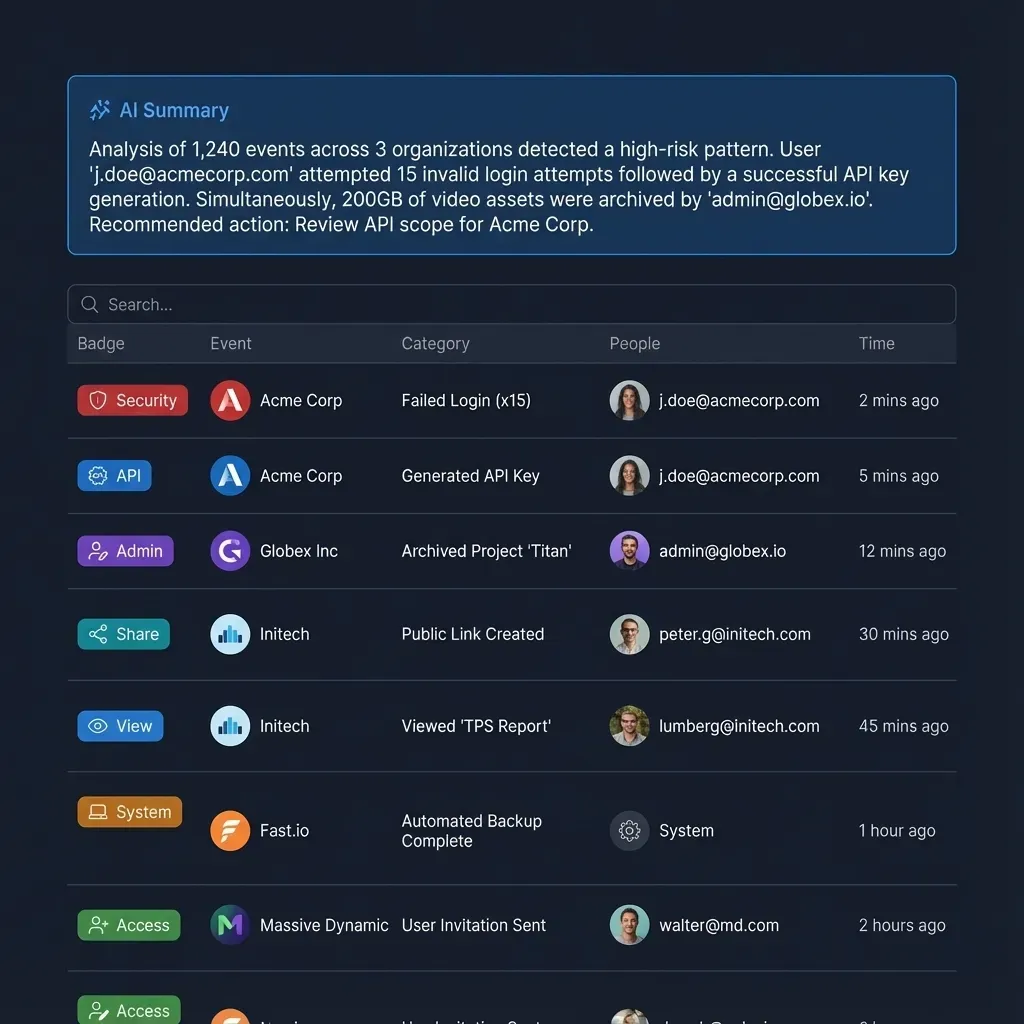


Give Your AI Agents Persistent Storage
Generous storage, included credits, and a consolidated MCP toolset. Built for agent blob storage workflows.
Step-by-Step Setup for AI Agent Blob Storage
1. Start the 14-day Business Trial: Visit Fastio and sign up for the Business Trial (credit card required).
2. Create workspace: Set up a dedicated workspace named "agent-blobs" via the dashboard or REST API.
3. Connect via MCP: Point your agent client to the remote MCP server at https://mcp.fast.io/mcp/tools over Streamable HTTP, following the setup steps. Interactive clients sign in with OAuth in the browser, while headless code sends Authorization: Bearer <api key> on the connection.
4. Store artifacts: Have your agent save JSON outputs and data files directly into the workspace using the consolidated MCP toolset.
5. Enable Intelligence: Toggle Intelligence on the workspace to enable semantic search and document Q&A across stored blobs.
6. Verify persistence: Confirm that files are listed in the workspace and version history records each update.
Advanced Multi-Agent Configurations
For teams: Invite agents and humans to the workspace. Use granular permissions and file version history to coordinate concurrent writes safely.
The WebSocket events feed alerts on uploads: Build reactive pipelines by listening to live event notifications.
Ownership transfer: An agent can create an organization and hand it to a human through a claim link.
Secure with granular perms, encryption, audit logs.
Define clear tool contracts and fallback behavior so agents fail safely when dependencies are unavailable. This improves reliability in production workflows.
Best Practices and Troubleshooting
- Chunk large blobs.
- Use semantic names.
- Troubleshoot: Check permissions, verify MCP endpoint connection. Scale to production on the Starter or Business plan.
Sources
References used to verify factual claims in this guide.
-
Fastio provides a consolidated MCP toolset for file operations
-
Fastio offers Starter, Business, and Enterprise plans with a 14-day Business Trial
Frequently Asked Questions
What is the best blob storage for AI agents?
Fastio provides persistent workspace storage for agents with a consolidated MCP toolset, advisory file locks, version history, and audit logs. Skip the custom infrastructure needed for raw object stores.
How to implement persistent blob storage in LLM tools?
Connect your agent to the remote Fastio MCP server. Enable versioning and monitor the audit log for reliable tracking across agent runs.
What are agent blob storage solutions?
Options range from raw object stores such as Amazon S3 and Azure Blob Storage to workspace storage such as Fastio, which agents reach through MCP with advisory file locks, version history and audit logs.
How does MCP enable secure blob access?
Streamable HTTP/SSE, session state, no custom APIs.
Why versioning for agent tools?
Tracks iterations, prevents overwrites in loops.
Is there a trial for AI agent blob storage?
Fastio offers a 14-day Business Trial requiring a credit card, providing access to team workspaces, the consolidated MCP toolset, and usage credits.
Related Resources

Give Your AI Agents Persistent Storage
Generous storage, included credits, and a consolidated MCP toolset. Built for agent blob storage workflows.