How to Use AI Agents for CAD File Management
AI agent CAD management automates file handling in design pipelines for engineering teams. Agents organize versions, run automated reviews, validate designs, and share massive CAD assemblies like STEP and IGES files without manual intervention. This addresses growing file sizes and coordination challenges in distributed teams.

What Is AI Agent CAD Management?
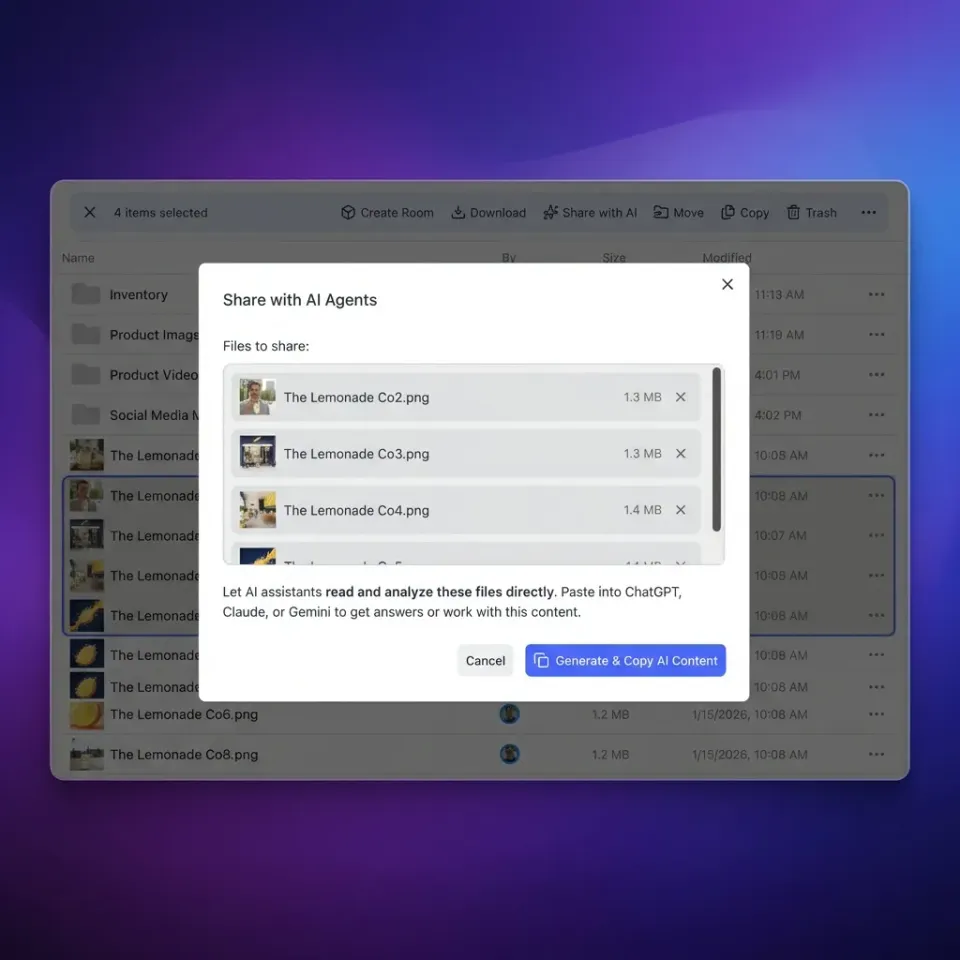
AI agent CAD management uses autonomous AI systems to handle CAD files through their full lifecycle, from upload to final share. Agents ingest designs, extract metadata, run validation simulations, tag revisions with semantic labels, generate previews, and distribute assets to teams or manufacturing partners. Traditional CAD workflows rely on manual effort for organization, version control, compliance checks, and sharing approvals. This creates bottlenecks in distributed teams, especially with time zones and large file transfers. AI agents automate these, parsing formats like STEP, IGES, DWG, or SolidWorks native files. They detect changes via diff tools, apply rules such as auto-archiving superseded versions to a "legacy" folder, or sending webhook notifications to stakeholders when a design passes checks. Take a turbine assembly project: An agent receives a new STEP file, counts its parts, extracts tolerances and material specs, generates interactive 3D previews, and acquires a file lock to reserve it for processing. If validation (e.g., dimension checks against specs) passes, it tags "approved-v3.1", unlocks, and creates a branded share link for partners. In agentic CAD setups, specialized agents divide labor, one for meshing, another for FEA analysis, a third for BOM extraction, all coordinating via shared workspaces. The computer-aided engineering market is growing fast. According to MarketsandMarkets, it is projected to reach USD 19.96 billion by 2030, growing at a CAGR of 10.2% from 2025. Helpful references: Fastio Workspaces, Fastio Collaboration, and Fastio AI.
Related guides
- How to Build AI Agents for Energy ManagementGuide to agent energy management: AI agents manage energy by controlling consumption, predicting demand, and balancing...
- How to Manage AI Agent State: Patterns for PersistenceState management is how agents save, retrieve, and sync their work, memory, and files across sessions. Without it,...
- Salesforce Agentforce Limits: Tokens, Context Windows, and Grounding File CapsAgentforce limits establish operational boundaries for autonomous AI across Salesforce, including a 1.5 million hourly...
- How to Use AI Agents for Inventory ManagementGuide to agent inventory management: Stockouts cost retailers an estimated $1.2 trillion a year, but traditional...
- ChatGPT Canvas Limits: File Sizes, Document Length, and WorkaroundsChatGPT Canvas limits documents to practical thresholds of roughly 4,000 lines of code or 25,000 words, running in an...
- ChatGPT Message Limits: Quotas, Cooldowns, and Large File WorkaroundsText chat in ChatGPT is unlimited; uploads, images, and voice are capped within rolling windows. When conducting...
More on this subject: AI Agents: General Guides (190 guides)
Why CAD Teams Need AI Agents
CAD files present unique challenges for engineering teams. Complex assemblies for machinery, vehicles, or buildings frequently exceed several gigabytes, with hundreds of versions across formats like STEP, IGES, DWG, SolidWorks (.SLDPRT), and Inventor files. Version hell is common: overwritten updates, lost revisions, mismatched parts sent to manufacturing. Manual coordination amplifies issues. Designers in different time zones delay reviews. Sharing large files via email or generic cloud storage fails due to size limits or slow transfers. Errors creep in, wrong tolerance applied, incompatible formats, compliance oversights. AI agents address these head-on. They automate intake with URL imports from external sources (no local downloads needed), enforce versioning with automatic diffs and tags, and enable RAG queries across docs: "Find the latest turbine blade revision with flange tolerance under 0.5mm" returns cited results. Agents validate designs against specs, flagging dimension errors or material mismatches before sharing. This shift lets creative teams focus on innovation rather than admin drudgery. With CAD complexity rising yearly, agent automation keeps pipelines efficient and error-free.
Key Features for Agentic CAD Workflows
Effective CAD agent systems require specialized features tailored to large files and collaborative workflows. Browser-based previews are essential: team members and agents view STEP, DWG, IGES, and other CAD formats directly without heavy software installs. Fastio's universal media engine provides the same high-fidelity previews for both humans (via UI) and agents (via API screenshots or embeds).
Large assemblies demand strong handling. Chunked uploads support files up to 100 GB on the Enterprise plan (25 GB on Starter, 50 GB on Business), with resume capability for unreliable connections. Stream previews load instantly without full downloads, critical for gigabyte-scale models.
Intelligence Mode turns workspaces into queryable knowledge bases. Toggle it on, and CAD metadata, accompanying PDFs, and notes get auto-indexed for RAG. Agents query "flange tolerances in assembly v3" and get cited responses spanning multiple files.
Ownership transfer simplifies handoffs. An agent provisions the project org and workspaces, populates with designs, then transfers ownership to a human client while retaining admin access.
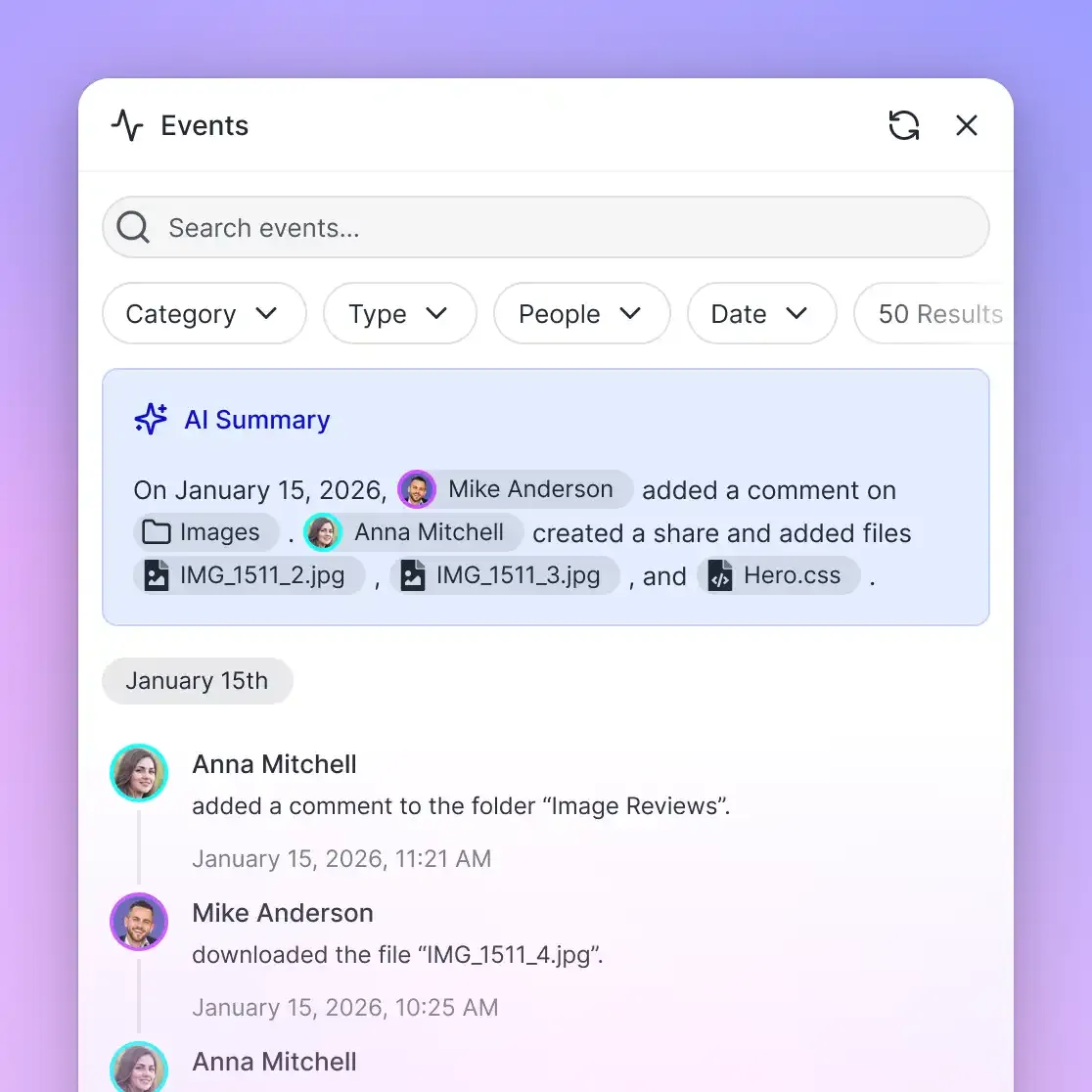
Event Streams enable reactive pipelines: the WebSocket events feed and activity polling alert external systems on upload or modification.
These features make Fastio the coordination layer for agentic CAD, bridging AI automation and human oversight.
Multi-Agent Concurrent CAD Access
CAD pipelines benefit from centralized storage where agents and engineers collaborate. In multi-agent CAD workflows, agents acquire an advisory file lock before writing, heartbeat it while working, and release it when finished. If another agent attempts to lock the same file, it receives an HTTP 409 status code and can wait or inspect current data. If an agent disconnects, the lease expires or can be taken over by anyone with write permission. Because locks are advisory, version history acts as the safety net, preserving every version and recording operations in the activity log.
Inspect activity
curl -X GET "https://api.fast.io/current/activity/poll/cad-project-v1/" \
  -H "Authorization: Bearer $TOKEN"
Polling the activity feed or connecting to the WebSocket events feed lets downstream tools react immediately to new CAD uploads.


Give Your AI Agents Persistent Storage
Generous storage, consolidated MCP toolset, CAD previews, and version history. Built for agent CAD management workflows.
Pros and Cons of AI Agent CAD Tools
AI agent CAD management accelerates pipelines from days to hours, though implementation requires upfront planning.
Pros:
- Automation: Handles versioning, tagging, and distribution autonomously, freeing designers for creative work.
- Scalability: Processes gigabyte assemblies with chunked uploads and streaming, no human intervention for routine tasks.
- Safe Collaboration: File version history and granular permissions enable multi-agent collaboration with full audit logging.
- Intelligent Search: Built-in RAG indexes metadata and docs for precise queries like "tolerances in v3 flange."
- Cost-Effective: Fastio plans bundle seats and storage, so a CAD library does not meter per gigabyte the way ephemeral alternatives do.
- Setup Time: Integrating APIs and defining workflows takes developer effort.
- Usage Limits: Credits meter AI work such as ingestion and agent runs, so watch consumption if simulations trigger heavy indexing.
- Agent Coordination: Multi-agent systems need clear handoff rules to avoid deadlocks.
- Human Oversight: Agents handle routine work, but complex decisions require engineer review. Small teams can start on the 14-day trial. Larger enterprises benefit from paid scalability and advanced permissions. Overall, pros outweigh cons for teams handling frequent revisions.
Set Up Fastio for CAD Agents
Start with Fastio's 14-day Business trial (credit card required). Plans include seats, storage, and workspaces, plus a monthly credit allowance that meters AI work such as document ingestion and agent runs. Point to /pricing/ for details.
Step 1: Connect via MCP or REST API
Connect your agent client to the remote MCP server at https://mcp.fast.io/mcp/tools using a scoped API key sent as a Bearer header, or use the REST API at https://api.fast.io/current/.
Step 2: Upload and preview CAD files Use chunked uploads for large STEP, IGES, or CAD files. In-browser previews and streaming generate automatically, and CAD metadata is indexed once Intelligence is enabled for the workspace.
Step 3: Set permissions and invite collaborators Add team agents and humans with granular roles (organization, workspace, folder, or file level).
Step 4: Test core capabilities
- Versioning: Inspect file revisions and restore earlier versions as needed.
- Search: Query specs once Intelligence is enabled.
- Realtime updates: Poll the activity feed or monitor WebSocket events for new files.
Step 5: Client delivery Use ownership transfer to hand an organization to a client via a claim link, or create branded shares for secure external access.
Building Agentic CAD Workflows
Agentic workflows chain multiple AI specialists for end-to-end CAD processing.
Example 1: Design Review Pipeline
- Intake agent imports from Drive/Box via URL.
- Validation agent reads design specs using RAG once Intelligence is enabled.
- Review agent generates annotated previews with comments.
- Share agent creates branded share link with per-recipient access.
Pseudo-code (MCP/Claude):
session = mcp.call("upload-from-url", {"url": drive_link})
meta = mcp.call("file-info", {"path": "/design.step"})
summary = mcp.call("ai-chat-create", {"query": "Validate tolerances"})
share = mcp.call("share-create", {"mode": "send", "password": true})
Example 2: Multi-Agent Simulation Chain Mesh agent → FEA agent → Optimization agent. Advisory file locks sequence updates; the WebSocket events feed alerts downstream tools.
Start small: pilot one workflow, measure time savings (e.g., reviews from 2h to 10min), iterate.

Fastio vs Alternatives for CAD Agents
CAD agents need persistent, collaborative storage, not ephemeral buckets.
Troubleshooting Common Issues
Lock Contention: Multiple agents compete, add retry with backoff:
for i in 1.5; do lock = acquire(); if success break; sleep 2^i; done
Credit Exhaustion: Monitor consumption via the API. Credits meter AI work such as document ingestion and agent runs, and overage bills at $10 per 100,000 credits. Upgrade for heavy use.
Upload Timeouts on Large Files: Always chunked; resume from session ID.
RAG Misses Details: Ensure Intelligence Mode on; re-ingest after metadata changes.
Permission Errors: Use workspace-scoped tokens; test roles early. Log everything via audit API. For persistent issues, ownership transfer to human for manual fix. Pro tip: Pilot workflows on sample data first, benchmark metrics like error rate and throughput.
Sources
References used to verify factual claims in this guide.
-
Computer aided engineering market projected to reach USD 19.96 billion by 2030
-
Fastio MCP server provides a consolidated toolset for file operations
-
Fastio plans include seats, storage, and a monthly credit allowance
Frequently Asked Questions
Best AI for CAD management?
Fastio provides a consolidated MCP toolset for file operations, including in-browser CAD previews and streaming. Works with any LLM, and files persist in a real workspace.
Agent workflows for CAD teams?
Agents handle design intake, version control, RAG searches on docs once Intelligence is enabled, and branded shares. Humans manage through the UI.
How do AI agents handle large CAD files?
Chunked, resumable uploads handle large assemblies. Previews stream on demand, and metadata is indexed for queries, so agents do not need local storage.
How does Fastio manage concurrent CAD access?
Agents acquire an advisory file lock before modifying CAD files, renewing it with heartbeats and releasing it when finished. A competing agent receives an HTTP 409 and can wait, while version history preserves every revision.
Is there a free trial for CAD agent storage?
Fastio offers a 14-day Business Trial requiring a credit card. Every plan includes seats, storage, workspaces, monthly credits, and the consolidated MCP toolset. See /pricing/ for plan details.
Related Resources

Give Your AI Agents Persistent Storage
Generous storage, consolidated MCP toolset, CAD previews, and version history. Built for agent CAD management workflows.