How to Integrate Prefect with AI Agents
Prefect integrates AI agents into reliable data pipelines. Use Prefect to run AI agent workflows with retries, caching, and scheduling. Combine with Fastio for persistent storage that survives flow failures. AI agent prefect integration solves key problems like ephemeral data and coordination failures. Agents produce files, summaries, or datasets. Prefect ensures they run on schedule. Fastio MCP tools let agents upload outputs to shared workspaces where humans review them.


What Is Prefect Orchestration for AI Agents?
Prefect is a workflow orchestration platform written in Python. It transforms ordinary Python functions into reliable, schedulable pipelines with built-in retry logic, caching, and real-time monitoring. The platform handles the complex task of coordinating multiple steps, managing dependencies, and ensuring tasks complete successfully even when individual components fail.
AI agents create unique challenges for workflow orchestration. Large language models can hallucinate outputs, API endpoints can timeout, and network issues can interrupt operations at any point. Traditional scripting approaches leave you manually restarting failed processes and hunting through console logs to understand what went wrong. Prefect solves these problems by treating each agent interaction as a task with explicit retry behavior, state management, and comprehensive logging.
The Prefect community has grown to nearly 30,000 engineers, with companies like Cash App relying on it for production machine learning pipelines. This adoption reflects the platform's maturity and reliability in handling real-world AI workloads at scale.
Why choose Prefect over cron or Apache Airflow for AI agent workflows? It's the Python-native control flow. Prefect tasks can make decisions based on agent outputs, branching dynamically rather than following rigid DAG definitions. When an agent returns unexpected results, Prefect can conditionally execute different downstream tasks. This flexibility matches how AI agents actually work in production.
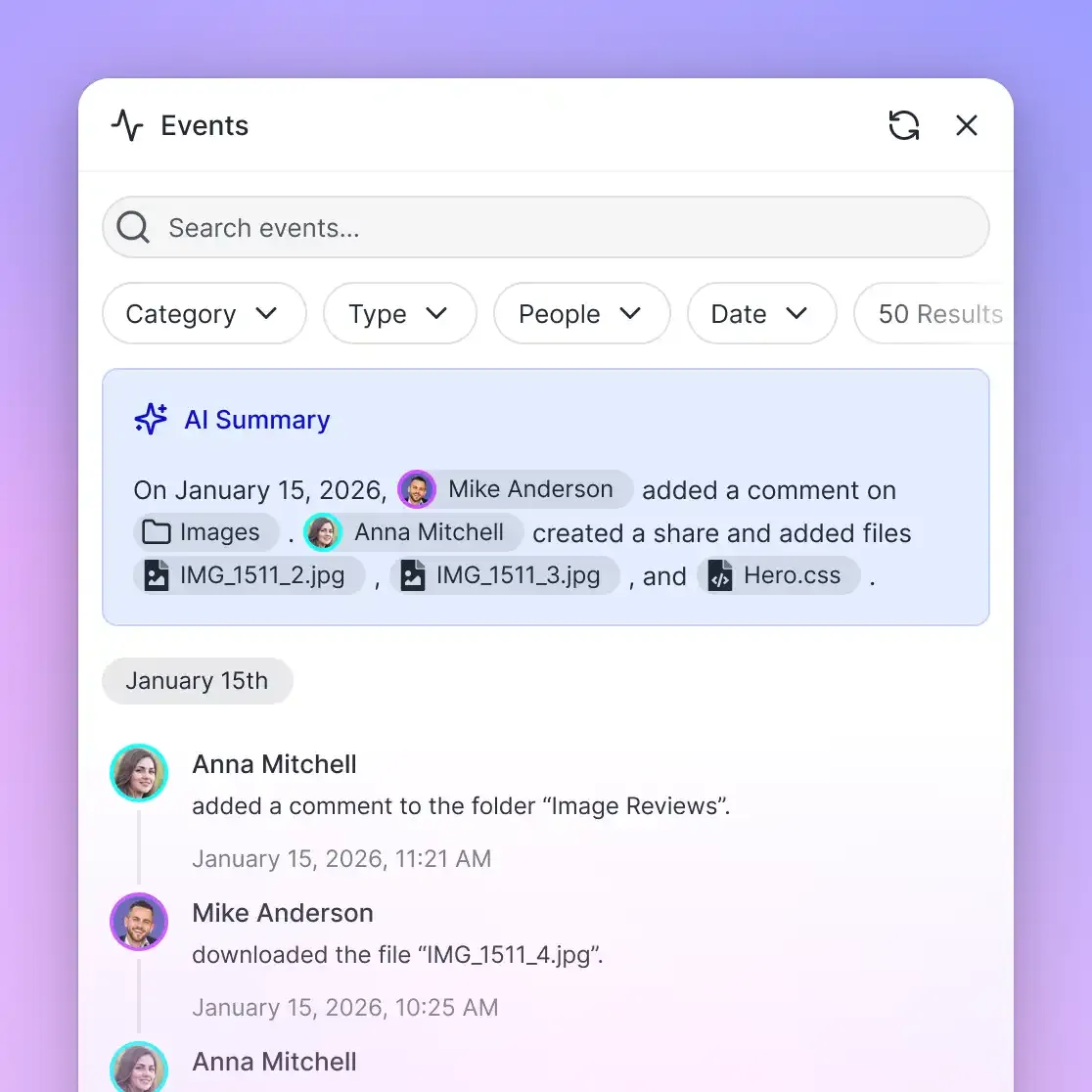
Event-driven triggers in Prefect also align well with agent needs. Rather than running on fixed schedules, flows can react to external events. Prefect flows can poll Fastio's activity feed or listen to event streams when agents complete work and save outputs to workspaces.
The combination of Prefect for orchestration and Fastio for persistent storage covers the full agent workflow. Prefect manages the execution logic while Fastio provides durable workspaces where agent outputs survive flow failures, enabling human review and subsequent agent operations.
Helpful references: Fastio Workspaces, Fastio Collaboration, and Fastio AI.
Related guides
- How to Integrate Fastio API with RustBuild high-performance, memory-safe storage systems by integrating Rust with the Fastio API. This guide covers...
- How to Integrate AI Agents with Salesforce: Patterns and ArchitecturesIntegrating agents with Salesforce transforms static CRM data into active intelligence that can autonomously update...
- How to Connect AI Agents to APIs: Integration GuideAI agent API integration connects autonomous agents to external services through REST APIs, MCP servers, or SDKs,...
- How to Build an AI Agent Notion Integration for File ManagementAI agent Notion integration enables autonomous agents to read, create, and manage pages, databases, and file...
- ChatGPT Box Integration: Connecting Box Storage to AI AgentsA ChatGPT Box integration enables OpenAI models to query, summarize, and retrieve documents stored within Box cloud...
- How to Connect ChatGPT to Dropbox: Integration GuideA ChatGPT Dropbox integration connects OpenAI models to cloud file directories, enabling users and agents to query,...
More on this subject: Agent Integrations and APIs (192 guides)
Core Benefits of Prefect for Agent Workflows
Prefect brings strong reliability to AI agent workflows. AI agents fail frequently due to LLM hallucinations, API errors, rate limits, and network issues. Without orchestration, you spend hours manually restarting failed jobs and piecing together what went wrong from scattered log files. Prefect handles this automatically with configurable retry policies, defaulting to retries with exponential backoff, and can recover state so partial results are not lost.
Dynamic task mapping makes Prefect great for agent workflows. When an agent produces a list of items, Prefect can automatically parallelize processing across that list using the map operator. Each item gets its own task run, complete with independent retry logic and logging. This scales from processing a handful of items to thousands without code changes.
Event-driven triggers align perfectly with agent use cases. Prefect can start flows when Fastio detects new file uploads via activity feeds, or on custom events. This reactive model means your agents respond to new data within seconds rather than waiting for cron-based schedules.
Visibility into agent workflows beats custom scripts. The Prefect UI displays directed acyclic graphs of your flows, real-time logs for each task, artifact previews, and cost tracking. When something fails, you can trace the error to the specific task that caused it, see the exact input parameters, and understand what the agent returned before the failure.
Fastio MCP enhances this setup with a consolidated toolset for agent persistence. Agents can upload files, list directories, query RAG-powered search once Intelligence is enabled, and acquire advisory file locks to coordinate concurrent writes. A 14-day Business Trial is available to test these integrations.
Outputs persist in shared workspaces where humans can review, edit, and build upon agent results. The ownership transfer feature lets agents create workspaces for clients and transfer control while retaining admin access for ongoing maintenance.
This architecture scales from development laptops to production clusters without fundamental changes to your flow code.
Step-by-Step Setup for AI Agent Prefect Integration
Follow these steps for ai agent prefect integration. Assumes Python 3.10+, OpenAI API key, Fastio account.
Step 1: Install dependencies Create virtualenv and install Prefect, OpenAI, and requests.
python -m venv prefect-agent-env
source prefect-agent-env/bin/activate  # macOS/Linux
pip install prefect openai requests
prefect profile create agent-workflow
prefect profile set-default agent-workflow
Step 2: Set up Fastio Sign up at Fastio for a 14-day Business Trial (credit card required). Generate an API key from workspace settings.
Set env vars:
export FASTIO_API_KEY=your_key
export FASTIO_WORKSPACE_ID=your_workspace_id
export OPENAI_API_KEY=your_openai_key
Step 3: Write your first agent flow
Create agent_flow.py. Use @task for agent calls with retries, and the Fastio REST API for persistence.
import os
import requests
from prefect import flow, task
from openai import OpenAI

FASTIO_API_KEY = os.environ.get("FASTIO_API_KEY")
WORKSPACE_ID = os.environ.get("FASTIO_WORKSPACE_ID")

@task(retries=3, retry_delay_seconds=10)
def generate_content(prompt: str) -> str:
    """Agent task: generate report, save to Fastio."""
    client = OpenAI()
    response = client.chat.completions.create(
        model="gpt-4o-mini",
        messages=[{"role": "user", "content": prompt}]
    )
    content = response.choices[0].message.content

# Persist output as a Markdown note via the Fastio REST API
    headers = {"Authorization": f"Bearer {FASTIO_API_KEY}"}
    filename = f"report_{task.run_id}.md"
    res = requests.post(
        f"https://api.fast.io/current/workspace/{WORKSPACE_ID}/storage/root/createnote/",
        headers=headers,
        data={"name": filename, "content": content}
    )
    res.raise_for_status()
    return filename

@task
def notify_team(url: str):
    """Optional: share link via email/slack."""
    print(f"Report at {url} - review in Fastio workspace")

@flow(name="daily-agent-report")
def agent_pipeline():
    url = generate_content("Analyze Q1 sales: trends, anomalies, recommendations")
    notify_team(url)

if __name__ == "__main__":
    agent_pipeline()
Step 4: Test locally
python agent_flow.py
Check Prefect UI (localhost:multiple), Fastio workspace for report.md.
Step 5: Deploy to Prefect Cloud
prefect cloud login
agent_pipeline.deploy(name="daily-report-prod", schedule={"cron": "0 9 * * 1-5"})
Runs weekdays 9AM. Monitor in app.prefect.cloud.
Step 6: Trigger on events Trigger flows via the Prefect API or scheduled polling of Fastio's activity feed.


Give Your AI Agents Persistent Storage
Persistent workspaces and a consolidated MCP toolset for orchestrating agent pipelines with Prefect. Start your 14-day trial.
Persistent Storage Patterns with Fastio MCP
Many orchestration platforms treat storage as an afterthought, leaving agent outputs in ephemeral containers that disappear when flows complete. Fastio workspaces solve this by providing persistent storage that survives Prefect retries, worker crashes, and flow restarts. This persistence enables patterns that would otherwise require significant custom infrastructure.
Key Patterns for Agent Persistence:
Artifact Upload Pattern: Save every agent output to a Fastio workspace immediately after generation. Use the Prefect run ID in the file path to create automatic versioning. When flows retry, new run IDs generate new files rather than overwriting previous attempts. This creates a complete audit trail of every agent execution.
RAG Query Pattern: Enable Intelligence on workspaces containing agent outputs. Once enabled, Fastio automatically indexes uploaded files and makes them searchable through natural language queries. When asking "Summarize the anomalies in the Q1 report," Fastio returns answers with citations pointing to the specific source files. This turns raw agent outputs into queryable knowledge bases.
Version History Pattern: Multi-agent systems often have multiple workers processing the same workspace. Without coordination, concurrent writes can cause confusion. Fastio provides automatic file version history with restore and a detailed activity log. Partitioning folders by agent ID or task run ID prevents accidental overwrites.
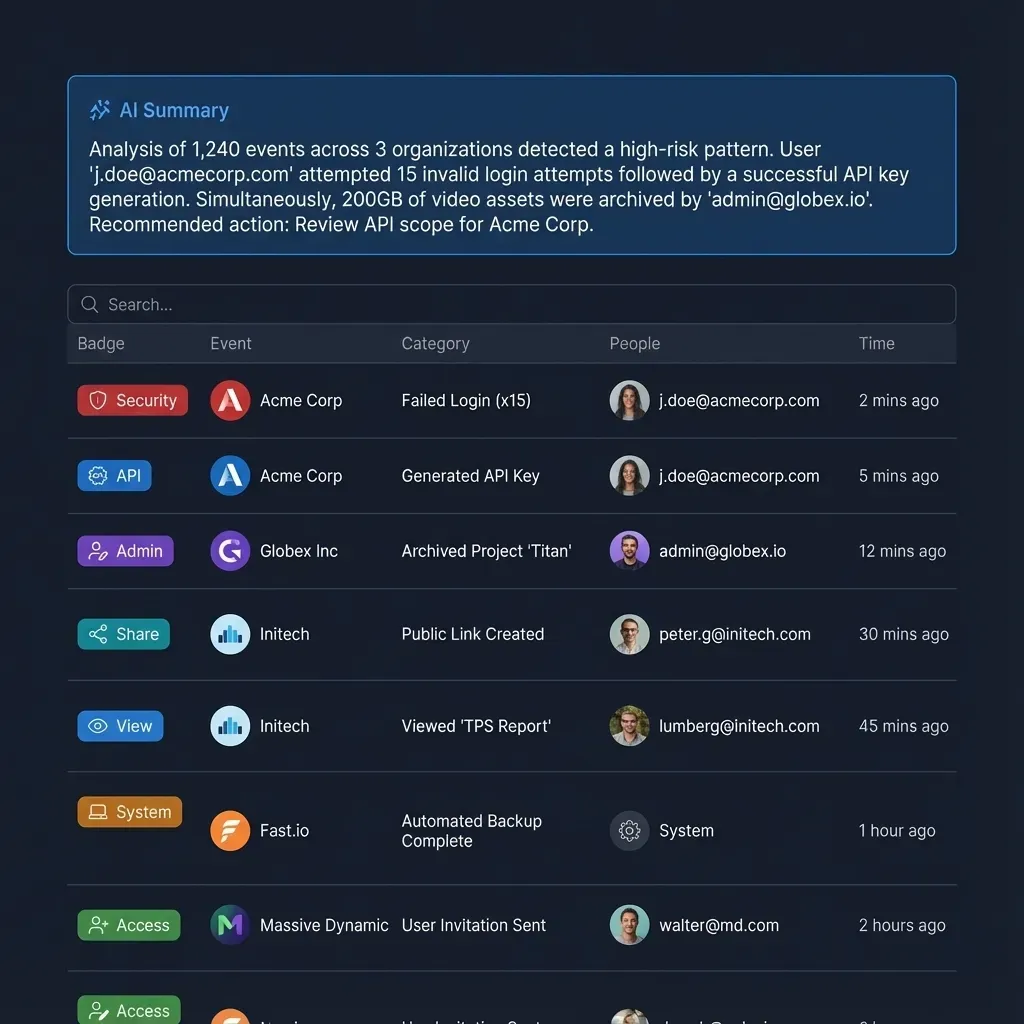
Event Stream Pattern: Monitor Fastio's WebSocket events feed or poll the activity feed to notify Prefect when new files arrive. This creates a reactive pipeline where agent outputs automatically trigger downstream analysis flows without manual polling loops.
Ownership Transfer Pattern: When agents build deliverables for clients, the ownership transfer feature provides a clean handoff. Agents create workspaces, populate them with outputs, and transfer ownership to human clients. The agent retains admin access for ongoing maintenance while the client gains full control. This pattern works well for agency workflows where agents produce client deliverables.
Multi-Agent Pipeline Example A complete agent pipeline might include three distinct agents: a data extraction agent that pulls information from external sources, an analysis agent that processes raw data into insights, and a review agent that summarizes findings for human consumption. Each agent writes outputs to the shared workspace, and downstream agents can query previous outputs through RAG once Intelligence is enabled.
import requests
from prefect import flow, task

FASTIO_API_KEY = "your_key"
WORKSPACE_ID = "your_workspace_id"
UPLOAD_URL = "https://api.fast.io/current/upload/"
NOTES_URL = f"https://api.fast.io/current/workspace/{WORKSPACE_ID}/storage/root/createnote/"
HEADERS = {"Authorization": f"Bearer {FASTIO_API_KEY}"}

@task
def extract_data(source_url: str) -> str:
    filename = "raw_sales.csv"
    data = "sales_data_2026_q1.csv content".encode()
    requests.post(UPLOAD_URL, headers=HEADERS, files={"chunk": (filename, data)},
                  data={"name": filename, "size": str(len(data)), "action": "create",
                        "instance_id": WORKSPACE_ID, "folder_id": "root"})
    return filename

@task
def analyze(filename: str) -> str:
    insights = "Top product: Widget A up 25%, Region X down 10%"
    summary_name = "analysis_summary.md"
    requests.post(NOTES_URL, headers=HEADERS, data={"name": summary_name, "content": insights})
    return summary_name

@task
def review(summary_name: str) -> str:
    return f"Review complete for {summary_name}"

@flow
def pipeline():
    raw = extract_data("sales_source")
    summary = analyze(raw)
    review(summary)
Deploy this pipeline with pipeline.deploy(). All artifacts accumulate in a single workspace where humans can join, browse outputs, and chat with RAG to explore results once Intelligence is enabled.
Deployment, Monitoring, and Scaling
Deploy flows to Prefect Cloud for production environments. The free tier accommodates small teams and development work, while enterprise plans scale to handle millions of monthly runs. The transition from local development to cloud deployment requires minimal code changes.
Deployment Steps:
Authenticate: Run
prefect cloud loginto connect your local environment to Prefect Cloud. This creates the link between your local flow definitions and the cloud execution environment.Create Work Pool: Work pools determine where flows execute. The process worker type works well for lightweight agent tasks. For GPU-intensive inference, choose Kubernetes or Docker workers that can provision the necessary compute resources.
Deploy Flow: Use
flow.deploy('prod-run', work_pool_name='my-docker-pool', image='my-agent-image')to create a production deployment. Specify the work pool, schedule, and any environment variables needed at runtime.Configure Scheduling: Prefect supports cron expressions, interval-based scheduling, and RRule for complex recurrence patterns. Schedule flows for business hours, weekdays only, or specific dates matching your operational needs.
Set Up Automations: Automations trigger flows based on events rather than schedules. Configure triggers for flow failures or external events.
Monitoring in Production:
The Prefect UI provides full monitoring. The runs dashboard shows execution history, success rates, and duration metrics. Each flow run displays detailed logs from every task, making it easy to spot where failures occurred and what inputs caused the issue.
Artifact tracking lets you preview outputs directly in the UI. When agents generate reports, images, or datasets, Prefect stores references to these outputs.
Cost tracking estimates compute spend per flow run, helping you understand the economics of your agent operations.
Set up alerts through Slack or email notifications for failure events. Critical flows can trigger immediate alerts while lower-priority flows might use daily summary emails.
Scaling Considerations:
Work pool concurrency limits control how many flow runs execute simultaneously. Set appropriate limits based on your API rate limits and downstream system capacity.
Event Stream Integration:
Monitor Fastio's WebSocket events feed or poll the activity feed to detect changes in your workspaces. This creates event-driven agent pipelines that respond to new data within seconds rather than waiting for scheduled runs.
Cost Efficiency:
Prefect pricing follows a pay-per-task model. Fastio plans scale across Starter, Business, and Enterprise tiers, with a 14-day Business Trial (credit card required) to prototype agent pipelines. Both platforms scale cost-effectively as operations expand.
Troubleshooting and Best Practices
Agent pipelines encounter predictable issues. Understanding common failure modes and implementing defensive patterns prevents production incidents and reduces debugging time when problems occur.
Common Problems and Solutions:
Best Practices for Production Agent Flows:
Log Prompts and Outputs: Store every LLM prompt and response as Prefect artifacts. This creates a complete record for debugging when agents produce unexpected results.
Version Files Systematically: Use consistent path patterns that include version numbers. Structure outputs as v{version}/output/{timestamp}/{run_id}.json to enable historical lookup and comparison across runs.
Implement Human-in-the-Loop: For high-stakes agent decisions, pause flows for human approval before proceeding. Prefect's pause/resume functionality lets flows wait for external input.
Test with Prefect's Test Mode: Prefect provides testing utilities that let you run flows in mock environments without calling external APIs. Write tests that verify flow logic and task dependencies before deploying to production.
Use Prefect Blocks for Secrets: Store API keys and credentials in Prefect Blocks rather than environment variables. Blocks provide encrypted storage and access control.
Implement Idempotency: Design tasks to produce the same result regardless of how many times they run. Use distinct file paths with run identifiers to prevent overwriting.
Error Handling and Logging:
Wrap agent calls in comprehensive error handling that captures context for debugging. This ensures errors don't disappear and that retry logic has the context needed to succeed on subsequent attempts.
Sources
References used to verify factual claims in this guide.
-
Prefect community of nearly 30,000 engineers
-
Prefect MCP server provides read-only access to workflows
Frequently Asked Questions
Prefect for AI agents?
Yes. Prefect orchestrates AI agents with retries, caching, and dynamic mapping. It handles LLM unreliability through automatic retry logic and state recovery. Pairing Prefect with Fastio provides persistent storage where agent outputs survive flow failures and become available for human review.
Agent Prefect setup?
Install dependencies with `pip install prefect requests openai`. Connect to Fastio via the REST API at https://api.fast.io/current/ or the remote MCP server at `https://mcp.fast.io/mcp/tools`. Write @flow functions with @task agent calls and configure retries.
What storage for Prefect agent workflows?
Fastio provides persistent cloud workspaces with a consolidated MCP toolset and REST API. Key features include RAG search once Intelligence is enabled, advisory file locks for concurrent access alongside version history, and workspaces that survive flow restarts. Start with a 14-day Business Trial.
Prefect vs Airflow for agents?
Prefect uses pure Python for workflow definition, enabling dynamic branching based on agent outputs. Airflow requires static DAGs defined in YAML or Python with less flexibility for runtime decisions. Prefect's Python-native approach better matches agent workflows that need to adapt based on LLM responses.
Handle rate limits in Prefect agents?
Configure exponential backoff using @task(retries=3, retry_delay_seconds=[5, 15]) and enable jitter with retry_jitter=True. Cache prompts and responses to avoid redundant API calls. Monitor usage in provider dashboards.
Scale Prefect agent flows?
Work pools in Prefect Cloud scale from single workers to hundreds of concurrent executors. Use Docker or Kubernetes work pools for GPU-intensive inference. Set concurrency limits per pool to match API rate limits.
How do Prefect flows react to Fastio events?
Prefect flows can monitor Fastio's WebSocket events feed or poll the activity feed to react immediately when files are uploaded or modified in a workspace.
Cost of agent prefect integration?
Prefect offers a free tier for development, while Fastio provides a 14-day Business Trial (credit card required). Paid Fastio plans start at $9.99/mo Starter (3 seats, 250 GB, 100,000 credits/mo).
Related Resources

Give Your AI Agents Persistent Storage
Persistent workspaces and a consolidated MCP toolset for orchestrating agent pipelines with Prefect. Start your 14-day trial.