How to Build a Fastio MCP Client in Python
Building a Fastio MCP client in Python enables seamless file management capabilities within Python-based AI agent frameworks. While many tutorials focus heavily on TypeScript, Python remains the leading language for AI agent development. This comprehensive guide shows how to connect Python agents to Fastio's multiple MCP tools, allowing your agents to natively search, read, and write to persistent workspaces.

Why Python Needs Dedicated MCP Clients
Building a Fastio MCP client in Python enables seamless file management capabilities within Python-based AI agent frameworks. Python has established itself as the undisputed leader in artificial intelligence and machine learning development. According to GitHub Octoverse, Python overtakes JavaScript as the most popular language on GitHub, driven heavily by AI. Despite this massive adoption, many MCP client tutorials focus heavily on TypeScript, ignoring Python implementations entirely. This leaves Python developers struggling to connect their agents to persistent storage and intelligent tools.
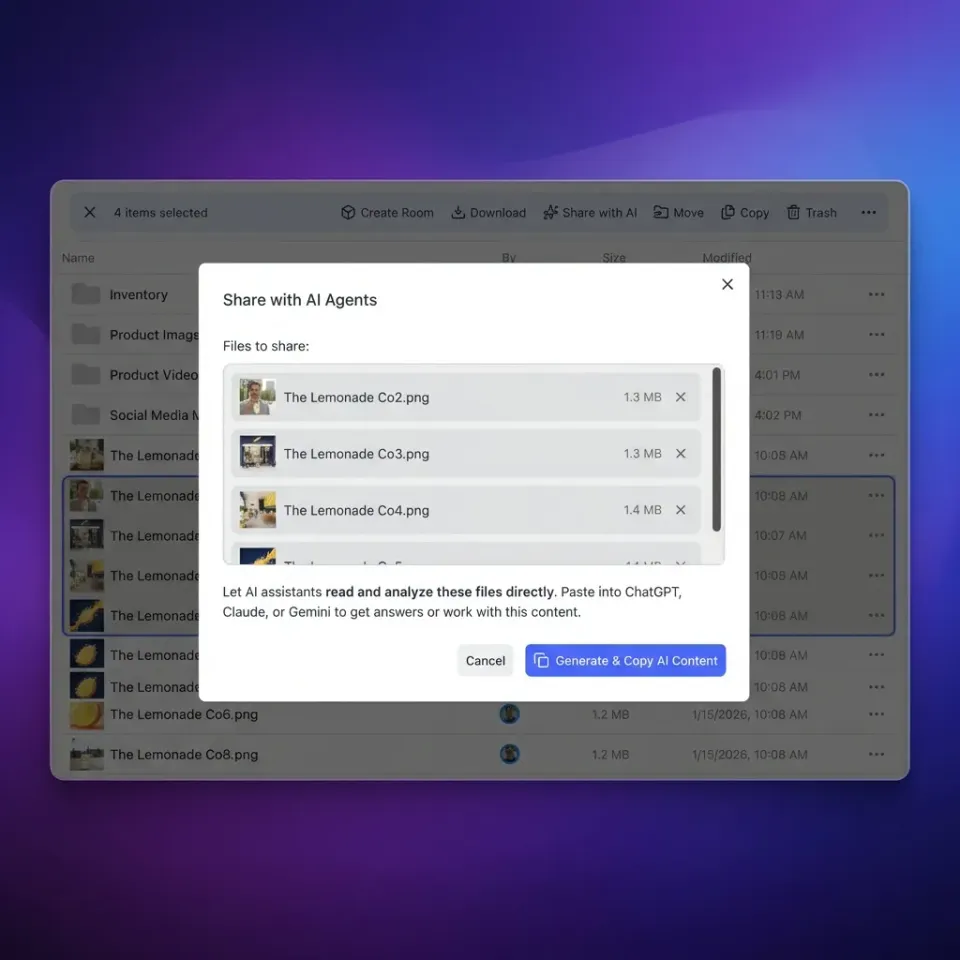
Integrating Fastio through the Model Context Protocol (MCP) bridges this gap. Fastio acts as the coordination layer where agent output becomes team output. Rather than treating storage as a dumb repository, Fastio provides an intelligent workspace. When you upload a file, it is automatically indexed and becomes searchable by meaning. Agents and humans share the same workspaces, the same tools, and the same intelligence. Humans interact through the web interface, while agents connect via multiple dedicated MCP tools. This shared environment fundamentally changes how autonomous systems collaborate with their human counterparts.
The 14-day Fastio Business Trial provides full access to test agent storage, including workspace capabilities and monthly credits. By building a Python MCP client, you give your LangChain, LlamaIndex, or custom Python agents the ability to read, write, and manage complex file hierarchies seamlessly.
Related guides
- How to Build an MCP Server with FastAPI and PythonGuide to mcp server fastapi python: You can use FastAPI to turn Python code into standardized tools for AI agents like...
- How to Build MCP Servers with Python: Best PracticesThe Model Context Protocol (MCP) gives AI agents a standard way to connect to external data and tools. This guide walks...
- How to Build an MCP Server in PythonBuilding an MCP server in Python means using the MCP SDK to define 'tools', 'resources', and 'prompts' that an AI agent...
- How to Get Started with the MCP Python SDK for AI AgentsThe MCP Python SDK is the official library for building Model Context Protocol servers and clients, enabling...
- Google Drive MCP Server in Python: Building Custom Tools vs Remote WorkspacesA Google Drive Python MCP server exposes Google Drive files and directory search to AI agents as standardized Model...
- How to Integrate Fastio MCP with Pydantic AI WorkflowsIntegrating Fastio MCP with Pydantic AI enables type-safe file operations for agentic workflows. By connecting to...
More on this subject: MCP and Model Context Protocol (244 guides)
Understanding the Fastio MCP Architecture
Before writing code, it is essential to understand how Fastio exposes its capabilities to your Python agents. Fastio implements the Model Context Protocol through both Streamable HTTP and Server-Sent Events (SSE). Unlike local CLI tools that often use standard input and output (stdio) for communication, the Streamable HTTP transport allows your agent to connect securely to Fastio's cloud infrastructure over the internet.
Every capability available in the Fastio user interface has a corresponding agent tool. With a consolidated MCP toolset available, your Python client can list directories, read document contents, generate share links, and manage permissions.
Another significant architectural advantage is Intelligence Mode. You do not need to build a separate vector database or configure a distinct Retrieval-Augmented Generation (RAG) pipeline. Files are indexed once Intelligence is enabled for the workspace. Your Python agent can then use specific MCP tools to ask questions and receive answers with precise citations, directly from the Fastio server. This removes an enormous amount of complexity from your Python codebase, offloading the heavy lifting of semantic search to the storage layer.
Prerequisites and Environment Setup
To build your Fastio MCP client, you need a modern Python environment and the correct authentication credentials. Start by ensuring you have Python 3.10 or newer installed. You will also need to generate an Agent Token from your Fastio developer dashboard. This token grants your client access to the specific workspaces you define, ensuring secure and isolated operations.
First, create a virtual environment to keep your project dependencies clean and organized. Open your terminal and execute the standard Python virtual environment commands. Once activated, you must install the official Python MCP SDK, which brings in the httpx2 asynchronous HTTP client as a dependency. The MCP SDK handles the intricate protocol negotiation, while the HTTP client manages the underlying network requests.
# Create and activate a virtual environment
python -m venv venv
source venv/bin/activate  # On Windows use: venv\Scripts\activate

# Install required packages
pip install mcp
With the packages installed, set your Fastio Agent Token as an environment variable. Hardcoding credentials directly into your Python scripts introduces severe security vulnerabilities. Using environment variables ensures that your keys remain protected and never accidentally leak into version control systems.
export FASTIO_AGENT_TOKEN="your_token_here"
This foundation prepares your system to establish a secure, asynchronous connection to the Fastio MCP server.
Implementing the Connection Layer
The core of your Python MCP client is the connection layer. You will use the streamable_http_client from the MCP SDK to connect to the Fastio endpoint. Because network operations are inherently asynchronous, you must write your client using Python's asyncio library. This approach prevents the client from blocking your main application thread while waiting for server responses.
Below is a complete, step-by-step implementation of a Python function that establishes the connection and initializes the MCP session. This code handles the Streamable HTTP transport negotiation and prepares the client to discover available tools.
import asyncio
import os
import httpx2
from mcp import ClientSession
from mcp.client.streamable_http import streamable_http_client

async def connect_to_fastio():
    token = os.environ.get("FASTIO_AGENT_TOKEN")
    headers = {"Authorization": f"Bearer {token}"}
    url = "https://mcp.fast.io/mcp/tools"

    async with httpx2.AsyncClient(headers=headers) as http_client:
        async with streamable_http_client(url, http_client=http_client) as (read_stream, write_stream):
            async with ClientSession(read_stream, write_stream) as session:
                await session.initialize()
                print("Successfully connected to Fastio MCP Server")

                # Fetch available tools
                tools = await session.list_tools()
                print(f"Discovered {len(tools.tools)} tools.")

if __name__ == "__main__":
    asyncio.run(connect_to_fastio())
In this implementation, the httpx2.AsyncClient carries the Bearer header and the streamable_http_client context manager opens the connection. The ClientSession then performs the necessary protocol initialization. Once initialized, the client immediately requests the list of available tools. This discovery phase is crucial, as it tells your underlying LLM exactly what actions it can perform within the Fastio ecosystem.


Ready to build your Python MCP Client?
Connect your AI agents to intelligent cloud workspaces with Fastio. Start your 14-day Business Trial today to test agent storage.
Executing Core File Management Workflows
Once the connection is established, your Python agent can execute operations using the consolidated MCP toolset. The most common operations involve reading files, uploading content, and managing workspaces. The Fastio MCP server expects tool calls to be formatted as standard JSON-RPC requests, which the Python SDK handles automatically behind the scenes.
To read a file's content, your agent calls the file reading tool, passing the file's unique identifier. The server returns the text content, which you can immediately inject into your LLM's context window. For uploading files, the workflow is equally straightforward. However, instead of pushing massive binaries through the Python memory space, you can leverage Fastio's URL Import feature.
URL Import allows your agent to pull files directly from external services like Google Drive, OneDrive, Box, or Dropbox. Your agent simply passes the source URL and the destination workspace ID to the URL import tool. Fastio handles the data transfer securely in the cloud, completely bypassing your local machine's input/output constraints. This architectural pattern dramatically reduces the bandwidth requirements for your Python client and prevents memory overflow errors when handling large multimedia assets.
Also, when building multi-agent systems, concurrent access becomes a major concern. Two agents attempting to modify the same file simultaneously can cause conflicting updates. To coordinate, Fastio provides advisory file locks via the storage tool actions lock-acquire, lock-status, and lock-release. An agent acquires a lock before writing, heartbeats it while working, and releases it when finished. If another agent tries to acquire a lock on the same file, it receives an HTTP 409 and can wait. Locks are advisory, and Fastio's automatic version history keeps every revision as a safety net.
Integrating with LangChain and AI Frameworks
A raw MCP client provides the connectivity, but the true power emerges when you integrate it with high-level AI frameworks. Frameworks like LangChain and LlamaIndex have built-in support for converting MCP tools into native framework tools. By wrapping the Fastio session, you expose the entire storage layer directly to your orchestration logic.
For teams utilizing agent orchestration frameworks, integration is straightforward. Agents connect directly to Fastio's remote MCP server endpoint. This remote connection provides a consolidated toolset optimized for natural language file management. It works seamlessly with any underlying model, including Claude, GPT models, Gemini, and open-source models.
When integrated correctly, your agent can perform complex, multi-step reasoning. For example, a user might prompt the agent to "summarize the Q3 financial reports and share the summary with the marketing team." The agent uses the MCP client to search the workspace, read the relevant documents, process the data, generate a new markdown file, upload it back to Fastio, and finally invoke the share creation tool to generate a branded, secure link. The agent executes this entire sequence autonomously, demonstrating the profound utility of a deeply integrated Python MCP client.
Best Practices for Python AI Agents
Deploying a Python MCP client into production requires adherence to several critical best practices. First, implement robust error handling around your network requests. Cloud environments occasionally experience transient failures. Your client should include exponential backoff and retry logic to recover gracefully from temporary connection drops. The HTTP client library you choose will typically offer middleware to handle these retries automatically.
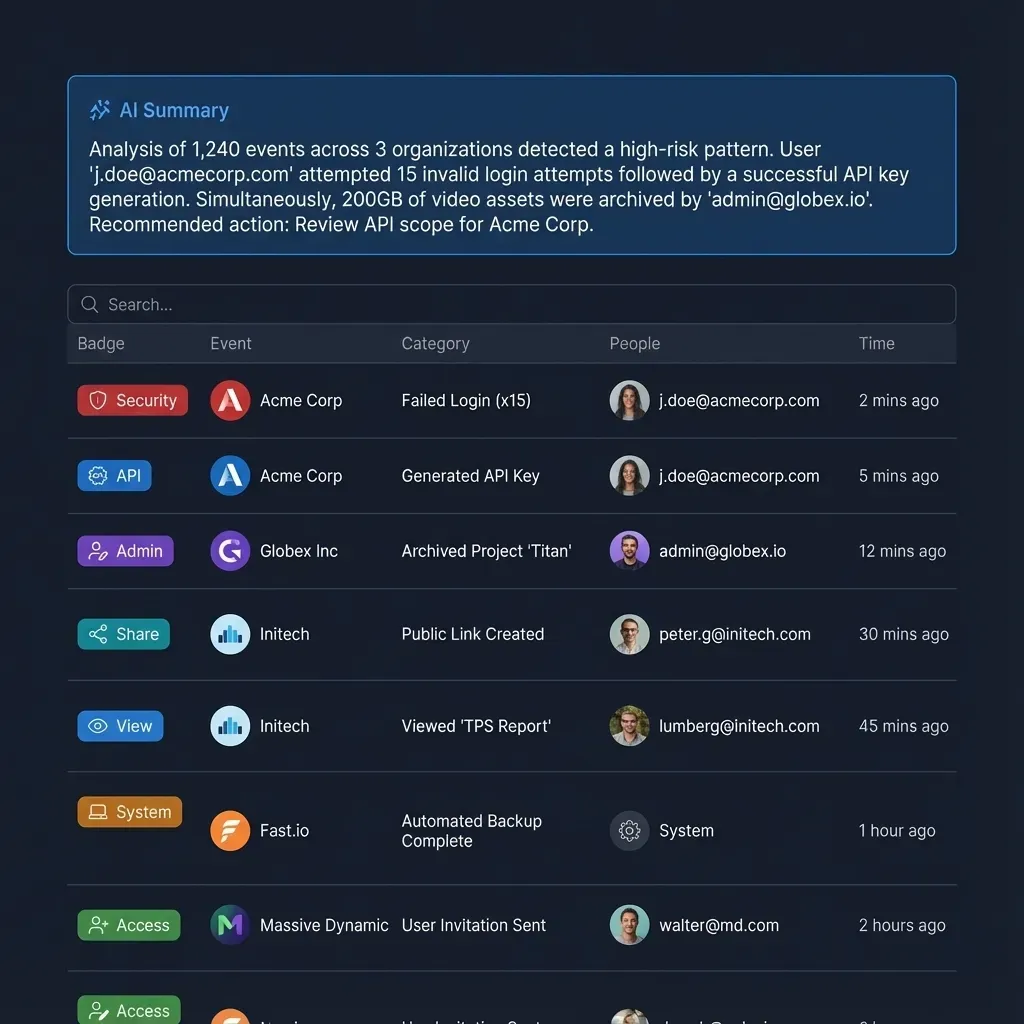
Second, take advantage of Fastio's WebSocket events feed or activity polling for reactive workflows. Rather than arbitrary waiting, your Python agent can listen for change notifications. When a file changes, Fastio emits an event notification. Your agent wakes up, processes the file via the MCP client, and returns to sleep.
Finally, utilize Fastio's ownership transfer capabilities. In many scenarios, an autonomous agent builds a workspace, compiles research, and organizes deliverables for a client. Once the work is complete, the agent can use the MCP client to transfer ownership of the workspace to a human user while retaining administrative access for future updates. This handoff protocol ensures that humans remain in control of the final assets while agents handle the tedious compilation and organization.
Sources
References used to verify factual claims in this guide.
-
Python overtakes JavaScript as the most popular language on GitHub, driven heavily by AI.
Frequently Asked Questions
How to use Fastio MCP with Python?
To use Fastio MCP with Python, install the `mcp` package, generate an Agent Token, and establish an asynchronous Streamable HTTP connection. The Python MCP SDK handles protocol negotiation, allowing your application to invoke Fastio tools directly.
Can I build an MCP client in Python?
Yes, you can build an MCP client in Python using the official Model Context Protocol Python SDK. Python is widely supported and provides excellent asynchronous libraries like `asyncio` to manage Streamable HTTP connections with MCP servers.
What is the maximum file size supported for AI agents?
The maximum upload size is 25 GB on the Fastio Starter plan, 50 GB on Business and 100 GB on Enterprise, accommodating document processing and media workflow requirements.
Does Fastio support concurrent file access by multiple agents?
Yes, Fastio supports concurrent access in multi-agent systems with advisory file locks, granular permissions, and automatic file version history. Agents can acquire a lock before writing, heartbeat it while active, and release it when done, while version history preserves every write.
How does Intelligence Mode work with the MCP client?
Intelligence Mode automatically indexes files uploaded to a workspace, eliminating the need for a separate vector database. Your Python MCP client can query this built-in RAG system directly to retrieve answers with precise semantic citations.
Related Resources

Ready to build your Python MCP Client?
Connect your AI agents to intelligent cloud workspaces with Fastio. Start your 14-day Business Trial today to test agent storage.