Fastio MCP Server Docker Compose Setup Guide
Using Docker Compose to set up agent environments that connect to the remote Fastio MCP server provides a stable foundation for testing workflows and managing storage. This guide walks through configuring containerized agents with environment variables and connecting to Fastio over Streamable HTTP. You get access to a consolidated MCP toolset, persistent cloud workspaces, and built-in RAG without managing local storage infrastructure.

Why Developers Prefer Docker for MCP Server Environments
Developers often run into issues when their local agent environment does not match production. For AI agents that interact with external APIs, databases, and remote MCP endpoints, these mismatches can break workflows quickly. Docker Compose fixes this by packaging agent services into reproducible configurations that run identically across developer laptops and production servers.
Using Docker Compose allows teams to containerize their autonomous agents while connecting them directly to Fastio's remote Model Context Protocol (MCP) server. Instead of dealing with conflicting Python or Node.js dependencies locally, each agent runs in its own isolated container with pre-configured network access and credentials.
Related guides
- Fastio MCP Server Integration Guide for DevelopersThe Fastio MCP server is a remote server. Your client connects to it over a URL, which means there is no package to...
- How to Implement Fastio SSE Streaming for MCP ToolsSSE (Server-Sent Events) streaming over MCP allows Fastio to push real-time file updates, extraction progress, and tool...
- How to Implement Fastio MCP with LangGraphIntegrating Fastio's MCP server with LangGraph lets your stateful agent workflows read, write, and share files across...
- How to Implement OpenTelemetry Tracing for Fastio MCP ServersLearn how to implement OpenTelemetry tracing for Fastio MCP servers to see how your AI agents actually work. This guide...
- How to Run Filesystem MCP in Docker and Connect Agents to Cloud StorageRunning the filesystem Model Context Protocol (MCP) server inside Docker provides containerized AI agents with...
- Top 7 MCP Servers for Databases: Connecting Agents to Data (2026)MCP servers for databases connect AI agents to structured data storage. This guide ranks the top 7 servers for...
More on this subject: MCP and Model Context Protocol (244 guides)
The Fastio MCP Advantage: a Consolidated Toolset and Built-in RAG
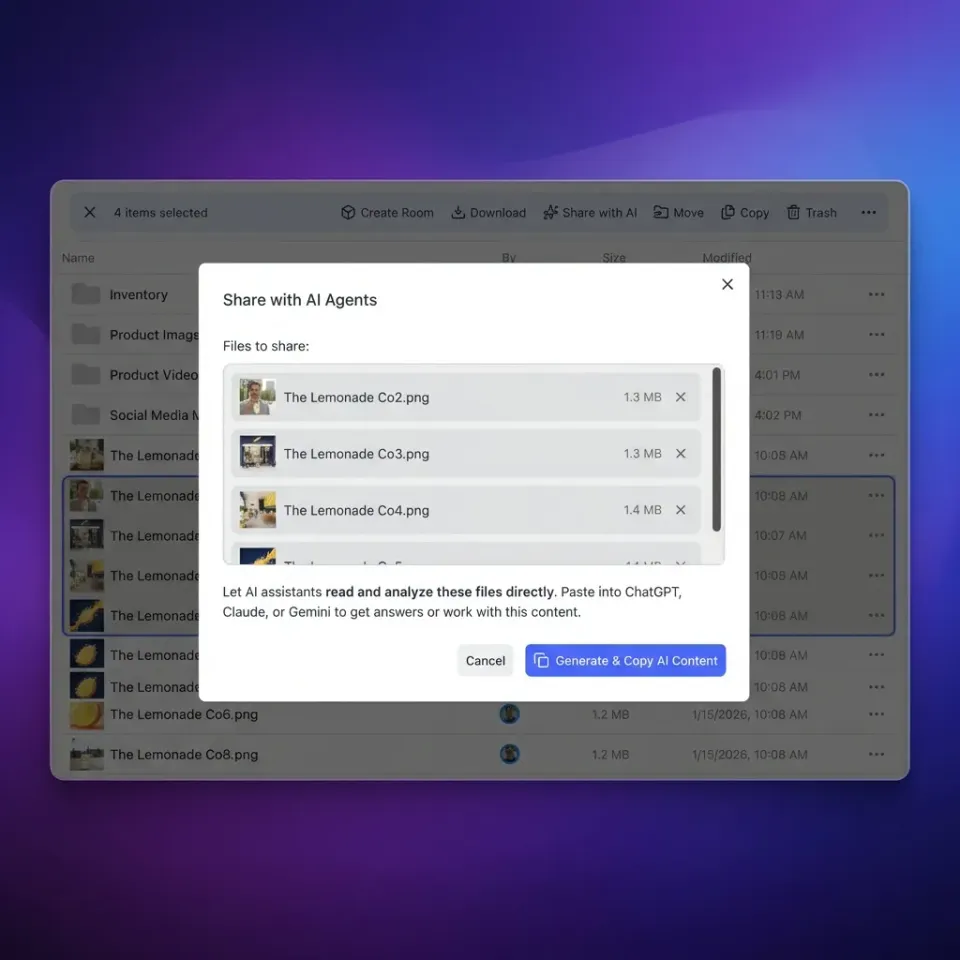
Fastio provides a managed cloud foundation for AI agents by pairing persistent storage with an intelligent coordination layer. Because Fastio hosts its MCP server remotely at https://mcp.fast.io/mcp/tools (Streamable HTTP), clients connect simply with a URL. Nobody needs to install, run, deploy, or containerize the storage server locally.
Fastio pairs persistent storage with built-in RAG capabilities. Once Intelligence is enabled for the workspace, files are indexed for semantic search automatically. Agents can query documents, retrieve relevant passages with exact citations, and collaborate in shared workspaces using a consolidated MCP toolset.
Step-by-Step Docker Compose Configuration
To configure containerized agents that connect to Fastio, organize your project directory with a Dockerfile for your agent code, a docker-compose.yml file, and a .env file for API keys.
1. The Dockerfile
The Dockerfile sets up the environment where your autonomous agent runs:
FROM python:3.11-slim
WORKDIR /app
COPY requirements.txt .
RUN pip install -r requirements.txt
COPY . .
CMD ["python", "agent.py"]
2. The docker-compose.yml File
Configure your agent service and inject Fastio MCP connection settings:
version: '3.8'
services:
  agent:
    build: .
    environment:
      - FASTIO_MCP_URL=https://mcp.fast.io/mcp/tools
      - FASTIO_API_KEY=${FASTIO_API_KEY}
    volumes:
      - ./data:/app/data
    restart: unless-stopped
3. The .env File
Keep your credentials secure in a local .env file:
FASTIO_API_KEY=your_fastio_api_key_here



Scale Your AI Agents with Professional Storage
Connect your Docker agent workflows to Fastio's remote MCP server. Access persistent workspaces, version history, and built-in RAG.
Configuring SSE and Port Mapping
The Model Context Protocol supports both Streamable HTTP and Server-Sent Events (SSE). Fastio's current remote endpoints use Streamable HTTP, such as https://mcp.fast.io/mcp/tools, and its older SSE address keeps working for existing setups.
When containerizing agents in Docker Compose, the agents initiate outbound HTTPS connections to Fastio's remote server. This eliminates the need to expose inbound host ports for storage services. Containerized agents maintain persistent connections to stream real-time workspace updates and tool execution results seamlessly over standard secure web protocols.
Scaling with OpenClaw and ClawHub
Once your Docker agent setup is running, you can connect agent frameworks like OpenClaw directly to Fastio's remote MCP server. By pointing your agent configuration to Fastio's MCP endpoint, agents gain access to a consolidated toolset designed for natural language file management.
In containerized environments, agents can orchestrate file lifecycle operations, create project folders, and execute ownership transfers. An agent can populate a workspace and hand admin access over to human team members via a claim link. The integration also supports URL Import, enabling agents to ingest external files from Google Drive, Dropbox, or OneDrive directly into Fastio workspaces without local container I/O. When running multiple agent containers simultaneously, agents can coordinate writes using Fastio's advisory file locks. An agent acquires a lock before writing, heartbeats it while working, and releases it when done, while version history preserves every version. When running multiple agent containers simultaneously, agents can coordinate writes using Fastio's advisory file locks. An agent acquires a lock before writing, heartbeats it while working, and releases it when done, while version history preserves every version.
Troubleshooting and Best Practices
When connecting Dockerized agents to the remote Fastio MCP server, network configuration and credential scoping are the most critical factors.
API Key Scopes
Ensure your Fastio API key has appropriate permissions for the workspaces and operations your agent performs. You can test your key with a simple curl request against https://api.fast.io/current/ before running your Docker containers.
Container Egress and Networking
Verify that your Docker bridge network allows outbound internet traffic to connect to mcp.fast.io. Firewalls or proxy servers blocking outbound TLS connections can cause timeouts during MCP handshakes.
Local Mount Performance
If your agent handles local temporary files before uploading them to Fastio, using named Docker volumes rather than bind mounts provides superior I/O performance on macOS and Windows hosts.
Sources
References used to verify factual claims in this guide.
-
Over 76% of IT and SaaS professionals now use AI tools at work to improve productivity. Container adoption has reached 92% among IT and SaaS professionals as teams standardize development environments.
Frequently Asked Questions
How do I update the Fastio MCP server in my Docker setup?
Because Fastio hosts the MCP server remotely at https://mcp.fast.io/mcp/tools, you never need to rebuild or patch server containers. Fastio handles all server updates automatically; you only need to manage your agent code and dependencies.
Can I run multiple agent containers connecting to Fastio?
Yes, you can define multiple agent services in your docker-compose.yml file. Each container can connect to Fastio's remote MCP server simultaneously, utilizing scoped API keys and shared workspaces for collaboration.
Is it possible to use Fastio MCP with local files in Docker?
Yes. You can mount local directories into your agent container, allowing the agent to read local files and upload them to a persistent Fastio workspace using remote MCP tools for cloud backup and RAG indexing.
What should I do if my agent cannot connect to the Fastio MCP endpoint?
Verify outbound internet connectivity from within your Docker container and check that your FASTIO_API_KEY environment variable is valid. Ensure firewalls allow outbound HTTPS connections to mcp.fast.io.
Does the Fastio Docker setup support the Business Trial?
Yes, containerized agent workflows can be tested with Fastio's 14-day Business Trial (credit card required). This provides access to persistent workspaces and remote MCP tools before selecting a Starter, Business, or Enterprise plan.
Related Resources

Scale Your AI Agents with Professional Storage
Connect your Docker agent workflows to Fastio's remote MCP server. Access persistent workspaces, version history, and built-in RAG.