How to Implement File Locks with the Fastio API
Guide to implementing file locks with the Fastio API: learn how to acquire, heartbeat, and release advisory file locks to coordinate multi-agent writes safely.

Why AI Agents Need Concurrency Controls
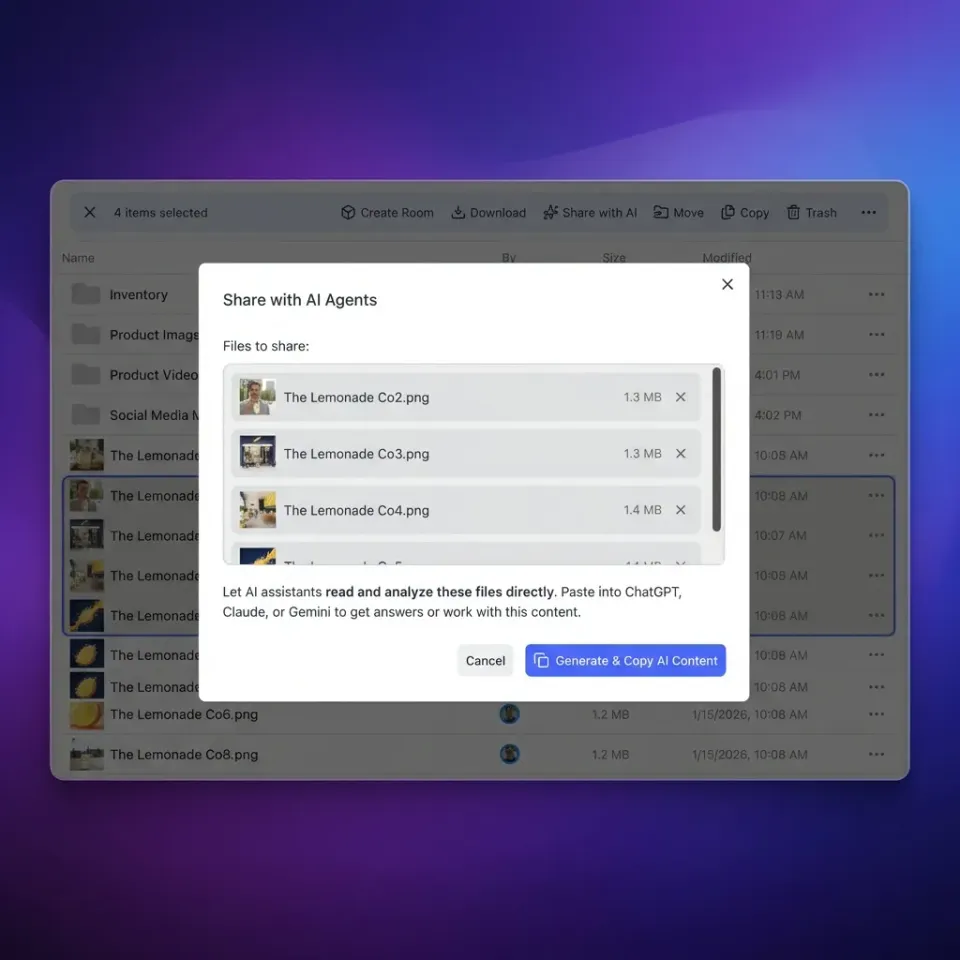
AI agents often process the same datasets or generate outputs together. Without concurrency controls, one agent can overwrite another's in-progress changes on a shared file, leading to confusion or race conditions. To solve this, Fastio provides advisory file locks designed for multi-agent coordination.
An agent acquires a file lock before writing, heartbeats it while working, and releases it when finished. If another agent attempts to acquire a lock on the same node, it receives an HTTP 409 error (Node already locked) and can wait or read. If an agent crashes or disconnects, the lease automatically expires or can be taken over by any collaborator with write permission.
Because Fastio locks are advisory rather than exclusive write locks, two writers that write without locking will not corrupt the system. Every write lands safely and version history preserves every version with full restore capabilities.
Helpful references: Fastio Workspaces, Fastio Collaboration, and Fastio AI.
Related guides
- How to Implement Generative UI File Uploads with Fastio APIGenerative UI file uploads use LLMs to dynamically render interactive upload components backed by the Fastio API based...
- How to Implement API File Versioning: A Complete Developer TutorialFile versioning with the Fastio API lets applications programmatically store, track, and roll back document iterations...
- How to Implement Fastio API Large File Chunked UploadsChunked uploading in the Fastio API splits large files into manageable segments, ensuring reliable transmission over...
- How to Implement Fastio API Real-Time File Event NotificationsFile sharing is the practice of distributing digital files between users over a network, but when AI agents...
- How to Implement Zero Trust File Access with Fastio APIImplement zero trust file access with Fastio API by validating tokens and applying RBAC to every file operation. No...
- How to Upload Files: Fastio API File Upload TutorialFollowing a Fastio API file upload tutorial is the fast way to get your applications talking to intelligent agent...
More on this subject: Agent File and Document Workflows (325 guides)
What to check before scaling concurrent updates with Fastio API
Fastio provides both REST API endpoints and remote Model Context Protocol (MCP) actions for file locking.
In the REST API, locking belongs to the storage endpoints:
- POST https://api.fast.io/current/workspace/{workspace_id}/storage/{node_id}/lock/ to acquire an advisory lease. This returns a secret lock_token, locked_at, and expires_at timestamps.
- POST https://api.fast.io/current/workspace/{workspace_id}/storage/{node_id}/lock/heartbeat/ to renew the active lease for the same duration.
- Release endpoints to free the lock upon completion, and override endpoints allowing anyone with write permission to take over an abandoned lock.
- If another agent or user holds the lock, the acquire call returns HTTP 409 with error 1660 ("Node already locked by another user").
In the remote MCP server (https://mcp.fast.io/mcp/tools), the storage_manage tool exposes the lock-acquire and lock-release actions, and the read-only storage tool exposes lock-status. Locker identity details (including locker.agent_name) are visible to Member roles and above.
Combined with granular permissions and a detailed activity log, developers have full visibility into concurrent updates.


Coordinate Multi-Agent Workflows Safely
Coordinate multi-agent writes with advisory file locks, version history, and granular permissions. Start your 14-day Business Trial today.
Prerequisites for Coordinating Concurrent Updates
Set up authentication with an API key or remote MCP session. The 14-day Business Trial offers full access to shared workspaces and developer APIs.
Note the workspace ID and file node ID to manage files programmatically.
Acquire a file lock before writing, maintain its heartbeat during longer operations, and inspect version history to verify updates.
Frequently Asked Questions
How does Fastio handle concurrent file updates?
Fastio coordinates concurrent updates using advisory file locks paired with automatic version history. Agents acquire a lock before writing and release it when done. If another agent tries to lock the same file, it receives an HTTP 409 status and can wait or read.
How do you coordinate concurrent edits using the Fastio API?
Use the REST API lock endpoints (POST .../storage/{node_id}/lock/) or the MCP actions (lock-acquire and lock-release on storage_manage, lock-status on storage). Heartbeat the lease while working, and release it when finished. If a holder disappears, the lock expires or can be taken over by anyone with write permission.
What happens if an agent overwrites a file in Fastio?
Because Fastio file locks are advisory and all writes are versioned, every update creates a new entry in version history. Teammates can inspect diffs and restore any prior version, ensuring no work is ever lost.
Related Resources

Coordinate Multi-Agent Workflows Safely
Coordinate multi-agent writes with advisory file locks, version history, and granular permissions. Start your 14-day Business Trial today.