How to Integrate Langflow File Storage
Langflow agents delete files when sessions end. This guide shows three ways to add permanent storage: native local volumes, complex S3 custom components, and the modern Model Context Protocol (MCP) approach. We'll show you how to build agents that can read, write, and search files across sessions without managing infrastructure.


Why Langflow Needs External Storage
Langflow is a visual framework for building multi-agent AI applications. Integrating external file storage allows Langflow workflows to keep documents, manage RAG data sources, and deliver outputs to end users. By default, Langflow is temporary. Files uploaded during a chat session often live only as long as the session or the container running the instance. This creates three problems for developers moving from prototype to production:
- Persistence: Agents cannot "remember" a file uploaded yesterday unless it is saved to a persistent layer.
- Scalability: Storing files on the local disk of a Docker container breaks when you scale to multiple instances.
- Handoff: An agent generating a report needs a place to put it where a human or another agent can retrieve it later. To fix this, move files to external storage.
Helpful references: Fastio Workspaces, Fastio Collaboration, and Fastio AI.
Related guides
- How to Integrate Dify File Storage for AgentsDify defaults to local file storage, which limits scalability and agent capabilities.
- How to Give AI Agents Secure Cloud File StorageAutonomous agents need more than vector memory. They need actual file storage to read documents, generate reports, and...
- How to Add File Storage to Vercel AI SDK ApplicationsThe Vercel AI SDK gives you React hooks and server utilities for building AI-powered applications, but file storage for...
- How to Add Persistent File Storage to Dify AI AgentsDify AI file storage connects the Dify open-source LLM platform to persistent cloud storage. This lets agents read,...
- How to Set Up File Storage for n8n AI Workflowsn8n AI workflows need persistent file storage to save documents, process AI outputs, and build RAG pipelines. This...
- How to Add Persistent File Storage to Relevance AI AgentsRelevance AI is a great no-code platform for building agent workflows. But its built-in storage has limits. You get a...
More on this subject: Agent Memory and Storage (263 guides)
What to check before scaling langflow file storage
Langflow provides built-in configuration options for basic persistence, though they have downsides.
Local Storage (Default)
By default, Langflow saves files to its configuration directory. You can control this via environment variables:
LANGFLOW_STORAGE_TYPE=local
LANGFLOW_CONFIG_DIR=/path/to/persistent/volume
Best for: Local development and single-server deployments.
Limitation: If you deploy to a serverless environment or a cluster without shared volumes, your files disappear when the container restarts.
Native S3 Integration
For production.
Langflow supports AWS S3. This requires configuring credentials in your environment:
LANGFLOW_STORAGE_TYPE=s3
AWS_ACCESS_KEY_ID=your_key
AWS_SECRET_ACCESS_KEY=your_secret
S3_BUCKET_NAME=your_bucket
Best for: Enterprise teams with existing AWS infrastructure.
Limitation: It takes work to set up. You must manage IAM roles, bucket policies, and potentially high egress fees for data-heavy RAG applications.
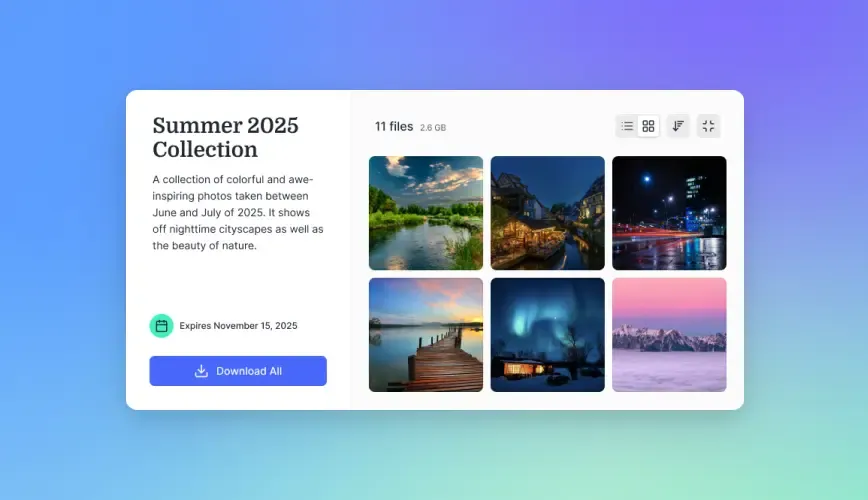


Give Your AI Agents Persistent Storage
Connect your agents to persistent high-speed cloud storage with a remote MCP server in under 2 minutes.
Method 2: The Model Context Protocol (MCP)
The Model Context Protocol (MCP) connects AI models to external data. Instead of hard-coding S3 logic into every agent, MCP provides a universal language for "reading" and "writing" files. Langflow recently added support for MCP, acting as an MCP Client. This means you can connect any MCP Server, including Fastio's file storage server, directly to your flow without writing custom Python code.
Why use MCP with Langflow:
- Standardization: The same
read_filetool works for local files, Google Drive, or cloud storage. - Security: Authentication is handled at the server level, not hard-coded into the agent's prompts.
- Portability: You can swap the storage backend without rebuilding the agent logic. Visual AI builders can save time using MCP instead of writing custom code.
Tutorial: Integrating Fastio Storage via MCP
This workflow allows your Langflow agent to persist files (like reports or images) to a shared workspace and create shareable links. We will use Fastio's remote MCP server at https://mcp.fast.io/mcp/tools.
Step 1: Get Your Fastio MCP Credentials
Fastio provides a hosted MCP server that requires no local installation.
- Sign up for Fastio and start a 14-day Business Trial at /pricing/.
- Create an API key for your Fastio account.
- Use the MCP server URL
https://mcp.fast.io/mcp/tools, and send the key as a Bearer token in theAuthorizationheader.
Step 2: Configure Langflow MCP Client
- Open your Langflow project.
- Locate the MCP component in the sidebar.
- Drag the MCP Client node to your canvas.
- In the configuration panel, paste your Fastio MCP URL.
- Langflow will query the server and discover available tools automatically.
Step 3: Select File Tools
Once connected, you will see a consolidated MCP toolset. For file storage, enable tools to upload files, organize folders, and list files so the agent can see what it has stored previously.
Step 4: Connect to Your Agent
Wire the MCP Client tools to your agent's "Tools" input.
Prompting the Agent: Now, you can instruct your agent in natural language:
"Analyze this data, write a summary report as a Markdown file, and save it to the 'Reports' folder."
The agent will call the upload tool, save the content, and return the link to the user in the chat window.
Use Case: RAG Pipeline with Persistent Memory
A common limitation in Langflow RAG (Retrieval-Augmented Generation) pipelines is that uploaded knowledge bases are often temporary. Here is how to build a persistent one.
The Old Way (Transient)
- User uploads PDF.
- Langflow parses text.
- Vector store indexes text.
- Problem: If the server restarts, the source PDF and often the vector index are lost.
The Persistent Way (Fastio + MCP)
- Ingest: Agent receives PDF and uses the MCP upload tool to store the raw asset in a "KnowledgeBase" folder.
- Index: Agent passes the persistent Fastio URL to the vector store.
- Retrieve: When answering queries, the agent can cite the original source document using its persistent public URL. This keeps your original documents available and linkable, even if the vector database needs to be rebuilt.
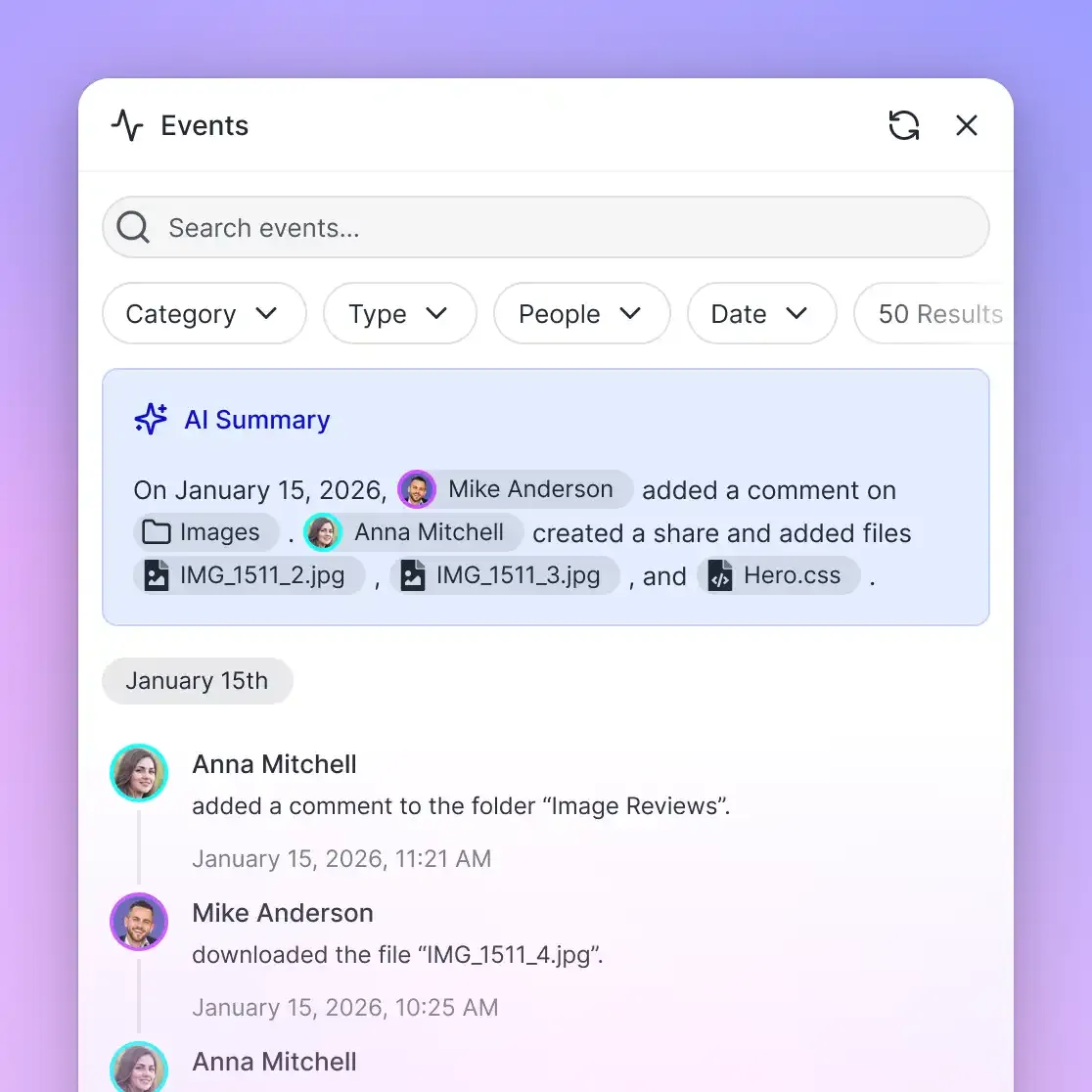
Comparison: S3 vs. Fastio MCP
When choosing a storage backend for Langflow, consider the setup work.
Verdict: S3 gives more control. For developers building agents who need speed and ease of use, Fastio is faster to set up.
Advanced: Multi-Agent Concurrency and File Locks
In complex Langflow setups with multiple agents running in parallel, race conditions can occur if two agents try to edit the same file simultaneously. Fastio provides advisory file locks exposed through MCP storage actions (such as lock-acquire, lock-status, and lock-release) and REST endpoints. An agent acquires a file lock before writing, heartbeats it while working, and releases it when finished. If a second agent tries to lock the same node, it receives an HTTP 409 and can wait or read. Because locks are advisory, every write is safely preserved in automatic version history with full restore capabilities, and a detailed activity log records who made each update.
Sources
References used to verify factual claims in this guide.
-
The Model Context Protocol (MCP) connects AI models to external data sources and tools.
Frequently Asked Questions
How do I use local files in Langflow Docker?
To use local files with Docker, you must mount a volume mapping a host directory to the container's internal configuration path. Use the `-v` flag in Docker or the `volumes` key in Docker Compose to map your local folder to `/app/langflow_data` inside the container.
Can Langflow agents share files with human users?
Yes, by using external storage like Fastio. When an agent uploads a file via MCP, it receives a URL. The agent can then paste this URL into the chat window, allowing the human user to click and download the file immediately.
Does Langflow support Google Drive or Dropbox?
Langflow does not have native, built-in components for Drive or Dropbox. However, you can connect to them using MCP servers that bridge these services, or use Fastio's 'URL Import' feature to pull files from these providers into your agent's workspace.
How is Fastio priced for AI agents?
Fastio offers paid plans starting at Starter for $9.99/month with 250 GB of storage and 3 seats, Business for $49.99/month, and Enterprise for $199.99/month. Organizations can evaluate the remote MCP server with a 14-day Business Trial requiring a credit card.
Related Resources

Give Your AI Agents Persistent Storage
Connect your agents to persistent high-speed cloud storage with a remote MCP server in under 2 minutes.