How to Use OpenClaw File Versioning
OpenClaw file versioning tracks changes to files in Fastio workspaces. It creates automatic snapshots on edits, shows diffs between versions, and supports rollbacks for multi-agent collaboration. This git-like system helps avoid lost work in agent workflows. Agents access versioning through the remote Fastio MCP server with a consolidated MCP toolset. Developers use it to keep file states stable during tasks like code generation or data processing.


What Is OpenClaw File Versioning?
OpenClaw file versioning tracks file changes and provides diffs and rollbacks for multi-agent use.
Fastio workspaces provide per-file versioning as part of activity tracking. Every edit creates a snapshot. OpenClaw agents interact with these via the remote Fastio MCP server at https://mcp.fast.io/mcp/tools using a consolidated MCP toolset for file management.
Key features:
- Automatic snapshots on any edit
- Diff views highlighting changes
- Rollback to any prior version
- Audit trail of who made changes
This works well for agent workflows where multiple OpenClaw instances edit shared files. Integrates with Fastio permissions and audit logs to track changes in concurrent edits. Teams use versioning for documentation updates, data pipelines, report generation, and collaborative code editing.
It is designed to handle the high-velocity file operations typical of autonomous agents. Unlike standard cloud storage which creates copies, this system maintains a single file reference with a retrievable history of every modification state. This ensures that even in complex, high-speed interactions, the integrity of the data is preserved and fully auditable.
Related guides
- Devin AI Project File Versioning: Tracking Persistent Agent DeliverablesCognition reports Devin AI achieves a 67% pull request merge rate in production, but Git PRs only capture source code...
- How to Use Claude Cowork File LocksFile locks in Claude Cowork help prevent conflicts by showing who holds the lock on a document, so other agents and...
- How to Set Up File Storage in OpenClaw WorkspacesOpenClaw agents need files that stick around between sessions in shared workspaces. Developers set up persistent...
- How to Use OpenClaw File Sharing for Agentic TeamsOpenClaw file sharing lets agentic teams access files securely in Fastio workspaces via the remote MCP server. Agents...
- How to Set Up OpenClaw with Google Gemini ModelsOpenClaw's Gemini integration connects your agent to Google's full model family, including Gemini 3.1 Pro for chat,...
- How to Set Up ClawHub for OpenClawClawHub is the public skill registry for OpenClaw, with over 13,000 community skills available. This guide walks...
More on this subject: OpenClaw Setup and Guides (199 guides)
Why Versioning Matters in OpenClaw Workflows
Without versioning, agents often overwrite each other's changes. For example, a code-generating agent might alter a script that a testing agent relies on, causing test failures or incorrect results that propagate through the workflow.
OpenClaw file versioning solves this by creating automatic snapshots on every edit. Roll back to any previous version instantly. View side-by-side diffs to see exactly what changed line-by-line. This provides git-like control without manual commits.
In multi-agent setups, versioning pairs with Fastio file locks. An agent acquires an advisory lock before writing, heartbeats it while working, and releases it when done. If another agent attempts to lock the file, it receives an HTTP 409 error and can wait or read. If writes occur concurrently regardless, version history snapshots every edit so no prior state is lost.
Agentic teams need good coordination here. Consider a data pipeline: Agent A generates raw CSV data, Agent B cleans and transforms it, Agent C runs analysis. If Agent B's transformation introduces errors, versioning lets Agent C revert to the raw data version and coordinate with Agent B via the activity feed.
Many agent storage options like S3 or temporary APIs store files as fixed blobs without version tracking. Traditional Git requires agents to manage branches and merges themselves, which leads to errors in chat-based workflows. The Fastio MCP server provides automatic versioning built for AI collaboration.
Real-world example: In a marketing automation workflow, the Data Agent drafts a performance report from ad data, and the Analysis Agent adds visualizations and insights. Versioning tracks "Added Quarterly sales chart" in diffs. If visuals don't match data, revert the Analysis Agent's changes without losing the draft, then iterate.
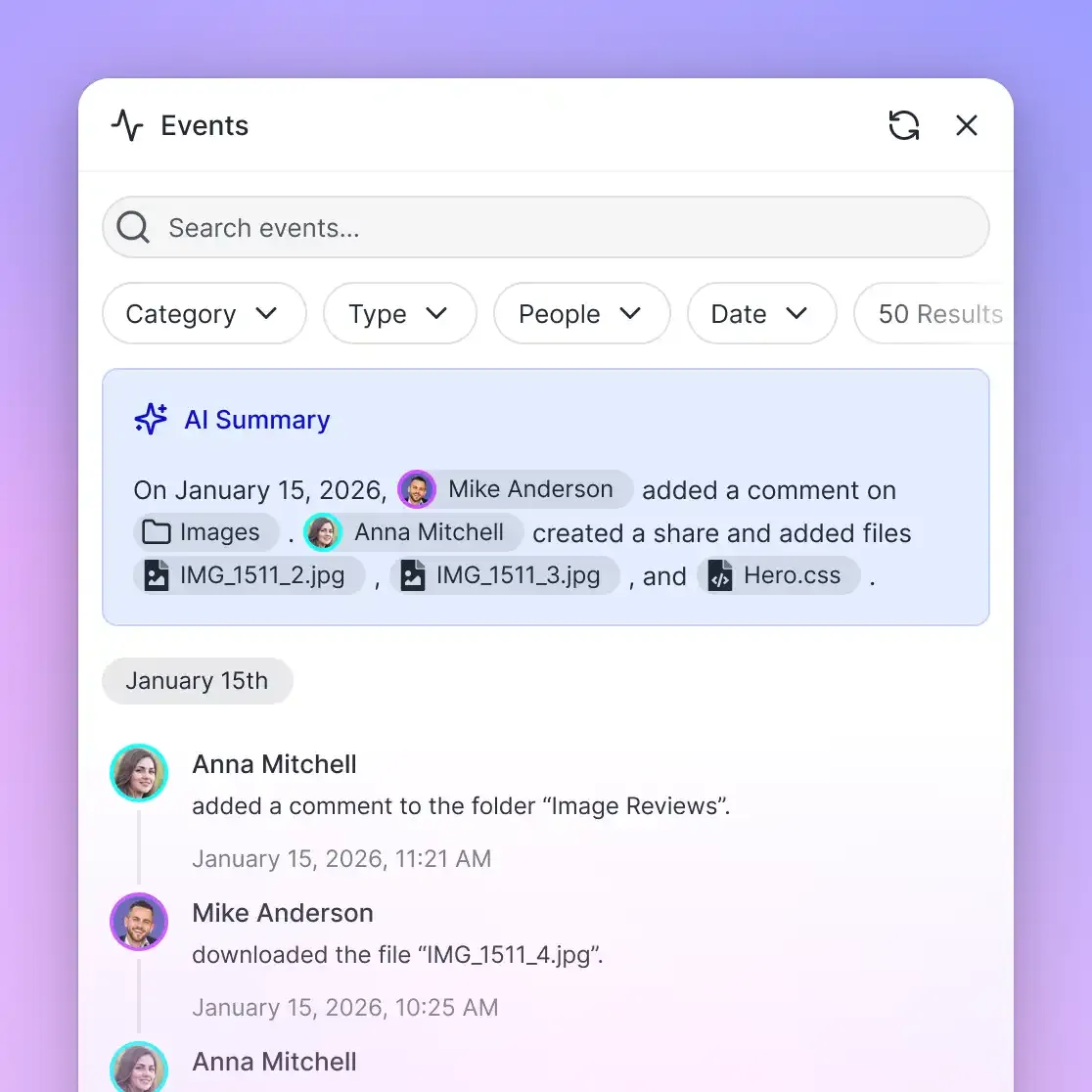
Versioning also helps with debugging. Query Intelligence Mode with "Summarize recent changes to report.md" for a quick activity review. It speeds debugging in multi-agent systems.


File Versioning for OpenClaw Agents
Scalable cloud storage, usage-based credits, a consolidated MCP toolset, and built-in version history for AI teams.
Setting Up File Versioning for OpenClaw
File versioning is available out-of-the-box in Fastio workspaces. No extra setup. Snapshots start on first edit. Here's how to get OpenClaw agents using it.
Prerequisites:
- OpenClaw installed locally
- Fastio account with a 14-day Business Trial or active plan (sign up here)
Step 1: Connect to the Remote MCP Server Configure OpenClaw to connect directly to the remote Fastio MCP server URL:
https://mcp.fast.io/mcp/tools
This connects OpenClaw to a consolidated MCP toolset for file operations and versioning.
Step 2: Authenticate Sign in to Fastio with OAuth in the browser. The Review Permissions screen lets you select Read Only or Read & Write and choose which organizations and workspaces the connection can reach.
Step 3: Create Workspace Ask OpenClaw:
Create Fastio workspace "project-versioning" with intelligence enabled
Intelligence auto-indexes files for RAG queries on versions.
Step 4: Upload and Test Versioning
Upload test.md to project-versioning with content "Initial version content"
Edit test.md to add "Changes in v2 content"
List versions of test.md
See v1 (upload), v2 (edit) with diffs.
Step 5: Advanced: Direct MCP Access
For programmatic agent control, connect to the remote MCP server at https://mcp.fast.io/mcp/tools with a consolidated MCP toolset. Headless agents authenticate by sending an Authorization: Bearer <api key> header on the connection without local installation. For complete setup steps, see the Fastio MCP documentation.
Versioning now active. Every "edit file" triggers a snapshot. Check with "Show version history".
Verify Setup
Ask your OpenClaw: "List versions of report.md in project-v1"
Response shows history with timestamps and diffs.
Viewing and Reverting Versions Step by Step
Step 1: Query versions:
- "Show version history for report.md"
Lists snapshots: v1 (upload), v2 (agent edit), etc.
Step 2: View diff:
- "Diff between v1 and v2 of report.md"
Highlights additions/deletions.
Step 3: Revert:
- "Revert report.md to v1"
Or download prior version.
Text diagram of workflow:
Upload → Edit1 (snapshot v2) → Edit2 (v3) → Diff v2-v3 → Revert to v2
Handles large files via chunked uploads, up to 100 GB on the Enterprise plan.
Supports reports, datasets, and media files in agent pipelines. This granular control allows human operators to audit agent behavior by inspecting intermediate file states. You can also automate the verification process by having a supervisor agent periodically check diffs against requirements before finalizing any document, ensuring high quality.
Multi-Agent Conflict Resolution
When multiple OpenClaw agents collaborate on files in a shared workspace, Fastio keeps changes safe through advisory file locks, version history, and permissions.
An agent acquires a lock on a file before writing, heartbeats it while working, and releases it when finished. Other agents that attempt to acquire the lock receive an HTTP 409 and can wait. If a lock holder disconnects, the lease expires or can be taken over by anyone with write permission. Because locks are advisory, version history acts as the safety net: every write lands as a distinct version and is recorded in the activity log.
Agents monitor changes via activity feed polling or the realtime WebSocket events feed.
Example: Agent A generates data, B analyzes it, C creates the report. Versioning tracks each contribution with clear diffs.
The realtime activity feed and WebSocket events feed keep every agent coordinated without silent overwrites, preserving data integrity across multi-agent pipelines.
Advanced Workflows and Best Practices
Ownership transfer: Agent builds workspace, then transfers it to a human.
Integrate Intelligence Mode: Auto-index files for RAG queries on versions.
Best practices:
- Name versions meaningfully if setting them manually.
- Poll the realtime activity feed or monitor WebSocket events for updates.
- Use granular workspace and folder permissions to manage write access.
- Query history regularly: "Summarize recent changes to report.md."
Pairs with URL imports from Drive/Box without needing local files.
Query history with "summarize recent changes to report.md" for ongoing transparency. Regularly pruning old versions of temporary files can also help maintain workspace hygiene and reduce storage costs. For compliance-heavy industries, retaining the full version history keeps it available for auditing purposes.
OpenClaw File Versioning vs Git: Key Differences
OpenClaw file versioning offers git-like features for AI agent workflows. It differs from traditional Git in several ways.
Core Similarities:
- Diff views: Line-by-line changes highlighted with additions in green, deletions in red.
- Rollback: Restore any prior version with one command.
- Audit trail: Timestamps, agent IDs, and change summaries for accountability.
Key Differences:
OpenClaw works well in dynamic agent environments where commits happen frequently without human oversight. No need to git add/commit/push. Edits snapshot automatically.
For software dev, store Git repos as files in Fastio workspaces and let agents interact via MCP tools. Versioning tracks repo changes at file level.
When to choose each:
- OpenClaw: Multi-agent document/code collab, quick iterations.
- Git: Branch-heavy projects, pull requests.
Real-World Workflow: Multi-Agent Report Generation
Here's a complete workflow using versioning:
Data Collector Agent: "Create workspace 'q4-report', upload sales.csv"
- Snapshot v1: raw data.
Analysis Agent: Adds charts to report.md.
- Snapshot v2: analysis added. Diff shows new sections.
Review Agent: "Diff between versions of report.md", spots error, reverts to v1, applies corrected chart.
- Snapshot v3: corrected version.
Human handoff: Ownership transfer via a claim link to an organization owner.
The activity feed notifies agents of updates across the workspace.
Markdown workflow diagram:
sales.csv (v1) --> edit --> analysis.md (v2) --> diff/review --> corrected (v3) --> share
                           ^ activity feed coordinates Review Agent
This prevents data loss, tracks contributions, and scales to multiple agents.
Sources
References used to verify factual claims in this guide.
-
Fastio plans provide scalable cloud storage starting at 250 GB on Starter Fastio handles large files via chunked uploads
-
Fastio remote MCP server provides a consolidated MCP toolset for file management and versioning REST API and remote MCP server provide version history and restore capabilities
Frequently Asked Questions
Does OpenClaw support file versioning?
Yes. OpenClaw uses Fastio workspaces with built-in per-file versioning. Automatic snapshots track edits, diffs show changes, rollbacks restore prior states.
How to revert versions in OpenClaw?
Query 'version history for [file]', view diffs, then 'revert [file] to vN'. Uses Fastio MCP tools.
What triggers new snapshots?
Any content edit, upload, or overwrite creates a snapshot. Metadata changes may too.
How does versioning prevent conflicts in multi-agent workflows?
Fastio creates a linear snapshot on each edit and records changes in the activity log. Prior versions remain retrievable even during rapid concurrent updates.
Can OpenClaw agents access version diffs via API?
Yes, the REST API and the remote MCP server provide a consolidated MCP toolset to list versions, view diffs, and download prior versions.
How long are versions retained?
Version history is retained according to workspace plan limits across Starter, Business, and Enterprise tiers.
Does versioning apply to binary files like videos?
Yes, snapshots capture entire file state including binaries. Diffs focus on metadata/size changes.
How to integrate versioning with event-driven workflows?
Subscribe to the workspace events feed over WebSocket or long-poll. It surfaces uploads and version history as they happen, so reactive workflows can respond to new snapshots.
Related Resources

File Versioning for OpenClaw Agents
Scalable cloud storage, usage-based credits, a consolidated MCP toolset, and built-in version history for AI teams.