How to Set Up Persistent Storage in OpenClaw
OpenClaw agents forget their state between sessions. Persistent storage lets them save memory, files, and data to Fastio cloud workspaces. Connect via remote MCP to access consolidated tools with no local setup required. Start in minutes with version history for multi-agent coordination. This guide covers setup through advanced usage.


What Is OpenClaw Persistent Storage?
OpenClaw persistent storage keeps agent state, memory, and files across sessions. Agents save to Fastio cloud workspaces to avoid data loss on restarts.
Fastio workspaces track file version history with restore capabilities. Multiple agents can work on the same files, and every earlier version stays recoverable.
Without persistence, agents forget conversations, tasks, and files on restart. External storage lets them resume workflows seamlessly.
Related guides
- How to Set Up Hermes Agent File StorageOnly 57% of organizations report having AI agents in production environments, largely due to challenges with state...
- How to Build Claude Cowork Persistent StoragePersistent storage in Claude Cowork lets files, outputs, and states survive between agent sessions and deployments....
- How to Set Up File Storage in OpenClaw WorkspacesOpenClaw agents need files that stick around between sessions in shared workspaces. Developers set up persistent...
- How to Set Up ClawHub for OpenClawClawHub is the public skill registry for OpenClaw, with over 13,000 community skills available. This guide walks...
- How to Build Multi-Agent Workflows in OpenClawOpenClaw multi-agent workflows let multiple agents coordinate on tasks like data processing or report generation....
- How to Browse and Discover Skills on OpenClaw ClawHubClawHub hosts over 13,000 OpenClaw skills, but finding the right one takes more than a keyword search. This guide...
More on this subject: OpenClaw Setup and Guides (199 guides)
Why Use Persistent Storage for OpenClaw Agents?
Agents without persistence reset every session, losing prior context and making long-running tasks impossible.
External persistence saves chat history, state files, and deliverables to durable cloud storage:
- Session recovery: Resume tasks where the agent left off.
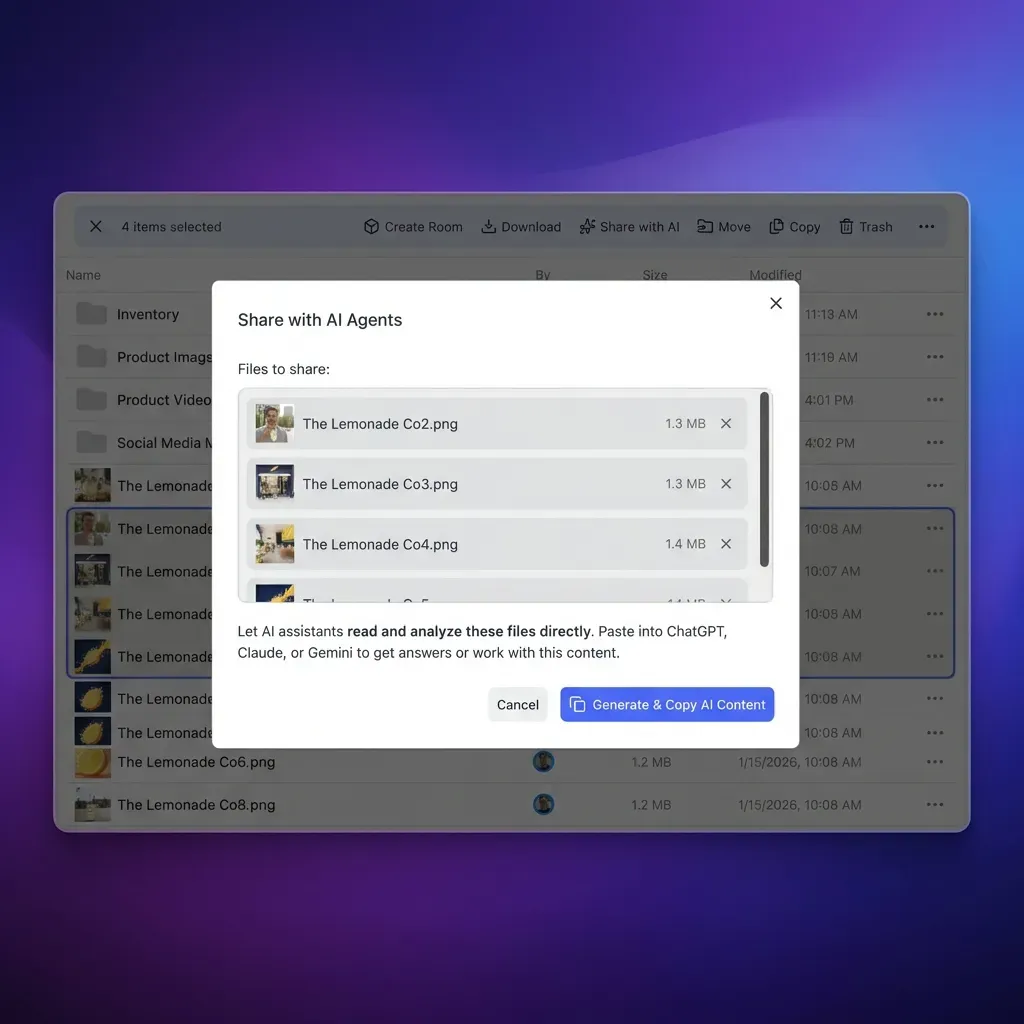
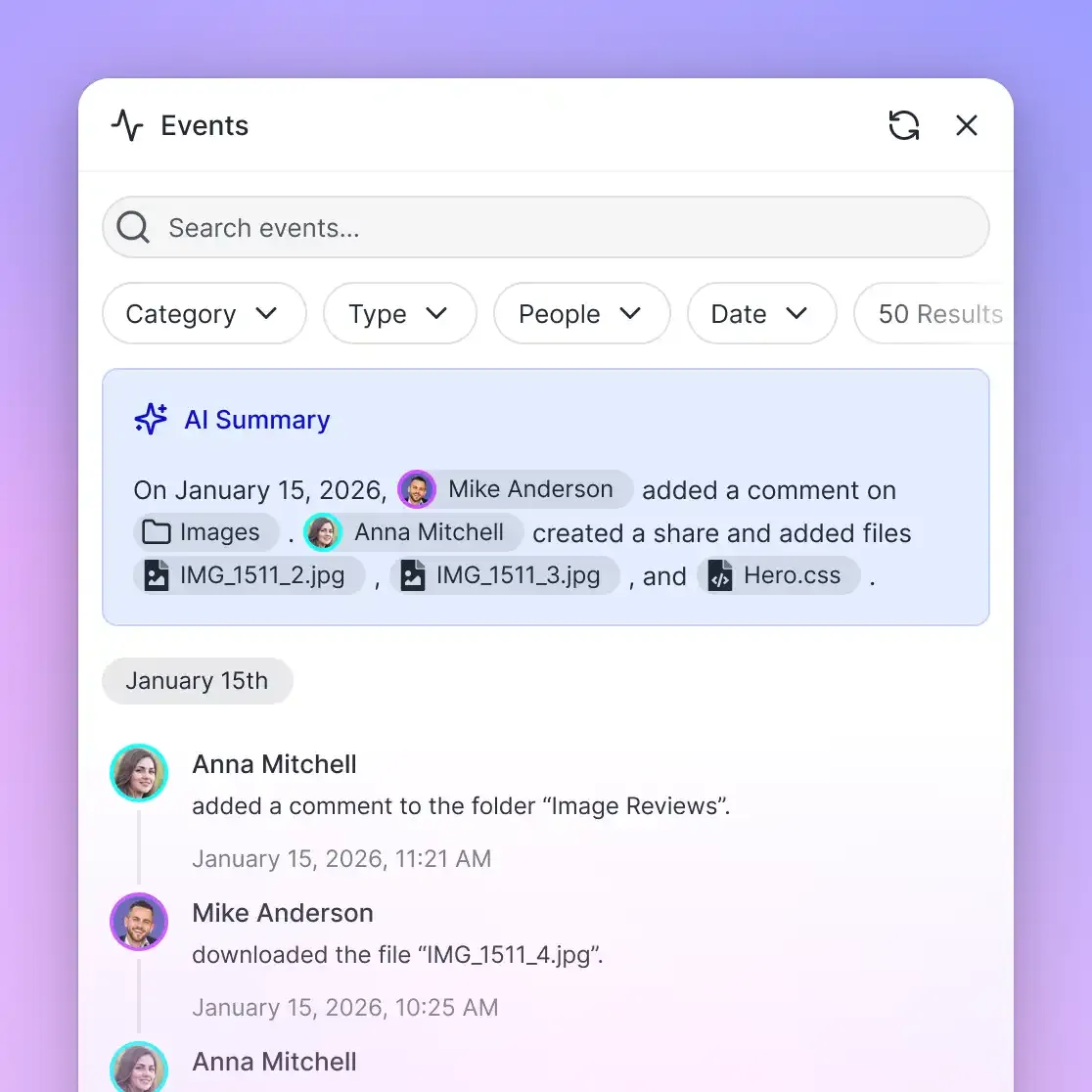
- Audit trail: Track every modification via Fastio's activity log.
- Multi-agent coordination: Use advisory file locks, version history and granular folder permissions to coordinate writes.
Build reliable agent systems. Test with a 14-day Business Trial.
Common Use Cases
- Long-running research agents that save findings.
- Multi-step automation, like invoice processing.
- Team agents passing work to humans.
Prerequisites
Before setting up persistent storage, ensure your environment is ready:
- OpenClaw installed and configured.
- Fastio account with a 14-day Business Trial (credit card required, see /pricing/).
- Scoped API key generated from Fastio organization settings.
Familiarize yourself with basic OpenClaw commands, then configure the remote MCP connection to begin persisting agent state.
First step: Install Fastio ClawHub Skill
Connect OpenClaw to Fastio's remote MCP server at https://mcp.fast.io/mcp/tools:
{
  "mcpServers": {
    "fastio": {
      "url": "https://mcp.fast.io/mcp/tools",
      "headers": {
        "Authorization": "Bearer YOUR_FASTIO_API_KEY"
      }
    }
  }
}
No local package installation or containerization is required. The remote endpoint exposes Fastio's consolidated MCP toolset for workspace management, storage, search, and sharing.
Second step: Connect to Fastio Workspace
Connect OpenClaw to your Fastio workspace for storage:
- Sign in to your Fastio organization.
- Create an agent workspace or obtain an existing workspace ID.
- Provide the workspace ID in your OpenClaw agent environment or tool parameters:
export FASTIO_WORKSPACE_ID="your-workspace-id"
Your agent is now ready to persist files and memory directly into cloud storage.


Give Your AI Agents Persistent Storage
Fastio provides persistent storage, consolidated MCP tools, and built-in RAG. Start with a 14-day Business Trial.
Third step: Implement Agent State Persistence
Your workspace is ready. Agents can now save memory and state:
Workflow:
- Save: Serialize memory to JSON, upload to the workspace.
- Load: Download
agent-state.jsonon startup and deserialize.
Fastio preserves previous versions of agent-state.json, so any corrupt state can be rolled back to an earlier revision.
Managing Multi-Agent Access with Locks
When multiple agents access the same workspace, concurrent writes can occur. Fastio provides advisory per-file locks alongside version tracking and audit logging to coordinate access safely.
The process:
- Acquire an advisory lock on the target file before writing via the storage tool's lock-acquire action.
- Send periodic heartbeats to maintain the lease while writing state updates.
- Release the lock when done. Other agents trying to lock the same file receive an HTTP 409 error and can wait or read.
- If an agent disconnects, the lease expires automatically or can be taken over by anyone with write permission.
Every write lands in file version history regardless, ensuring full rollback capability if unexpected data is written.
Advanced Workflows: Handoff and Real-Time Events
Agents can smoothly transfer workspace ownership to human users when a task is complete. This is critical for client deliverables or supervisor review.
You can also monitor the realtime activity feed or WebSocket events feed to trigger downstream agent actions whenever a file changes.
For example, a new file upload can alert worker agents to begin processing immediately without continuous polling.
Best Practices for State Management
Tips for solid persistence:
- Use compact JSON for state files.
- Organize files cleanly:
agents/{agent_id}/state.json. - Check Fastio's activity log to verify file updates.
- Enable Intelligence on the workspace to index documents for semantic search.
- Clean up temporary scratch files to stay within plan storage allowances.
Troubleshooting Common Issues
Troubleshooting
- Auth failure: Verify your scoped API key in Fastio organization settings.
- Connection error: Ensure network connectivity to
https://mcp.fast.io/mcp/tools. - File not found: Check workspace ID and file path.
- Quota limits: Check usage in the Fastio dashboard. Fastio plans scale from Starter to Business and Enterprise at /pricing/.
Evidence and Benchmarks
Fastio resolves common persistence issues in multi-agent workflows:
- OpenClaw agents lose memory between sessions without external storage.
- Context window compaction loses detailed data over time.
- Fastio provides durable cloud storage where all files remain accessible, versioned, and searchable once Intelligence is enabled.
Ownership Handoff to Humans
Agents set up workspaces, then hand off ownership to people:
- Complete deliverables and configure shares.
- Generate an organization transfer token.
- Share the claim link the transfer returns.
- The human claims ownership while the agent retains administrative access for ongoing updates.
Frequently Asked Questions
What is OpenClaw persistent storage?
Cloud storage for agent memory and state. Survives restarts via Fastio workspaces.
How does OpenClaw handle agent state persistence?
Upload and download JSON state to Fastio workspaces using the remote MCP server, with version history for safe access.
Is Fastio free for OpenClaw agents?
Fastio offers a 14-day Business Trial requiring a credit card, and plans scale from Starter to Business and Enterprise at /pricing/.
Does it work with any LLM?
Yes, works with Claude, GPT-4, Gemini, and local models. LLM-agnostic.
How to troubleshoot connection issues?
Verify your workspace ID, check API key permissions in Fastio settings, and confirm network access to `https://mcp.fast.io/mcp/tools`.
What plans does Fastio offer?
Plans include Starter ($9.99/mo, 250 GB), Business ($49.99/mo, 5 TB), and Enterprise ($199.99/mo, 25 TB), with a 14-day Business Trial at /pricing/.
How do multi-agent setups coordinate writes?
Fastio uses advisory file locks for write coordination, paired with file version history to protect all revisions and an activity log of every change.
Can I query stored state with AI?
Yes, once Intelligence is enabled for the workspace, you can perform RAG search across workspace files with citations.
How does OpenClaw connect to Fastio?
OpenClaw connects directly to Fastio's remote MCP server at `https://mcp.fast.io/mcp/tools` using a scoped API key.
Related Resources

Give Your AI Agents Persistent Storage
Fastio provides persistent storage, consolidated MCP tools, and built-in RAG. Start with a 14-day Business Trial.