How to Manage Files for Resume Parsing Agents
Managing files for resume parsing agents means organizing candidate documents for AI recruitment systems. Learn to build secure workflows that extract structured data from different file types.

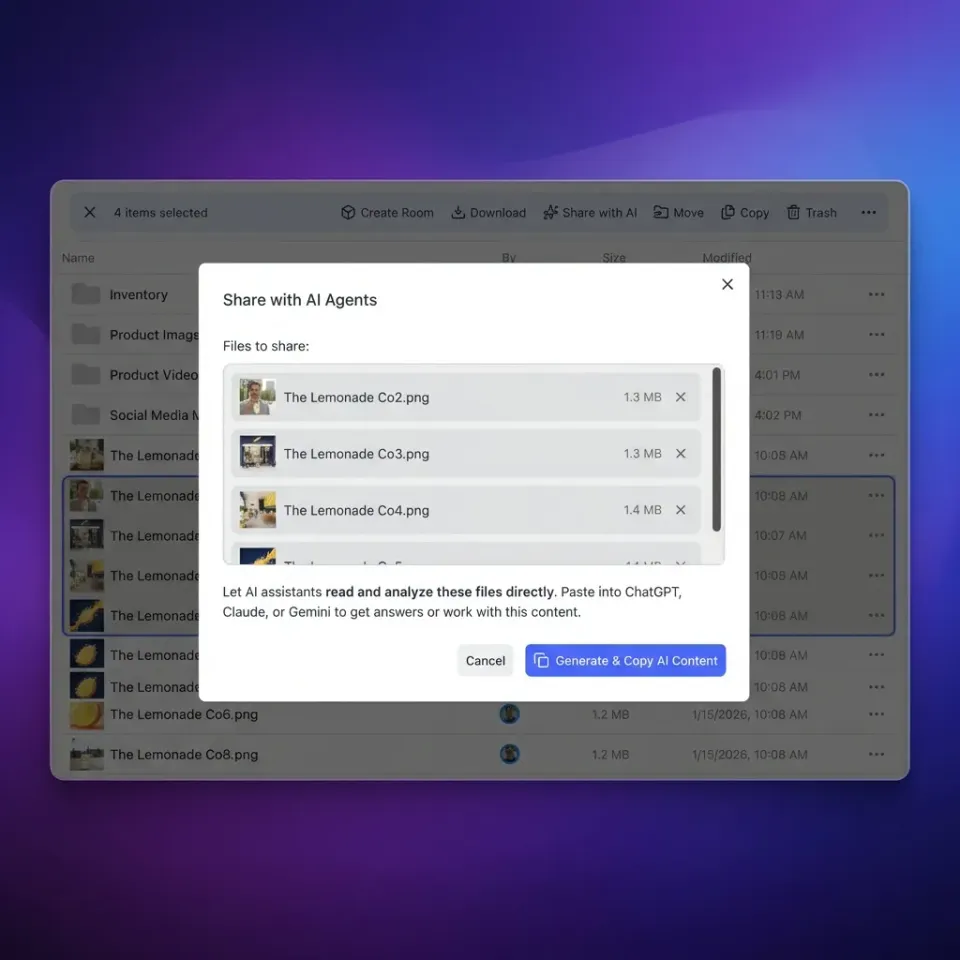
Why File Management is Critical for AI Recruiting
Resume parsing agents rely on a steady stream of high-quality data. Poor file management leads to lost candidates, compliance risks, and slow hiring. With the HR tech market growing fast, optimizing your AI infrastructure is essential.
Good file management ensures that your parsing agents can access, process, and archive resumes without errors. It turns a messy pile of PDF and DOCX files into a structured, searchable talent pool.
Beyond efficiency, secure file management protects against data breaches. Recruitment databases are targets for cybercriminals. By using secure, agent-driven storage, you ensure that sensitive personal information (PII) is encrypted. This protects your candidates and shields your organization from bad press and legal fines.
Industry data shows AI resume screening can cut time-to-hire time-to-hire. Getting these results requires storage that handles different file formats, from text-heavy PDFs to scans needing OCR.
Helpful references: Fastio Workspaces, Fastio Collaboration, and Fastio AI.
Related guides
- How to Set Up AI Agent File Indexing (The Easy Way)Most AI agent file indexing requires complex Python pipelines and vector databases. This guide shows you how to skip...
- Top 5 File Sharing Tools for AI WorkflowsOver 60% of AI workflows involve document or file processing. Multi-agent systems can generate hundreds of artifacts...
- How to Automate File Classification with AI AgentsAI agent file classification automation uses intelligent agents to categorize incoming documents, apply tags, and route...
- How to Manage Files with the Gemini APIGoogle's Gemini API offers powerful multimodal capabilities, allowing you to analyze images, audio, and video directly....
- How to Manage Files for Image Generation AgentsImage generation agents create thousands of files in minutes. Learn how to organize prompts, version outputs, and...
- How to Manage Files in Rasa ChatbotsRasa file management includes storing conversation data, training files, model artifacts, and user documents. Rasa...
More on this subject: Agent File and Document Workflows (325 guides)
What to check before scaling resume parsing agent file management
A solid workflow moves candidate data efficiently from intake to useful data.
1. Multi-Source Ingestion Agents should accept resumes from emails, web portals, and uploads. Use a central "Inbox" folder where all new files land before processing.
2. Validation and Pre-processing
Before parsing, check file types and sizes. Security scanning is important here. Resume uploads are a common way malware spreads. Your agent should quarantine and scan every incoming file. Also, standardizing filenames (e.g., YYYY-MM-DD_Lastname_Firstname.pdf) prevents conflicts and helps recruiters find files. Convert image-based resumes (JPG, PNG) into text using OCR tools.
3. Parsing and Extraction The agent extracts key fields, such as name, contact info, skills, and experience, and converts them into structured formats like JSON or XML.
4. Archival and Indexing
Move the original file to a permanent storage location (e.g., /candidates/{year}/{month}/) and store the extracted data alongside it or in a database.

Storage Patterns for High-Volume Recruiting
Organizing thousands of resumes needs a clear folder structure. Avoid flat folders with thousands of files, which make finding files slow and frustrate reviewers.
Recommended Folder Structure:
/inbox/: Temporary holding area for new uploads./processing/: Files currently being analyzed by the agent./rejected/: Files that failed validation or parsing./candidates/{YYYY}/{MM}/{candidate_id}/: Permanent home for successful parses.
Metadata Strategy Store parsing results (JSON) in the same folder as the original resume. This keeps the original document linked to its parsed data, making audits and re-parsing simple.
Fastio Tip: Enable Intelligence Mode on the workspace to index these folders. Your agents can then use RAG (Retrieval-Augmented Generation) to ask questions like "Find candidates with Python experience in the 2025 folder" without needing a separate vector database.


Give Your AI Agents Persistent Storage
Fastio gives teams shared workspaces, MCP tools, and searchable file context to run resume parsing agent file management workflows with reliable agent and human handoffs.
Handling Resume Updates and Versioning
Candidates often re-apply or update their resumes. Your file management system must handle these updates well without creating duplicate records or overwriting history.
Versioning Strategy
When a new file arrives for an existing candidate ID, the agent should not overwrite the old file. Instead, it should save the new version with a timestamp or version number (e.g., resume_v2.pdf) and update the metadata to point to the latest version while keeping the archive accessible.
Change Detection Advanced agents can compare the new parse against the old one to highlight changes, such as new skills, recent employers, or updated contact details. This 'diff' can be stored as a separate metadata object, giving recruiters an instant view of the candidate's professional growth.
Security and Compliance for Candidate Data
Candidate data is sensitive personal information (PII) and must be protected according to privacy laws.
Access Control Use strict role-based access control (RBAC). Agents should have read/write access to processing folders, while human recruiters might only need read access to final candidate folders.
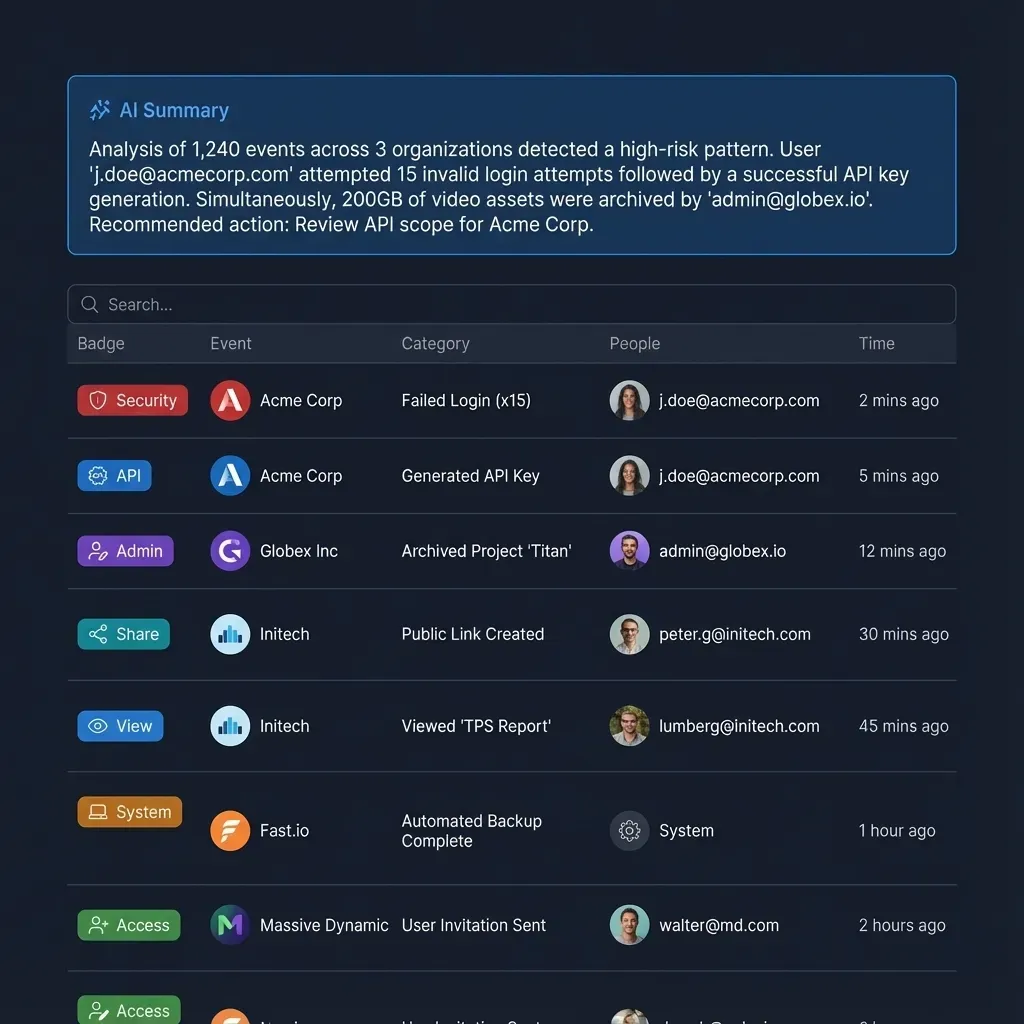
Audit Logging Keep a full log of every file access and modification. You need to know exactly when a resume was parsed, who viewed it, and where the data went.
Data Retention Set up automatic retention. For example, configure your agent to move applications older than two years to a "Cold Storage" archive or delete them to follow data minimization rules.
Integrating Agents with MCP Tools
The Model Context Protocol (MCP) connects your AI agents directly to your file system. Instead of building complex API wrappers, you can use standard tools to manage candidate files.
Fastio MCP Server Fastio provides a remote MCP server with a consolidated MCP toolset for file operations. Agents can read resume contents, save extracted JSON profiles, organize files into target folders, and scan the inbox for newly arrived applications.
Real-Time Processing via Event Feeds
Connect your pipeline to Fastio's WebSocket events feed or poll the activity feed to trigger your parsing agent the instant a new resume lands in the /inbox/ folder. This event-driven architecture ensures prompt action in your recruitment pipeline.
Standardizing on MCP also simplifies maintenance. If you update your underlying storage provider, you don't need to rewrite your agent's code; you update the MCP server configuration. Separating logic from infrastructure makes your AI agents stronger and easier to scale as your recruitment needs grow.
Sources
References used to verify factual claims in this guide.
-
agents use RAG to find candidates in the 2025 folder Fastio provides an MCP server with a consolidated toolset for file operations
Frequently Asked Questions
How do I store resumes for AI parsing?
Store original resumes in a structured folder hierarchy (e.g., by date or department) and save the parsed data as a JSON sidecar file in the same location. This keeps the source document and its structured data linked.
What is the top file format for resume parsing?
PDF is generally the best format as it preserves formatting across devices. However, your parsing agent must also handle DOCX, RTF, and image formats (with OCR) to ensure you don't miss qualified candidates.
How can I secure candidate data in an AI workflow?
Use granular permissions to restrict access to sensitive folders. Implement audit logging to track every file interaction and automate data retention policies to comply with privacy regulations like privacy requirements.
Can I use AI to search my resume database?
Yes. Once Intelligence Mode is enabled on the workspace, Fastio indexes documents so you can query your entire resume repository using natural language without setting up external search infrastructure.
Related Resources

Give Your AI Agents Persistent Storage
Fastio gives teams shared workspaces, MCP tools, and searchable file context to run resume parsing agent file management workflows with reliable agent and human handoffs.